
Archiving the “strange death of Europe,” as Douglas Murray put it, and the West more broadly, at the hands of the neoliberal technocracy.
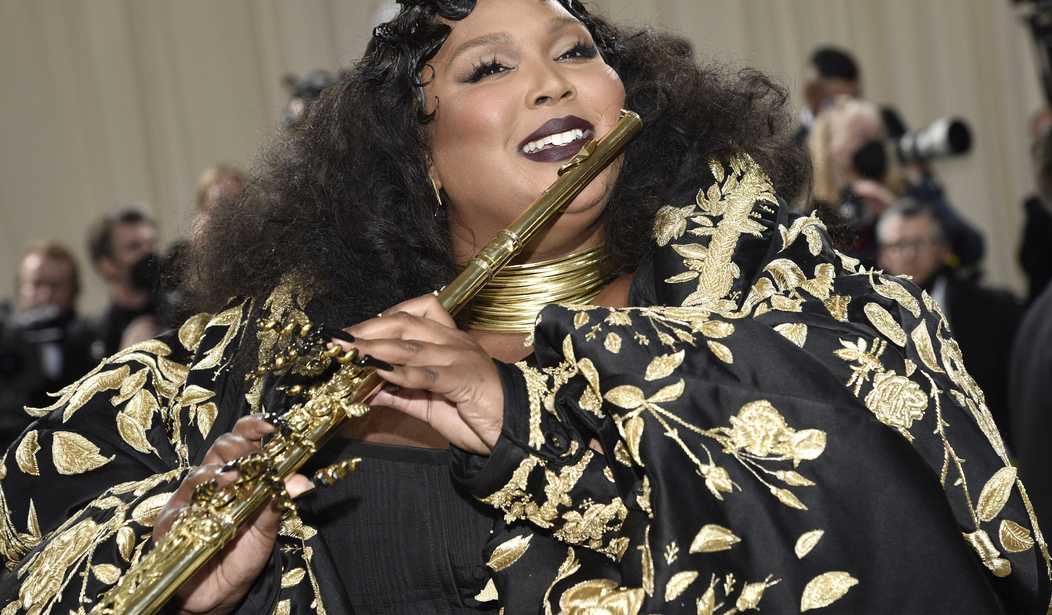
Lizzo claims to have ‘manifested’ Sports Illustrated Swimsuit cover
Of all the women in the world to choose from on this planet of eight billion people, most rational editors interested in serving their audience, for what I assume are obvious reasons that don’t require expounding, wouldn’t as a first resort opt for top celebrity twerker Lizzo to grace the cover of Sports Illustrated Swimsuit.
Yet, somehow, in our magical DEI age that defies rationality, that’s exactly what happened.
Related: Social Engineers: White Men's Sexual Interest in Big Butts Is Now Racist
This accomplishment, achieved in spite of all aesthetic reason, is one that Lizzo claims to have “manifested” after “envisioning” it “for years.”
Via People (emphasis added):
Lizzo says landing her first Sports Illustrated Swimsuit cover wasn’t just a career milestone — it was something she’d been envisioning for years.
The Grammy winner revealed that landing her first cover for the magazine felt like the realization of something she’d long envisioned, telling Sports Illustrated Swimsuit that she had “kind of manifested” the milestone while building her Yitty Swim brand.
“I was genuinely excited,” Lizzo said of learning she’d be part of the issue. “I was like, Wow, I kind of manifested this because I have Yitty Swim, which I love. Every time I do Yitty Swim, I always feel like it’s Sports Illustrated level. It’s only a matter of time when these worlds collide.”
That excitement only grew when she learned she wasn’t just appearing in the issue — she’d landed the cover.
“I was super excited to do the runway show, and then they were like, ‘You’re on the cover, b----,’” Lizzo recalled. “I was like, ‘Hell yeah, bring it on!’ I love it. I love it.”
For the singer, the achievement carried even greater significance because of how much representation has changed since she first saw the magazine as a child…
Elsewhere in the interview, Lizzo reflected on the public scrutiny surrounding her body, revealing that she intentionally gained about 20 lbs. after previously losing weight.
Related: Activist Gets Paid to Lie to Children About Nutrition for Corporate Profit
Did you know?
The Sports Illustrated brand is now owned by billion-dollar firm Minute Media.
Minute Media, in turn, has as heavy investors Goldman Sachs, ProSieban, and, most pertinently here, none other than global DEI progenitor BlackRock itself.
So, putting some puzzle pieces together, by “manifested,” Lizzo presumably means that her agent, understanding his leverage, called up the management over at Sports Illustrated and told them that if they don't cooperate with the program, he would be forced to ring the big guys over at BlackRock next and inform them that the magazine they’ve invested in is engaging in all manner of –isms and phobias by refusing to deposit Lizzo’s brave and stunning likeness on its cover.
Blackrock CEO Larry Fink on forcing mass adoption of DEI policies, 2017: "Behaviors are going to have to change… We're asking companies, you have to force behaviors, and at BlackRock we are forcing behaviors. " pic.twitter.com/7NAbw2wgW9
— Ben Bartee (@BenBartee) March 31, 2026
Did you also know?
Social Justice™ people, whose pastime is pioneering ways to describe novel forms of victimhood, actually have an extremely parochial term for agents of twerking celebrities to weaponize against magazine editors who hesitate to put their clients on all of their covers from now until eternity: “misogynoir.”
Related: Black Actress Worth Estimated $12 Million Cries About Low Pay, Cites Racism
Via Everyday Feminism (emphasis added):
Misogynoir – a portmanteau that combines “misogyny” and the French word for black, “noir” – is a term coined by the queer Black feminist Moya Bailey to describe the particular racialized sexism that Black women face.
It’s a word used to acknowledge the very specific convergence of anti-Blackness and misogyny, and therefore is not applicable to non-Black women of color (or white women).
And it’s often overlooked in feminist discourse – because it disrupts the tendency that mainstream feminism has of universalizing womanhood as a uniformly shared experience based on the default narrative of white women.
Insisting that conversations around misogyny disregard race or take a “colorblind” approach are misguided and wrong-footed.