Ron Radosh

By Ron Radosh

Bio

Get Updates From Ron Radosh

Here’s a suggestion for Memorial Day reading, if you’re going to a beach or simply resting in your backyard enjoying the good weather. Buy the May 28th issue of The New Yorker (yes, I know it usually is knee-jerk leftist when it comes to politics), which features an amazing article by author David Grann called “TheYankee Comandante: A Story of love, revolution, and betrayal.”

Grann’s reportage is so good that you will think you are reading good fiction — either a thriller or an adventure story — except that he is telling the very real story of the late William Alexander Morgan, who, as a young man in his 20s, went off to Cuba in 1957 to fight alongside Fidel Castro and his rebels in the guerrilla army seeking to bring down the regime of Fulgencio Batista, the long-ruling authoritarian and corrupt leader of Cuba. I hope that someone gets this article to Andy Garcia and that this Cuban-American exile actor considers optioning it for a film before someone else does.

There were a few other Americans who fought with Castro, but Morgan was the only one to be awarded the rank of comandante, usually reserved for the likes of Che Guevara, Raul Castro, Huber Matos, and, of course, Fidel himself. Like other naive and idealistic young Americans, Morgan was taken with Castro’s cause, having heard many stories about the ruthlessness and brutality of Batista, especially towards his enemies. He went to fight with Castro, he said, because “the most important thing for free men to do is to protect the freedom of others.”

Two things strike the reader on the very first page of the article. The first is a large photo of Castro applauding Morgan at a Havana meeting in 1959, soon after his victory and the collapse of the Bastista government. The second is the opening paragraph, in which Grann writes about the night in which the now 32-year-old man faced Castro’s firing squad at La Cabana, an 18th century stone fortress overlooking Havana’s harbor. As Morgan stood waiting to be killed, one of Castro’s soldiers yelled out that he should kneel and plead for his life. Morgan answered: “I kneel for no man.” The soldiers then shot him in the knee, forcing him to kneel, before they shot off his head in a blast of gunfire.

What happened between 1957 and Morgan’s execution on the orders of Castro is the story that Grann tells. He describes secret meetings of the CIA and Morgan’s seeming alliance with the Dominican dictator Rafael Trujillo, who was putting together a secret force to murder Castro. He also tells of Morgan’s friendships and alliances with a key member of the Mafia, Dominick Bartone; the secretive head of the International Rescue Committee, Leo Cherne; and other major players in the various efforts to deal with the reality that Fidel Castro and his rebel band had become Cuba’s new rulers.

I do not wish to try to summarize the twists and turns in the story Grann tells. It is also the subject of a  2007 book by Aran Shetterly, Morgan’s biographer. I have not read The Americano, but although Grann gives the author credit as “incisive,” Grann brings the story up to the present, having interviewed Morgan’s children and the  woman he married in a brief guerrilla ceremony, Olga Rodriguez, who fought beside him and was later imprisoned for years by Castro.

If one wishes to gain insight into the living hell that Fidel Castro created in Cuba, look no further than Grann’s article.  Castro, like Adolf Hitler, was given luxury treatment when he was imprisoned for trying to overthrow Batista’s government at an earlier moment, before he took to the mountains with his guerrilla band. While incarcerated, he delivered his famous speech, “History Will Absolve Me,” which was published throughout Cuba — the equivalent of Hitler’s Mein Kampf, also written in a luxury prison given Hitler by the Weimar Republic after his Munich beer hall putsch.

Castro has now been in power for many decades and through the reigns of eight American presidents. It is already clear that history will not absolve Fidel Castro, whose crimes have been thoroughly exposed and with whom the oppressed populace of Cuba are all but fed up. Grann’s readers will learn, perhaps for the first time, what kind of treatment Castro gave his political prisoners when they were thrown into his regime’s jail cells. Not only is there no special status for political prisoners, they are the ones singled out for the worst treatment — forced to live in the kind of conditions you would not wish on your worst enemy. Morgan himself was put in solitary confinement for a month, where he became ill, convinced that the food he was being fed was filled with toxic poison. Later, his food was filled with ground glass.

Pages: 1 2 | 3 Comments bullet bullet

Much has already been written about Mayor Cory Booker’s faux pas on the Sunday edition of NBC’s Meet the Press. Appearing on the program as a surrogate spokesman for the Obama campaign, Booker spent the first part of his time in support of the president’s re-election. He told viewers that during Obama’s first term they received a tax cut, that he saved the auto industry while a Romney presidency would have let them fail, and that Obama has put forth a bi-partisan plan for real tax reform. It was standard Obama boilerplate, and Axelrod and company were undoubtedly smiling. Had Romney or a surrogate for his side been on, he could have undoubtedly engaged Booker in an interesting conversation on the relative merit of Booker’s claims.

But then, the bombshell fell. The issue of Bain Capital, the key issue that the Obama team is using to demonize Governor Romney, came up. Undoubtedly, the panel and journalists expected more of the same from the mayor of Newark, New Jersey. And then Booker spoke the words that would come to haunt him:

I have to just say from a very personal level I’m not about to sit here and indict private equity…this kind of stuff [referring as well to conservative attacks on Rev. Jeremiah Wright] is nauseating to me on both sides.

No one should have been surprised. As the mayor of Newark, a town desperately in need of new business to rebuild a dying city and help it recreate itself, he knows that equity funds invested in potential business is a mechanism for economic growth and jobs. Like Steven Rattner, Obama’s former auto czar and billionaire investor who said as well last week, “Bain Capital’s responsibility was not to create 100,000 jobs or some other number. It was to create profits for his investors, most of whom were pension funds, endowments and foundations. It did it superbly, acting within the rules and acting very responsibly and was a leading firm. So I do think to pick out an example of somebody who lost their job unfortunately, this is part of capitalism, this is part of life. And I don’t think there’s anything Bain Capital did that they need to be embarrassed about.” Booker found himself inadvertently making arguments for Romney.

Both Booker and Rattner, not surprisingly, found themselves on quickly delivered team Romney videos meant for broadcast in swing states like Ohio and Wisconsin. Within minutes, a fuming David Axelrod was on the phone, and probably texting a nasty message to Booker that he could read before he got off the air.

Axelrod should not have been very surprised. As TNR’s Alec MacGillis points out, Booker represents hedge fund and equity fund managers in Wall Street who four years ago saw Obama as a New Democrat who stood fast in their corner and who poured a fortune into the Obama campaign. Now they are heavily disappointed in the president, and opposed to the left-wing populism he is now basing his campaign on. For that reason, many of the traditional Wall Street types who flocked to the president’s side in 2008 are now drifting away from him, and towards Romney instead.

Pages: 1 2 | 41 Comments bullet bullet

Remember the Trayvon Martin brouhaha? The MSM almost universally concluded that George Zimmerman both stalked and then murdered Martin in cold blood. Many commentators ignored any evidence to the contrary. The geniuses at Slate.com even had a reporter go to the Florida community where Martin was shot and interview some women who claimed to see Zimmerman shoot him in cold blood. They said that Martin was never on top of him and had not been banging Zimmerman’s head on the ground at all.

Now, the Florida district attorney has released 67 CDs of evidence, and made them available to the press. ABC News has for once done the MSM proud, by headlining their story with a bold conclusion: “Cops, Witnesses Back Up George Zimmerman’s Version of Trayvon Martin Shooting.” The network report states:

Two police reports written the night that George Zimmerman shot Trayvon Martin said that Zimmerman had a bloody face and nose, according to police reports made public today.

The reports also note that two witness accounts appear to back up Zimmerman’s version of what happened when they describe a man on his back with another person wearing a hoodie straddling him and throwing punches.

In addition, Trayvon Martin’s father told an investigator after listening to 911 tapes that captured a man’s voice frantically calling for help that it was not his son….

So the district attorney, true to her word at the time of the Zimmerman arrest, told the press that she would be guided by the evidence alone. Now, the only remaining issue is the argument that the prosecutors will evidently make: If Zimmerman had not followed Martin and instead taken the advice of the police to stay put, nothing would have happened and Martin would not have been killed.

But clearly, Zimmerman’s claim that “that he shot Martin in self-defense after the 6-foot tall, 160 pound teenager knocked him to the ground, banged his head against the ground and went for Zimmerman’s gun” is apparently true. It is also true that Zimmerman’s face was bloodied, that his nose was broken as he said, and that previously unreleased photos of the back of his head show severe lacerations.

The witness report released has the witness saying the following:

“He witnesses a black male, wearing a dark colored ‘hoodie’ on top of a white or Hispanic male and throwing punches ‘MMA (mixed martial arts) style,’” the police report of the witness said. “He then heard a pop. He stated that after hearing the pop, he observed the person he had previously observed on top of the other person (the male wearing the hoodie) laid out on the grass.”

ABC News also notes that “the lead investigator on the case, Officer Christopher Serino, wrote that Zimmerman could be heard ‘yelling for help as he was being battered by Trayvon Martin.’”

Pages: 1 2 | 154 Comments bullet bullet

It is far too early to know whether Barack Obama or Mitt Romney will win the presidential election, but the latest polls must not be giving Obama much comfort. The New York Times/CBS poll, one heavily skewed to give the Democrats a bigger margin (surprise, surprise), shows Mitt Romney with a 3-point lead over the president. It is within the margin of error, but it nevertheless reveals Romney quickly widening what was a large gap in the president’s favor.  Sixty-two percent of the respondents said that the economy and jobs were most important to them in deciding who the candidate of their choice should be. In other words, Romney’s lead is due to the belief of those polled that he would be able to deal with producing jobs and improving the economy better than the president.

For the president’s base, his recent announcement in favor of gay marriage was greeted with an outpouring of gratitude. But when asked by the pollsters whether Obama’s support of same-sex marriage would make them more or less likely to vote for him, 26 percent said less likely and only 16 percent said more likely. A strong 57 percent said it would not influence their choice at all. Moreover, 67 percent of those polled said Obama’s announcement was done for political reasons, while only  24 percent thought he announced it because he thought it was right. To put it another way, Obama may have motivated his base, but in terms of the general election, his position has not helped him at all.

As others have noted, including Karl Rove, the cover of this week’s Newsweek, depicting the president with a halo over his head and the heading “The First Gay President,” may very well backfire by turning off the half of the country that is strongly opposed to gay marriage. Moreover, the article by Andrew Sullivan in praise of the president’s decision can easily be discounted since Sullivan is not only  gay himself and a major  advocate of gay marriage, but also a fierce cheerleader for the president.

The poll also revealed that Romney now has the edge in women voters, 46 to 44 percent. Remember that just a few weeks ago, when Rick Santorum was making contraception the issue, all the pundits argued that Romney would lose because he could no longer gain the support of women. And one month ago, the same poll showed the president leading among women by 49 to 43 percent. That is an astounding gain in a short time frame.

All of the above explains why the Democrats are trying to make Romney’s personality, rather than the economy or foreign policy, the issue in the campaign. That is why you will continually hear that Romney is a bully, that he put his dog on top of his car during a vacation trip, and that as head of Bain Capital he caused many to lose their jobs and to suffer. Once a bully,  always a bully.

Pages: 1 2 | 84 Comments bullet bullet

The mainstream media has hailed President Obama’s decision to come out in favor of gay marriage, only criticizing him for dragging his feet on the issue. By staying on message and emphasizing the economy, Mitt Romney is trying not to get sidetracked into yet another side issue.

But will the MSM let him do that? Not if they can help it. Yesterday the Washington Post ran a front page story, which extended many pages, depicting Romney as a bully and homophobe via a 50-year-old incident. According to the story, Romney led a group of fellow students from the elite Cranbrook School to cut the long bleach-blonde hair of a quiet student named John Lauber, who later came out as being gay.

Here is the very first paragraph, where reporter Jason Horowitz says Romney “stopped something he thought did not belong” at the school:

Mitt Romney returned from a three-week spring break in 1965 to resume his studies as a high school senior at the prestigious Cranbrook School. Back on the handsome campus, studded with Tudor brick buildings and manicured fields, he spotted something he thought did not belong at a school where the boys wore ties and carried briefcases. John Lauber, a soft-spoken new student one year behind Romney, was perpetually teased for his nonconformity and presumed homosexuality. Now he was walking around the all-boys school with bleached-blond hair that draped over one eye, and Romney wasn’t having it.

How, one wonders, does Horowitz know this, since he never interviewed Romney, who has said in a TV interview that he doesn’t even remember the incident? Even if the act took place — and it was ugly and inexcusable despite different cultural mores in that era — is it even relevant to make something that Romney engaged in fifty years ago an issue in the campaign? To ask that is to answer the question. Of course the Post should not have run the story. The sole reason for it is to depict Romney in an unsympathetic manner.

Scores of people can recall things they did in high school that they deeply regret. Indeed, incidents in which I was the victim in summer camp traumatized me, and I recall myself engaging in similar actions against other campers in order to get in with the group and not make myself an outcast. (Yes, I am being more than vague here about what happened, but I still recall the incident in question.) I grew up. I am not the same person I was over fifty years ago, and certainly Mitt Romney is not either.

The story goes on to put Romney down in other ways. Readers learn that he was proud of his family’s wealth, looked down on those who were scholarship students, and was “bowled over by the wealth of some of his friends,” particularly diplomat Max Fisher, who had a home movie theater with numbered seats in his house. You get the idea? Mitt Romney is not your average Joe, and he does not care for the working stiff. You know, the exact group of swing voters that had become Reagan Democrats and that the Republicans need to get back to their ticket come November.

Pages: 1 2 | 49 Comments bullet bullet

If you want to know what is wrong with academia and its devotion to political correctness, look no further than the scandal brewing over a recent action of The Chronicle of Higher Education, the important weekly newspaper of the entire higher education establishment.

The Chronicle has a regular blog by various contributors, all of whom are supposed to use their contributions to discuss their take on issues considered by the academy. One of their regular bloggers was the conservative writer Naomi Schaefer Riley, author of a book about the failures of higher education. It was because of her critical outspoken views that she was obviously chosen to be one of the paper’s opinion bloggers.

But this time, Riley supposedly overstepped the boundaries of permissible opinion. Last week, she wrote an entry opposed to the institution of black studies in the university curriculum. Here is Riley’s judgment about black studies departments:

If ever there were a case for eliminating the discipline, the sidebar explaining some of the dissertations being offered by the best and the brightest of black studies graduate students has made it. What a collection of left-wing victimization claptrap. The best that can be said of these topics is that they’re so irrelevant no one will ever look at them.

Riley went on to point out some of the absurdities appearing in the field of black studies. They include such gems as a thesis about the omission in studies of natural childbirth of black women’s experience giving birth, of the horrors of the federal government supporting single family homes for blacks in the 1970s, and a thesis about how conservative African Americans attack civil rights even though the role they have attained in society is due to the very programs they criticize. Riley wrote the following comment about the latter:

The assault on civil rights? Because they don’t favor affirmative action they are assaulting civil rights? Because they believe there are some fundamental problems in black culture that cannot be blamed on white people they are assaulting civil rights?

Noting that there were legitimate problems to address about the plight facing the black community today, Riley argued that they were not being addressed in black studies departments. Instead, she argued, all they want to do is engage in arguments that blame everything on the white man.

The result of Riley’s article — again, her opinion — was an avalanche of protest to the Chronicle’s letters section. The editors told readers that they received “thousands” of protests. That means, of course, that Riley hit a real sore spot. In a note to readers, editor Liz McMillen announced that the article “did not conform to the journalistic standards and civil tone that you expect from us,” and that Riley’s piece did not meet the “basic editorial standards for reporting and fairness in opinion articles. As a result, we have asked Ms. Riley to leave the Brainstorm blog.”

Pages: 1 2 | 71 Comments bullet bullet

I cannot let this day pass without noting the death of one of Central America’s greatest tyrants, Tomás Borge. The obituary notice in today’s New York Times hardly lets readers know the kind of moral monster that Borge was. Perhaps the mourning by Hugo Chavez and Fidel Castro is enough to let people understand how vile he was.

Borge was one of the original group of Sandinista rebels who had been imprisoned by the authoritarian ruler of Nicaragua, Anastasio Somoza. He had been in prison for one year when in 1978 a raid by Sandinista troops (disguised in Nicaraguan army uniforms) seized the National Palace and held the leaders of Somoza’s regime hostage. The government gave into the raiders’ demands, released fifty of those they had incarcerated, paid the FSLN (the initials of the Sandinista National Liberation Front) a half million dollars in ransom money, and provided a plane to fly them out of the country to safety.

In 1979, Somoza fled and the Sandinistas took power, at first hiding their true intent and putting into office a coalition junta composed of non-Sandinista opponents of the old regime but in which their movement had a majority. The coalition collapsed, and the government was then run by the so–called commandantes of the revolution, who formed a new government intent on imposing a communist regime according to the classic Marxism-Leninism in which they believed.

The moderate junta the Sandinistas first put in place was meant as a fig leaf to give them time to build the kind of regime they preferred. The pressure from the new Reagan administration forced them, Borge said, “independently from our will, to develop political pluralism and a mixed economy.” That, he noted, was but a tactic, which had “made much more difficult the role of the revolutionary leadership within the masses. Political pluralism, mixed economy and the more general traits of the revolution,” he said, “tend to confuse the masses.” Hence Borge said it would have been better from the start to pursue “an ideological project which is as clearly defined as the one that existed in Cuba.”

It would take a few years, but the “ideological project” of a communist regime became one that the FSLN would implement before they were voted out of office in 1989, in an election they assumed they would win but which they were unable to avoid because of growing international pressure.

Pages: 1 2 | 15 Comments bullet bullet

If you want to know what is wrong with academia, look no further than a long article that appears in The Chronicle Review, the weekly magazine of the academy’s major publication, The Chronicle of Higher Education. Keep in mind that most professors subscribe to it, as do the presidents and deans of every institution of higher learning.

The article in question is written by the outgoing president of the Organization of American Historians, Prof. Alice Kessler-Harris of Columbia University, who is author of a new biography of playwright Lillian Hellman, titled A Difficult Woman. Using her forthcoming book as the excuse to get some free publicity for her thesis, Kessler-Harris has written a piece titled “Lillian Hellman’s Convictions.” (Unfortunately, the magazine has chosen to put her article under a firewall, and to read it you will have to either purchase it or wait for them to eventually post it.)

What Kessler-Harris addresses is what might simply be called the question of Stalinism, and how she sees anti-Communists using the term to oppose people like Hellman who, she thinks, was unfairly called a “Stalinist” by her opponents. She writes:

I found myself asking the questions that others had posed before me. Did she deserve the epithet? Was she or wasn’t she a member of the CPUSA? How active was she? Did she follow the party line? When did she quit? Did she, in the end, come clean? Did she repudiate her former connections, turn in known Communists? And, finally, the litmus test for morality and ethics: Did she, when she learned about the evils of Stalin and Stalinism, distance herself from the CP, join the anticommunist crusade? Like everyone else, I wanted an answer to the key question: What did she know, and when did she know it?

Let us, for a moment, dissect the above paragraph. The key part is where she asks did Hellman “join the anticommunist crusade?” Obviously, by asking it in this manner, the author makes it quite clear that if Hellman had done that, it certainly was a bad thing to have done. Yes, Kessler-Harris acknowledges that there is plenty in Hellman’s life “to deplore as well as to admire.” But on that question of anti-Communism, she argues that “the cold war is over,” and scholars should neither celebrate or condemn “the virtues of my subject,” but simply ask, “So what?”

What she says she wants to do is “place communism in the context of a dynamic, many-faceted, rapidly changing century; to separate the history we write from our own hopes and fears; to recognize how communism…has shaped our efforts to interpret a difficult century.”

Let us ask another question. Substitute fascism or Nazism for Communism in that above sentence. Would she not condemn without reservation any historian who did not view it with absolute horror, not to speak of celebrating it? At the start of her article, she refers to “the distinguished historian Eric Hobsbawm,” who still in his 90s defends completely his years of subservience to the Soviet Union, and who in his writings regularly bemoans the Soviet Union’s collapse. What, then, makes him so “distinguished”? I know that Hobsbawm was knighted by the queen and is highly regarded, but many writers have written boldly of his giant blind spot about Communism. Aren’t they right to have done that? Is he to be so easily excused for his continuing adoration for Stalin’s leadership of the old totalitarian state?

Kessler-Harris purports to be above all of this. She writes that we no longer have to situate ourselves on the left or the right, “as sympathizers or as apologists, that time is now past.” We can, now that the Cold War is over, “move outside old debates…and…start seeing the 20th century with fresh eyes.”

I’m certain Prof. Kessler-Harris thinks she does just that, especially in her book on Hellman. (I am in the process of writing a review of it for The American Spectator.) So let us evaluate what Kessler-Harris says in this lengthy article, and see whether she is successful in doing what she claims.

First, she says Hellman was briefly a Communist and later a “fellow traveler.” But she writes that this was “in the sense that she remained sympathetic to the broad goals of social justice for which she believed an abstract communism stood, and she courageously advocated peaceful coexistence with the Soviet Union when many people believed that position to be close to treason.”

Now, most people define a “fellow traveler” as an individual who blindly supported the Communist line, and who regularly apologized for actions they knew were morally wrong and the consequences of which were horrendous for those who lived under the reign of Communist regimes. What Kessler-Harris has done is define it as one who supports a wonderful aim — “social justice.” I mean, who can be opposed to that? As for having courage to advocate co-existence with the USSR, is she kidding? Scores of people, including anti-Communist liberals, favored that, and wanted an arrangement that would keep nuclear war from breaking out. This is one of the great myths of our time — that favoring a policy such as “peaceful co-existence” was to brand oneself a Red. Remember SANE — the Committee for a Sane Nuclear Policy — which, by the way, had an anti-Communist clause attached to membership in order to differentiate its members from the Soviet fronts like the U.S. Peace Council, which sought to confuse people who wanted peace to join their group instead?

Pages: 1 2 | 27 Comments bullet bullet

In 2001, Michael Walzer, the Princeton professor and editor of the social-democratic magazine Dissent, wrote a much discussed essay called “Can There Be a Decent Left?” He was ambiguous, but hopeful, and very critical of those on the Left who after 9/11 still saw the United States as the only real enemy of the world’s people. There have been since then scores of events that have proven that the only answer to Walzer is that there cannot be, since the raison d’etre of the Left is the opposition to democratic capitalism and to any exertion of American power in the world.

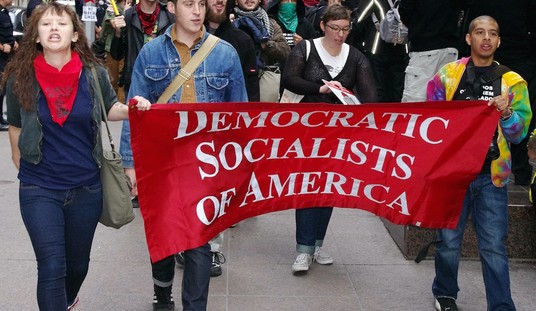
More proof came this weekend, as the internet is abuzz with a short video posted by MEMRI of a conference held in Tehran last February, but which only now is getting noticed. The video consists of interviews with three American professors who attended a solidarity conference arranged by the mullahs to publicize the Occupy Wall Street movement, the key event of the American left.

The professors identified in the video are Albert Vitale and John Hammond, who claim to be on the faculty of Brooklyn College of the City University of New York, and a sociologist from Fordham University’s Lincoln Center campus in New York, Heather Gautney. I was able to find Gautney on the faculty list of Fordham, but the name John Hammond does not come up at the Brooklyn College website. Vitale is a prof. of sociology and an elected member of the PSC, the AFL-CIO affiliated union that represents the faculty and is now led by a very left-wing leadership. (I originally used Memri’s wrong spelling of his name and have now corrected it.)

In a report that appeared on the Fox News website in March, Gautney is quoted as being pleased that the Iranians supported OWS. She said the conference “is quite a welcome development, and speaks to the Iranians’ affection for Americans despite all the political conflict.” She sounded like an advertisement for the existence of American “useful idiots” for the Iranian regime. It seemed not to occur to Professor Gautney that she was being used by the very regime that brutally suppresses its own dissidents and welcomes an alliance with the Western Left, which it woos as allies who oppose the United States of America.

Although Gautney told Fox’s reporter Mike Levine that at first she worried about the regime’s motive for allowing the meeting, her fears were put aside when she studied the conference’s agenda. She concluded that “it seemed like a very legitimate kind of project.” The government media reported the event and ran a story with the heading: “Experts: Occupy Wall Street likely to topple US administration.”

Pages: 1 2 3 | 22 Comments bullet bullet

Who was Robert F. Williams, whom Ann Coulter treats in her recent column as a civil rights hero?  That is true, but unfortunately, it’s only half the story. The main point of Coulter’s column is well-taken—liberals, not to mention most people in America, have little knowledge of what first led to gun control laws. Coulter writes:

Gun control laws were originally promulgated by Democrats to keep guns out of the hands of blacks. This allowed the Democratic policy of slavery to proceed with fewer bumps and, after the Civil War, allowed the Democratic Ku Klux Klan to menace and murder black Americans with little resistance.
(Contrary to what illiterates believe, the KKK was an outgrowth of the Democratic Party, with overlapping membership rolls. The Klan was to the Democrats what the American Civil Liberties Union is today: Not every Democrat is an ACLU’er, but every ACLU’er is a Democrat. Same with the Klan.)

At the end of the Civil War, as most leftist historians know very well, Democratic legislatures enacted the so-called “Black Codes,” which forbade blacks basic civil rights and led to the end of Radical Reconstruction that enabled civil rights for the former slaves. Blacks were also forbidden to own guns, the only recourse they might have had against the newly formed racist Ku Klux Klan, which terrorized black communities throughout the former slave South.

Skipping to the more recent past in the segregated South of the 1950s and 1960s, Coulter turns to the riveting story of an NRA member, a black activist named Robert F. Williams, who first told his story in 1962 in a book he titled Negroes with Guns.  (The full story of his life and impact can be found in the book by historian Timothy B. Tyson, Robert F. Williams and the Roots of Black Power.)

Coulter writes how Williams, head of the Monroe, North Carolina NAACP, got a charter from the NRA and decided to fight head on growing racist activity from a new post-war KKK that beat, lynched, and murdered blacks at will, especially those who belonged to a civil rights group like the then mainstream NAACP. His organization armed itself and built what Williams called the Black Armed Guard, which, as Coulter writes, “stood sentry and repelled the larger, cowardly force.” Their resistance to Klan violence put an end to the vigilante racist whites immediately. As Coulter comments: “The NRA’s proud history of fighting the Klan has been airbrushed out of the record by those who were complicit with the KKK, Jim Crow and racial terror, to wit: The Democrats.”

Pages: 1 2 3 | 17 Comments bullet bullet