





"It's been another milestone year for SpaceX so far," founder and CEO Elon Musk told investors on the company's first-ever quarterly earnings report on Tuesday, but his forward guidance was absolutely jaw-dropping.
First, the bottom line figure that might have scared more skittish investors, although I found it reassuring: SpaceX actually lost more than half a billion dollars last quarter.
You might wonder if I've been day drinking. No, but there is a re-corked half-bottle of wine on the bar from last night, and I have been tempted.
First, the technicals, then the gee-whiz stuff.
Andrea Williams, the company's head of investor relations, explained on the call that "Revenues of $7.8 billion, up 92% from $4.1 billion, a quarterly net loss of $541 million, an improvement of $467 million, an adjusted EBITDA of $3.5 billion, up 191% from $1.2 billion."
The thing to take away from Williams' report is that the company cut its Q2 losses almost in half from 2025, despite spending much more on datacenter buildout. Partly that's because Starlink continues growing as the company puts more Starlink satellites in orbit (stick a pin in that thought), but also, as Musk explained, because "current economics have translated into a less than one-year payback on our new capital deployments for compute."
In other words, while some competitors still can't make money selling AI, SpaceX's xAI division needs less than a year to turn cashflow-positive. And as I noted recently, with positive cashflow, all things are possible.
So let's get to the "all things" that Musk wants to do, because I know you're dying for the gee-whiz portion of this column.
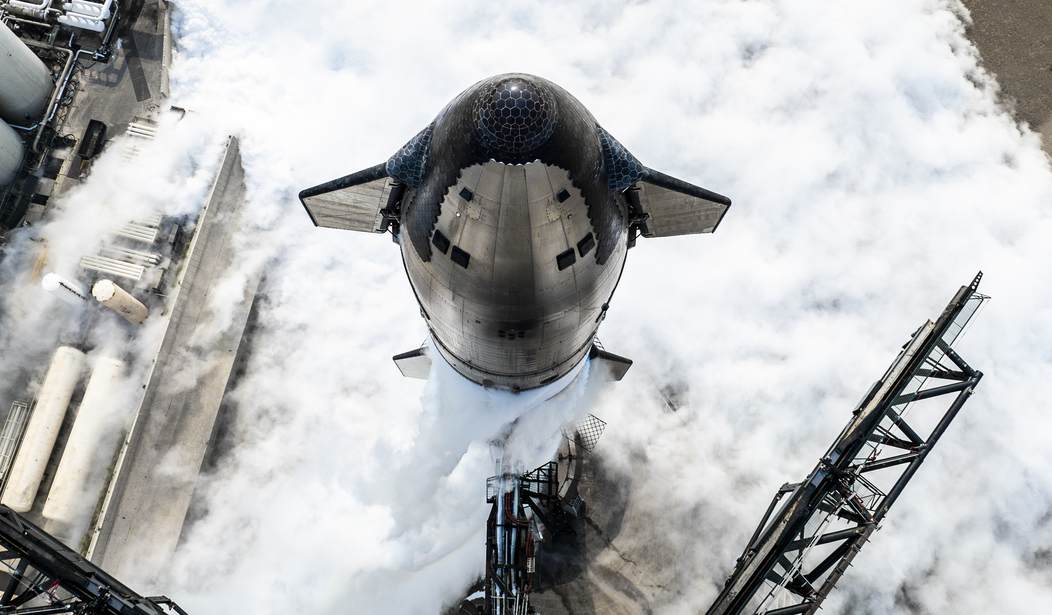
This month, Musk hopes to conduct another Starship flight test — in name only. If things go to plan, the new and improved V3 upper stage will conduct its first orbital flight, returning to Texas to get "caught" in Mechazilla's massive chopstick arms. SpaceX has already achieved that feat with the booster stage, which practically dwarfs the ship. However... even though the company calls it a test, the plan is for Starship to deploy a set of next-generation Starlink satellites "about an order of magnitude more capable than the Starlink V2 satellite."
Unlike the V3 birds deployed sub-orbitally during Flight Test 13 for a few minutes of tests, this next set will enter full service.
Likely before the end of 2026, Starship will deliver 60 V3 Starlink satellites into Low Earth Orbit (LEO) at a time, adding 20-23 times more throughput into service than a single Falcon 9 launch. Starlink is the company's primary revenue-driver, but growth is limited because Falcon can only lift the older V2 sats. That's one reason why Musk said "we are expecting to reach $100 billion+ ARR in December of this year."
The plan then is to use Starship's unbeatable (and almost unbelievable) launch costs to put data centers in orbit, where they'll be powered by the Sun and use zero water or land. At that point, xAI will likely be the low-cost leader in artificial intelligence and datacenter services. And that's how Musk says the company's "internal projections for reaching $1 trillion in revenue, not ARR, but revenue, have moved up from 2031 to 2030."
One. Trillion. Dollars.
By 2030.
"There's a non-zero chance of that being in 2029," Musk added.
Increasing revenues by two orders of magnitude by 2030 seems impossible, but as Musk likes to say, SpaceX turns the impossible into the merely late.
Recommended: NASA's Jared Isaacman Wants America Back on the Moon — and Beyond
The New Space Race isn't today's only exciting news.
PJ Media VIP members get tons of exclusive goodies, including podcasts and video live chats with your favorite writers. You can support alternative conservative news and save 60% with promo code FIGHT.



Join the Conversation
VIP members get the ability to comment on articles.