
A Pakistani court sentenced Qaisar Ayub, a Christian and father of three children, to death over a blasphemy allegation. On October 7, the Supreme Court of Pakistan rejected Qaisar's appeal and upheld the death sentence. Qaisar has been imprisoned for the past 12 years. He now has very few legal options remaining. If nothing changes, the state will execute him.
Qaisar and his brother Amoon were arrested and charged under Pakistan’s blasphemy laws in 2014 and 2015 for allegedly creating a WordPress blog that published material insulting to Islam's prophet Muhammad.
In 2018, authorities sentenced the brothers to death. In 2022, the Lahore High Court Rawalpindi bench upheld their death sentences.
On October 7, Pakistan’s Supreme Court announced its decision to uphold Qaisar's conviction and death sentence while acquitting Amoon. Amoon is now free after nearly twelve years in prison, and has been moved to a safe location.
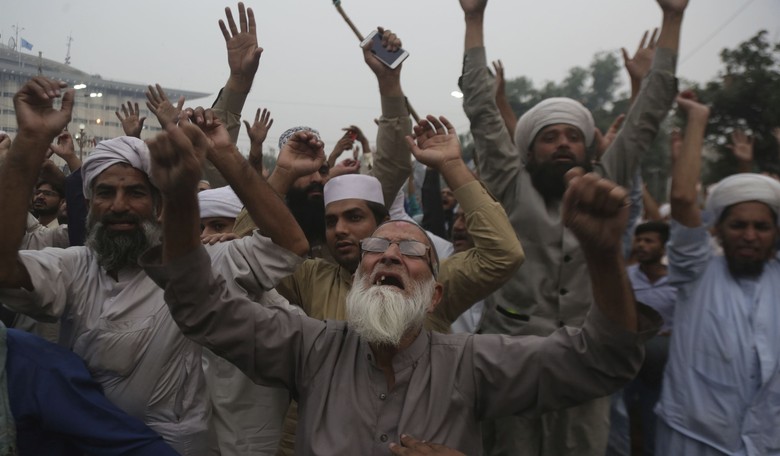
The Ayub brothers are not the only victims of Pakistan's blasphemy laws. Those accused of blasphemy often face mob violence, imprisonment, or the death sentence in the country.
Since blasphemy laws were enacted in the 1980s, thousands of Pakistanis have been accused of committing blasphemy against Islam. Angry Muslim mobs have killed many of them, hundreds are still serving long sentences in prison (including life imprisonment), and many have been issued death sentences.
According to the U.S. Commission on International Religious Freedom (USCIRF),
In Pakistan, blasphemy accusations, whether true or false, often lead to lengthy prison sentences on death row and solitary confinement, foment violence towards religious minorities, and in some cases, the killing of the accused. Many instances illustrate the use of blasphemy allegations to settle personal vendettas, leading to acts of violence before charges can be drafted or presented to a court. In many cases, there is no punishment for those who offer false accusations or perpetrate vigilante violence.
The Organization for Legal Aid (OLA), an American Center for Law and Justice (ACLJ) affiliate in Pakistan, represents the Ayub brothers.
In addition to the urgent submission the ACLJ recently filed with the Special Procedures with the United Nations Office of the High Commissioner for Human Rights, and briefing the office of the Special Rapporteur on extrajudicial, summary, or arbitrary executions, the ACLJ filed a review petition before the Supreme Court of Pakistan.
Under Article 188 of the Constitution of Pakistan, the Supreme Court has the power to review its own decisions. A larger judicial panel will now review Qaisar’s conviction.
Qaisar was convicted under Section 295-C of the Pakistan Penal Code, which punishes anyone who defiles the name of Muhammad, the prophet of Islam, through words, images, or “imputation, innuendo, or insinuation.” Introduced in 1986 under the military regime of General Zia-ul-Haq, the provision has allowed death as its only penalty since a 1990 Federal Sharia Court ruling.
Although Pakistani courts have handed down numerous death sentences under Section 295-C, the state has never actually executed anyone for blasphemy. However, this offers little comfort. Defendants often spend a decade or more on death row, and the case of Asia Bibi — a Christian woman whom the Supreme Court acquitted in 2018 after eight years under a death sentence — demonstrated that even an acquittal does not end the danger. Facing severe threats from Muslims, she was eventually forced to flee the country.
The organization Human Rights Without Frontiers (HRWF) notes,
In blasphemy cases, the real executioners are often mobs. Accusations have triggered lynchings and extrajudicial killings. Human rights organizations have long documented how these laws are used to settle private disputes, seize property, or intimidate religious minorities. Defense lawyers and judges who acquit the accused have also received threats.
The Aug. 16, 2023 attack on Christian communities in Jaranwala is a notable example of how blasphemy accusations can foment widespread violence towards religious minorities.
The attack in Jaranwala occurred after two Christians were accused of committing blasphemy by desecrating a Qur’an. Following the accusations, members of the Tehreek-i-Labbaik Pakistan (TLP) began making public announcements from mosques for Muslims to gather in Jaranwala.
A Muslim mob then burned at least 24 churches, and raided and damaged several chapels. They vandalized around 80 homes belonging to Christians, completely burning 30 to 40 of them. A Christian graveyard was also desecrated, with community leaders noting that violence lasted for ten hours without police intervention.
Mob violence against those accused of blasphemy remains widespread. Two days after the Supreme Court's decision regarding the Ayub brothers, blasphemy mobs were on the rampage again — this time in Narang Mandi, a town in the Sheikhupura district of Punjab.
On October 9, police registered a First Information Report at Narang Police Station against a Christian man, Kamran Gill Masih, following a complaint from a local Muslim resident Raees Ahmed. The complainant accused Masih of uploading and sharing a video on social media containing material offensive to Islam's prophet Muhammad and his family. Police arrested Masih.
His arrest did not satisfy some of the local population. A crowd set fire to the clinic where Masih practiced traditional medicine — a modest structure attached to his home that also housed a small pharmacy. Fearing further attacks, Christian families in the area abandoned their homes.
According to HRWF,
Read together, the two cases describe the predicament of Pakistan's Christians. In Narang Mandi, the accusation alone was enough to destroy a family's livelihood and empty a neighborhood before any judge had seen the video. The Ayub brothers, for their part, went through every stage of the judicial process over fifteen years, and the result for Qaisar is a death sentence resting on disputed digital evidence about a website he says he had abandoned. Pakistani authorities often present the courts as the protection the accused need against the street. Critics answer that judges also work in a climate where acquitting a blasphemy defendant may put their own safety at risk, and that the law itself—with its mandatory death penalty and vague wording—is the root of the problem.
The Ayub brothers' case dates back to 2011, when material deemed "blasphemous" was allegedly published on a website registered under Qaisar’s name. Qaisar has consistently maintained that he shut down the site in 2009 and that a third party later reactivated it without removing his name from the copyright notice. The brothers fled Pakistan in 2011 due to harassment, but returned in 2012.
While Qaisar and Amoon have long affirmed their innocence regarding the blog content that led to their prosecution, the question of authorship is fundamentally beside the point. Whether someone criticizes, questions, or even mocks any religious figure, expression should never be met with a prison cell or the gallows. True freedom of expression and genuine religious liberty must protect speech that others find deeply offensive.
What demands criminalization and punishment is not offending religious sensibilities, but the mob violence directed at those who dissent.
In Pakistan, however, those who commit mob violence too often escape justice or earn public praise. That lawlessness is hardly surprising when the state itself codifies intolerance by imposing capital punishment on anyone accused of blasphemy.