I've been writing over the last few weeks about the growing call for elections in Venezuela. Several factors have led to the increased pressure. The double earthquakes that devastated the country in June, for example, proved to the world that the Delcy Rodríguez regime is much like the Nicolás Maduro regime. State help was delayed, refused, and handled incompetently. If not for the other nations on the ground, the extremely high death toll would likely have been much higher.
The oil deal with the United States was another. Many people in both countries and on both sides of the political aisle do not like the idea of executing such a big contract with the Marxist anti-American woman who was Maduro's vice president up until January 3 of this year and who, if left in power, could do pretty much anything to ruin it.
The fact that hundreds of political prisoners remain behind bars despite being told they'd be freed in January continues to anger people. The fact that opposition leaders are still being detained does too. The fact that María Corina Machado is not even allowed to return to the country, news that broke this week, has really amplified the situation. The fact that there is currently a group of opposition leaders negotiating with the regime at a snail's pace makes the Venezuelan people feel as if this is all just for show.
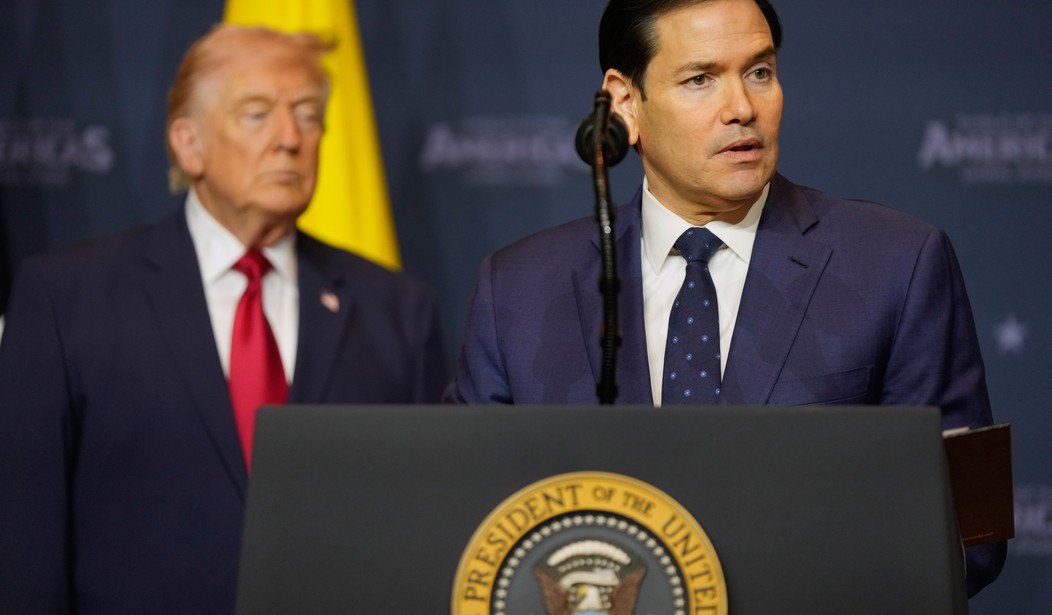
It's not. Donald Trump and Marco Rubio have promised that there will be elections when the timing is right. And I believe them. But it's time to stop being vague and set a date, or we're going to have a bigger problem on our hands.
Everyone knows voting can't happen right now. There is much to be done to create the environment where the country can hold free and fair elections. But a growing number of influential people are calling for those in control to, at least, set a date, something to work toward.
Sen. Bernie Moreno (R-Ohio) has suggested July 24, 2027, on multiple occasions. It's the country's original liberator's, Simón Bolívar, birthday, and it gives all parties involved 10 months to get their acts together. Several Republican and Democrat members of the House and Senate are backing him up, either agreeing with the date or backing up the idea of speeding up the process, as are Venezuelan opposition parties and leaders, including Machado, who would likely win a truly free and fair election.
This week, at the United Nations General Assembly (UNGA), something else is happening. Several leaders in the region are saying it's time to get things rolling as well.
Paraguay's president, Santiago Peña, who actually met with Delcy recently, clarified that he was not legitimizing her, and during his speech at the UNGA said he's pushing for elections in Venezuela and would like to see them in Cuba, Nicaragua, and Haiti too.
Javier Milei of Argentina ripped the UN for sheltering dictatorships like the ones in Cuba and Venezuela, and after his speech, told the press that Venezuela must become a democratic state and suggested that he knows the U.S. is managing that transition. Chile's new president, José Antonio Kast, also said that his country would support the transition to democracy, while Colombia's new vice president, José Manuel Restrepo, said, "We look forward to a swift, secure, and profound democratic transition in Venezuela" and promised that his country's new government would support it.
Ecuador’s Daniel Noboa, one of our greatest allies in the region, spoke to the press on Thursday and said, "There should be free elections and a date should already be set."
For what it's worth, Luiz Inácio Lula da Silva of Brazil, who will hopefully be out of office soon, also called for Venezuelan elections ASAP, but it was a bit more backhanded compared to the supportive calls from the aforementioned leaders. He hates Trump and Rubio and has been campaigning for his own reelection bid coming up next month by telling the good people of Brazil that the imperialists will come take their oil too.
"It's very severe, what the U.S. did to Venezuela. The sovereignty of the country has ended. This is not good... and it's not good for democracy either," Lula told CNN's Christiane Amanpour.
Meanwhile, Lula's arch-enemy, former Brazilian president Jair Bolsonaro, has come out in support of Moreno's proposed July 24, 2027 date.
Even Delcy herself, who spoke at the UNGA on Wednesday, said that "there will be elections in Venezuela." (Why do I feel like Rubio wrote her speech?) However, she wouldn't commit to a timeline either and later told the press, "The Venezuelan people, with their ancestral wisdom, will determine the right moment." Whatever that means.
Meanwhile, back home, her brother Jorge, who is head of Venezuela's sham National Assembly and leading negotiations on behalf of the regime, declared that the economy should come first and that the opposition should "say whatever you want now, but hurry up because your time is running out."
Axios reported this week that during their informal UNGA meeting, Trump told Delcy that elections "need to happen." He reportedly did not state a timeline either, but the current rumor mill says the administration is looking as far as mid to late 2028. The problem with that is that many around Delcy have supposedly made it clear that she's hoping Trump's successor, whoever it may be, will lose the U.S. presidential elections in 2028, and a Democrat will allow her to stay in place or be more lenient on the regime as Joe Biden was.
Rubio also spoke about the process on Wednesday, and while he had many things to say about it, this part stood out to me:
What we want to see is not only that you have free and fair elections but that you have an enduring republic. What would threaten an enduring republic in Venezuela would be that someone is elected and they inherit a complete catastrophe, economic and social, and then the whole project is endangered because now anything can happen. So, we want to do two things at the same time. We want to help them rebuild their economy – not perfect, but certainly to a level of stability that allows an elected government to succeed – and second is build back all the things necessary in order to truly have free and fair elections.
Personally, I get what he's saying, but isn't the whole point of an elected government to fix a nation's problems? There are things we must fix, yes. But we can't spend years fixing everything economic and social. And if we're going to continue to guide the process, it seems as if we'd want to work with allies, not adversaries, as we're doing now. Obviously, we would support that government, as would many other nations in the region, as it rebuilds and dismantles what's left of the last 30 years.
I don’t understand why the elected government can’t handle its own problems, presumably with some backing from the United States and other neighboring counties early on. That’s the point of an elected government. https://t.co/zYne5XdgIE
— SarahDownSouth (@SarahDownSouth) September 23, 2026
Finally, the pressure isn't just coming from world leaders and members of Congress. It's coming from inside Venezuela. In recent days, protests have reportedly ramped up, and polling suggests Venezuelans are increasingly unhappy with Delcy and what appears to them as legitimization by the Trump administration. Heck, I don't need polls — the ones I talk to are quite angry and frustrated.
Rubio talks a lot about how one thing they wanted to avoid was civil unrest — mass protests, mass migration, etc., but if a date isn't set soon, I have a feeling that is exactly what may happen.
BREAKING:
— Visegrád 24 (@visegrad24) September 25, 2026
Continued protests tonight in several cities in Venezuela.
People demand swift democratic elections, the return of Maria Corina Machado and an end to the decades of economic mismanagement. pic.twitter.com/vmtf16S1Wc
Protests are spreading in Venezuela.
— Visegrád 24 (@visegrad24) September 24, 2026
People demand swift democratic elections and that Maria Corina Machado is let back into the country
🇻🇪 pic.twitter.com/JdAPhF2W5t
BREAKING:
— Visegrád 24 (@visegrad24) September 24, 2026
Protests erupt in Venezuela after Maria Corina Machado’s attempt to the country was blocked.
People demand swift democratic elections
Via @EmmaRincon pic.twitter.com/ppk5ddeJ8e