I kind of feel bad for Marco Rubio.
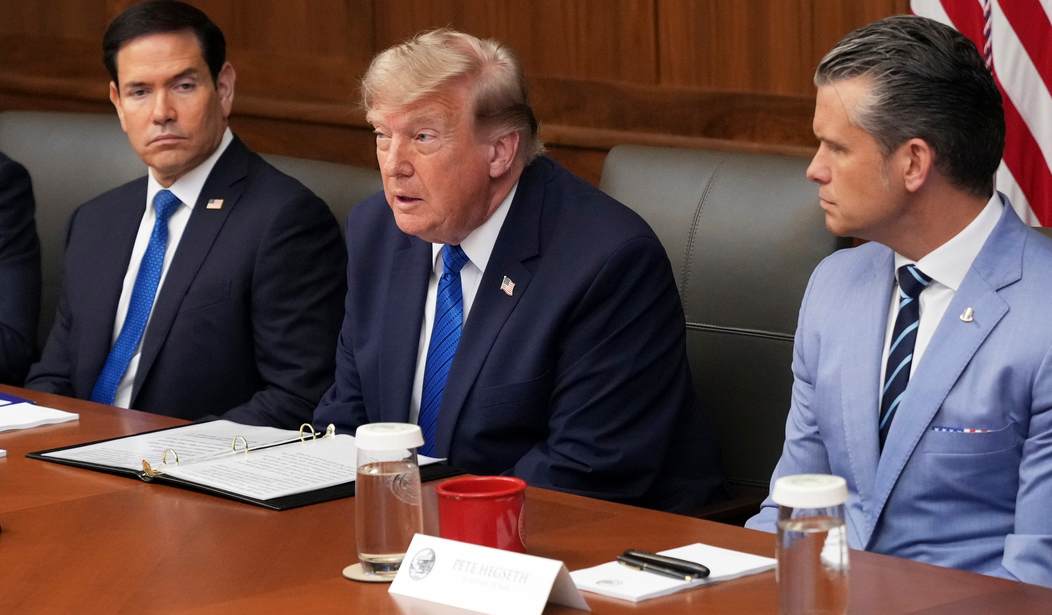
He's managing the Donald Trump administration's Venezuela project, and he's under a lot of pressure right now to hurry along the situation and speed up the process toward elections.
As I mentioned yesterday, the August 1 talks between the opposition and the regime were kind of a bust. What sounded like it would be both sides meeting in person turned out to be a phone call that resulted in the release of some vaguely worded statements.
To quote myself from yesterday (because that's what I do):
Of course, this is, hopefully, only the beginning of a process that will bring about real change. Most people realize you can't just hold elections tomorrow, but a big announcement, followed by a phone call that led to a proposed potential meeting about nonspecific topics, isn't all that reassuring, especially when that was all that happened across the span of two weeks.
Related: So, Is Venezuela on the Path to Elections Now? Depends on Who You Ask.
I'll admit that I've been a little hard on him too in my writing lately, or as hard as his number one fan can be. But as bad as I feel for him, I feel even worse for the Venezuelan people. They're still hurting. They still protest because they don't have jobs or receive living wages. They still lack food and medicine. They still deal with daily blackouts that are, I'm told, getting worse, partially because of the work to revive the energy sector. They still live under repression from a corrupt regime, and now, they've watched as thousands of their fellow countrymen died under rubble, thanks to decades of incompetent leadership, if you want to call it that.
They were the most hopeful people alive on January 3 when we took out Nicolás Maduro, but now they're losing that hope. Their faith in Rubio has waned. Politico reported that his favorability rating has dropped 15 points since February. They're losing patience. Over the weekend, a Venezuelan woman asked me to please not forget about them. The U.S. media talks about Trump, Rubio, oil, regimes, cartels, and politics, but it rarely shares the human side. That's one reason I do what I do.
And the human side of that country is desperate.
As it turns out, there are some prominent people here in the United States who are starting to see and feel it too, and they're speaking out.
On Monday, conservative commentator, author, and filmmaker Dinesh D’Souza interviewed Venezuelan opposition leader María Corina Machado. He came away from it calling for elections and saying some of the things many of us are thinking.
The US can keep the oil flowing indefinitely with a free, pro-American government in Venezuela. That is NOT the case now with this socialist regime that is merely trying to outlast Trump. It’s time to announce free elections and a transition to genuine constitutional democracy. pic.twitter.com/Eh06rEOX02
— Dinesh D'Souza (@DineshDSouza) August 4, 2026
If the Trump administration is fighting socialism and Communism here, why keep the socialists and Communists in power in Venezuela?
— Dinesh D'Souza (@DineshDSouza) August 4, 2026
Nobel laureate @MariaCorinaYA makes a telling point: https://t.co/XD1ya9Y9Zw pic.twitter.com/LyvXvPbV9m
Trump and Rubio have an historic opportunity to make Venezuela great again. It’s a big win for Venezuela, and for the US, to have a free, oil-rich, pro-American ally. No more propping up the socialist regime—it’s time to announce free elections.@realDonaldTrump @SecRubio https://t.co/Iri1ZmmxXJ
— Dinesh D'Souza (@DineshDSouza) August 4, 2026
Here's the entire interview if you'd like to watch. You will not find someone who can paint a better picture of the situation than Machado, and I'm glad he gave her the outlet.
MAKE VENEZUELA GREAT AGAIN
— Dinesh D'Souza (@DineshDSouza) August 3, 2026
The 2026 Nobel peace prize winner María Corina Machado joins me to discuss how Trump and the US can have a huge foreign policy success in Venezuela.
Also: Socialism has proven to be a disaster every place it’s been tried. Yet somehow it’s making a… pic.twitter.com/AsbSADEqFx
Following that interview, we learned on Tuesday that a bipartisan group of senators, led by Sen. Ted Cruz (R-Texas) and Jeanne Shaheen (D-N.H.), introduced a Senate resolution reaffirming U.S. support for free and fair elections in Venezuela.
Sens. Tim Kaine (D-Va.), Rick Scott (R-Fla.), Dick Durbin (D-Ill.), Adam Schiff (D-Calif.), and Jacky Rosen (D-Nev.) are cosponsors. These aren't your usual bedfellows.
The resolution calls for free, fair, and transparent elections in Venezuela to occur expeditiously; states that a legitimately elected government is vital to U.S. national security interests and would create the foundation for long-term partnership (security, counternarcotics, economic cooperation, etc.); calls for the release of political prisoners; notes that any serious harm to individuals involved in the democratic process would be unacceptable; and criticizes the Delcy Rodríguez interim government for failing to take meaningful steps toward elections or dismantling the repressive apparatus left over from Maduro.
What I found particularly interesting about the press release for the resolution is that both Cruz and Shaheen (who, for all of her faults, has been good on Venezuela) mention Machado as an essential part of the process. She has not been sidelined despite what some want to portray.
What I find most interesting - and reassuring - about this press release from @tedcruz and @SenatorShaheen on #Venezuela is that they both mention @MariaCorinaYA as an essential part of the process. She has not been sidelined, despite what bad actors want to portray.…
— SarahDownSouth (@SarahDownSouth) August 4, 2026
We'll see how this plays out, but the pressure is growing. I suspect we'll see more of it as time progresses.
A reporter asked Rubio about Venezuelan elections on Tuesday when he was with Paraguayan Foreign Minister Rubén Ramírez Lezcano at the signing of a Memorandum of Understanding for Strategic Civil Nuclear Cooperation. He replied that it has to happen, but it will require more patience, and that he now finds himself facilitating the political transition and the economic recovery at the same time. But many argue that the economic recovery would go faster if someone competent was seated at Miraflores Palace.
He did say the process will not take years, but months and weeks. Again, we'll see how it plays out. I'll leave you with his entire remarks:
It’s a process, and they have to have them. Obviously, there’s a lot of work that has to happen to lay the groundwork for an election. As I said, you have to have true freedom of the press. You have to have multiparty participation. You have to have national reconciliation. I mean, you have to have an electoral commission that will accurately count the votes. So it has to happen and it’s a work in progress, but again, it’s been about six months since Maduro was removed, and there’s a lot going on at the same time with economics and so forth.
So I think we’re moving on two tracks. We want to improve the daily lives – help improve the daily lives of Venezuelans economically so that they’re better off, they’re more prosperous. I think that helps as well facilitate the political transition. And you also have to have a process where every element of political society in Venezuela has a role to play, not just in constructing elections but constructing the government and future of the country.
So I think it’s going to require some persistence and a little bit of patience – not years, but certainly months and weeks. It’s going to take some time to get there. You’re dealing with a system that’s been in place now for almost three decades, so it’s not going to be from one day to the next. If you look at the transitions in Eastern Europe, after the fall of the Iron Curtain; if you look at Paraguay, a country that undertook a transition from authoritarianism to democracy, it took them almost three and a half years to complete that process.
These things are difficult. They don’t happen – I know we are all used to instant results or at least expectations of instant results, but if you want to do it right, what you want to have is a democratic transition that happens that brings society together, where there’s a national reconciliation, where you have political parties that are able to openly and freely participate, where you have an electoral count but you also have an economy and a country whose institutions are functioning so that they’re not inheriting a disaster, they’re not inheriting the reconstruction process, they’re inheriting a functional state.
So all of that is to say that these things don’t happen from one day to the next, but the needle is pointing in the right direction. And even though the progress is probably slower than all of us would want, there is progress and progress will happen, and we’re committed to it.