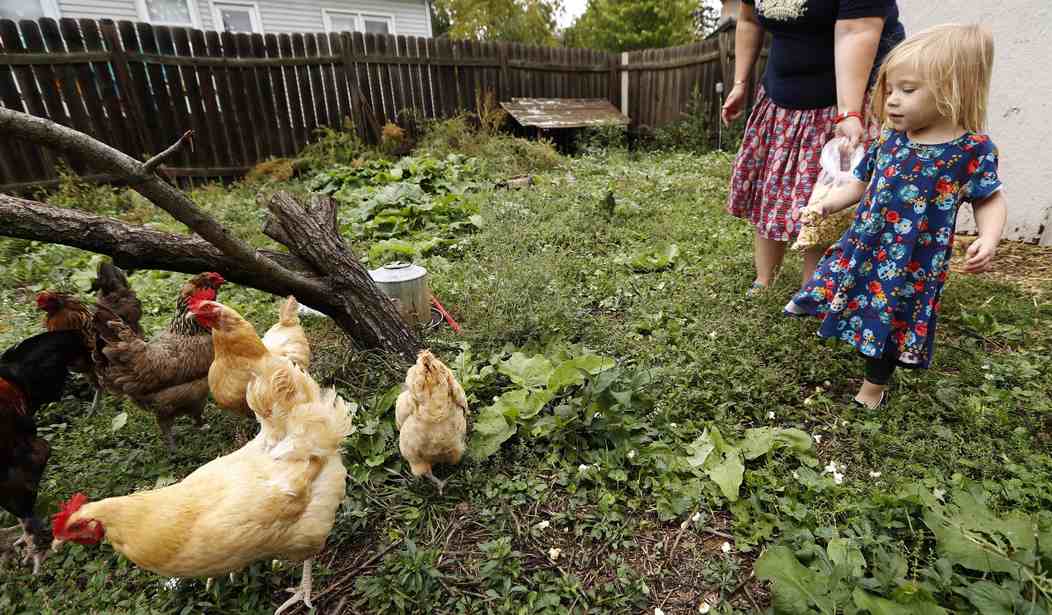

On Monday, I reported that JD and Usha Vance have apparently secured a chicken coop for their residence at the Naval Observatory. Apparently, the second family wants fresh eggs. The vice president has joked that his kids can go through something like 14 a day, and these two appear to be hands-on parents who enjoy teaching their children through experiences, which I think is amazing.
I also mentioned that this supports the Make America Healthy Again (MAHA) movement by encouraging people to eat nutrient-rich whole foods instead of processed junk food, getting them outside and keeping them active, and giving them more control over their lives and diets, among other things.
But should everyone run out and grab a few chickens to keep? While I think most people are probably capable, as someone who's been raising chickens at my house for over a decade, I wanted to go over some pros and cons based on my actual experience. And I do let my chickens free-range part of the time, so keep that in mind. Your mileage may vary.
Lets start with the good stuff.
1. Healthy, tasty food: Whether you simply want chickens to gather eggs or you plan to raise chickens to eat, you can't go wrong with doing it yourself. I can't speak to the meat aspect, but I can tell you that the flavor of the eggs you get from a chicken that is allowed to roam and eat grass, bugs, plants, and even small reptiles and rodents is unbeatable. And they do eat all those things, no matter what the Perdue chicken commercials try to sell you about a "vegetarian diet."
2. Self-reliance: Contrary to popular belief, raising chickens probably isn't going to save you a ton of money, at least not initially. But there is something comforting about knowing that you can feed yourself without a third party involved. Back during COVID, for example, when a lot of people were worried about grocery stores running out of food, I knew that I was in good shape if we got to that point.
3. It's fun and educational: As I've mentioned before, put me outside in a chair watching my chickens every night. It's 100 times better than anything on TV. And if I had children, I'd totally make chicken care a part of their lives, too. I've learned so much about life, death, nature, biology, the food cycle, etc. from those little birds.
4. They can be an essential part of a regenerative systems: If you're into regenerative farming or simply creating natural ecological patterns in your yard or gardens, chickens can be a big part of that. Their manure is high in nitrogen and can help fertilize plants. When allowed to forage, they till up your topsoil and remove pests. You can also integrate them in with other livestock.
5. They help reduce waste: I'm a big fan of composting, but I don't currently have a system set up. So, the chickens often get my table scraps, especially produce. I also hate to throw food away, but I'm bad about over-buying produce, so if I know something is about to go bad that I'm not going to eat, the chickens get it. I'll even cook up their eggs that are nearing the end of the life cycle and feed them back to them. I know, many of you are probably grossed out by this idea, but it's really actually good for them.
Now for the caveat. I won't say all of these are cons necessarily, but they are things to think about before rushing out to the feed store to buy some baby chicks.
1. The initial costs are high: Chickens need a secure place to sleep at night. I'm not a fan of these prefab coops you can buy at places like Tractor Supply unless you do some major reinforcing. I actually kept a rooster in one once, drilled down the doors, and surrounded it with cement blocks, and a raccoon still managed to get in and kill him. I felt terrible — it was meant to be a temporary set-up, and I thought I was keeping him very safe. My current little flock sleeps in a 10x16 building that cost me $4,000 plus, and while you don't need to go that far, you are going to have to spend some time and money on security.
2. You will deal with predators and pests: My current chickens spend part of their day roaming free and part of it in a large pen that's next to their $4,000 chicken mansion. When I first got them, I made the decision that I'd rather them be happy than cooped up in some tiny pen for their entire lives. That means you may lose some to predators, and I have. I've had hawks, raccoons, and a fox take some out over the years. I also lost one to a snake that got into the coop, and last year, a neighbor's dog got loose, and after 15 or 20 minutes of chasing him away from my girls, he finally managed to catch one — my favorite one — and took two huge bites out of her back, killing her on the spot. That was devastating. And sometimes, like in the incident I mentioned above with my little rooster, no matter how hard you try or how predator-proof you think your enclosure is, something will get in. Not to mention that mice and rats will find your chicken's home quite appealing. I have found this part of it to be a big learning process.
3. They do require some effort and responsibility: Chickens are pretty low-maintenance. If you have a decent setup, you just need to ensure they have food and water and are let out each day and locked up at night, but that's still time out of your day. As a matter of fact, yesterday, I woke up in the middle of the night and remembered I'd forgotten to refresh their water the night before (it'd been storming when I locked them up and I was in a hurry), and I felt awful. I knew they'd probably be fine until I was able to get out there that next morning (they still had some day-old water, just not fresh water), but I fell back asleep and had a stress dream that their legs had fallen off. But at the same time, there have been times in my life, like after my mom died, when taking care of these animals of mine has kept me going. And it forces you to take a break from your desk or computer or whatever it is you do, or so it does in my case, and go outside, even when you don't want to. On the other hand, there are days that the weather is nasty and I just want to stay inside. Or weeks when I'm traveling and I have to plan for their care like I'm leaving a small child behind.
4. They will have health issues: I've lost more chickens to health issues than predators, but those must be dealt with too. Bumblefoot. Water belly. Egg bound. Mites. Worms. Sour crop. Marek's. Coccidiosis. Frost bite or heat exhaustion, depending on where you live. The first time I had a sick chicken, I rushed her off to the vet and paid him $250, all while he joked that the Tractor Supply across the street had baby chicks and she was easily replaced. That was 10 years ago. That's not something I do today. I've developed an arsenal of veterinary skills myself and even successfully performed surgery on one chicken a few summers ago. I keep supplies on hand for various conditions. When one falls ill, I go through the list and try to treat her as best I can. Sometimes that simply means a night in the house in a dog crate where she can rest and be pampered and return to the flock the next day. Sometimes that dog crate turns into chicken hospice when all possibilities have been exhausted. You just never know.
5. They may not fit your lifestyle: If you live in an HOA or even a municipality that bans backyard chickens, that's going to be an issue. If you want your lawn, porch, driveway, and sidewalks to remain pristine, you'll only be able to do that if you keep your chickens locked up. They go to the bathroom on everything. They'll dig in your gardens and eat the sunflower seeds you just planted or eat those low-hanging cucumbers and tomatoes off the plants. They'll dust bathe in your raised beds and flower pots. This is not an issue for me — I live pretty wild and free out here far away from HOAs and will most likely do so for the rest of my life. I've learned to work with nature, not against it, and that includes chicken destruction, but that's not for everyone.