
I'll admit that I'm a bit of a snob when it comes to books. For example, I don't do digital books or eBooks. I understand that they're convenient, and for some people they're lifesavers — I'm not knocking them.
They're just not for me. I need to feel the weight of the book in my hands when I read it and smell the pages as I turn them. Plus, I think I still own nearly every book I've had since birth, and I enjoy surrounding myself with them and displaying them around my home. Putting Kindles on a shelf would just make my house look like a Best Buy.
I also love going to other people's houses and seeing their books displayed. I think it says a lot about who you are. Extra points if your books are obviously well-loved and you aren't trying to match them to your throw pillows. (Have you seen these people who display books with the spines facing the insides of the shelves? Yuck.)
But what I think scares me more than digitized books are books that weren't even written by humans.
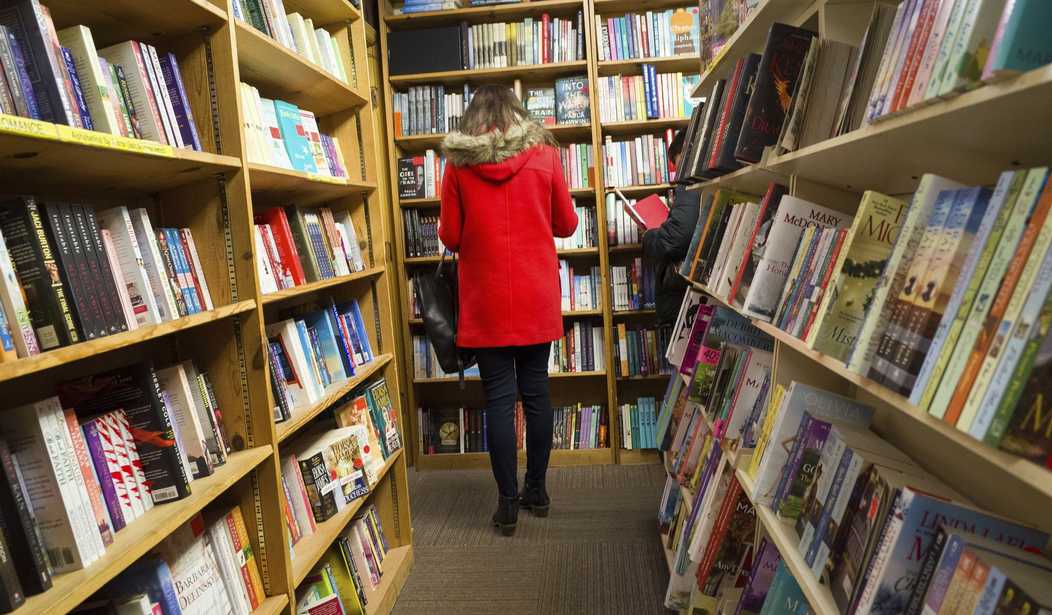
When I see a shelf full of books, I'm not just looking at paper and type. I see a mix of human authors with unique ideas, experiences, personalities, emotions, obsessions, and stories to tell.
That's why there are so many good books. Every single writer brings something different to the world of literature. Even in fiction, it's impossible for an author to put something down on the page that doesn't represent a little bit of who they are. It's been that way for centuries.
AI-generated books, which are apparently "flooding the market" lately, lack all of that. They simply follow patterns, which leads to uniform and unoriginal content that may or may not break copyright laws. They're low-quality and, quite frankly, morally questionable. I've been a professional writer for over 15 years now, and the idea of putting my name on something I didn't actually write almost makes me break out in hives. I question the integrity and ethics of anyone who could and would do such a thing.
Apparently, I'm not alone. According to a recent survey, 95.1% of library workers view "AI-generated books, including fraudulent or low-quality content, flooding major retail platforms" as a major problem, along with 82.5% of those who work in publishing. The fact that it's not 100% concerns me, but I digress.
A quick Google search tells me that AI-generated books, including some "scammy rewrites" of bestsellers, have been popping up on Amazon for years. And recently, James Daunt, the CEO of Barnes & Noble, has created quite a ruckus because he said last week that "I have actually no problem selling any book, as long as it doesn’t masquerade or pretend to be something that it isn’t. So, as long as an AI-written book says it’s an AI-written book, then we will stock them."
Daunt made those remarks during an appearance on The Today Show, and the day after, thousands of people called for a boycott against the bookstore chain, including some prominent writers and authors.
He then backtracked a bit, saying his words were taken out of context and that the situation was much more nuanced. He also compared it to... book banning. Seriously.
This is from the Los Angeles Times:
In an emailed statement, he said the bookseller does not sell AI books, 'as far as we are aware.' Barnes & Noble 'demand[s] that publishers label any books that are AI generated,' and the chain takes 'active measures to exclude all AI generated books.'
Daunt further stated that Barnes & Noble 'will sell AI generated books if there is clear demand' and not 'ban reputable books published by reputable publishers, even if AI generated, should these be published, labeled and there be clear evidence of customer demand.'
He also said that the retailer thinks it’s 'very unlikely' that there will be customer demand for AI-generated books or that reputable publishers will publish them.
'The argument is nuanced, and perhaps over nuanced, but there are important principles that have to be balanced and I believe we do so as sensibly and thoughtfully as is possible,' he said. 'Book banning is a clear and present danger, so we are very careful with demands to ban any books' while also remaining vigilant 'not to sell AI generated books that masquerade to be by real authors.'
Sir, please. This is not book banning. It's nothing like book banning. It's more like a hospital looking for doctors and choosing to only hire those who have actual medical training instead of novices or fraudsters. Or it's like a butcher selling steak and suddenly decided to add some disgusting fake chemical concoction to his storefront and pretending it's meat.
While Amazon and Barnes & Noble might not be safe, something I've learned recently is that many smaller, independent booksellers have pledged never to sell AI-generated work. I actually just ran across a post on social media where Savannah, Ga.'s E Shaver Booksellers says it is becoming more and more difficult to determine who uses AI to write, but that they will never knowingly stock AI-generated books. Good for them.
That post prompted me to search for others, and, as it turns out, from Washington state to Florida, most smaller booksellers feel pretty strongly about this across the board. That's reassuring. I've always been a firm believer in supporting these small, independent bookstores. My local one here in Georgia literally helped make me who I am today. But now that I know they're taking this stand, I'm going to go out of my way to support them even more.
I'd rather live in a world that is filled with stories that are flawed, messy, and chaotic than one filled with inauthenticity.