Governments are not dependable, and some less so than others. States fail. Courts and justice systems break down. Leaders become corrupt beyond repair. Their citizens bear the brunt of it.
The only way many people typically survive this type of failure is through something more reliable and something that's been around much longer than any government, something that will never go away.
More specifically, when institutions break down, mothers are often the ones left to pick up the pieces.
In my coverage of Venezuela in recent months, especially when learning and writing about the political prisoners, I always find myself coming back to one theme: mothers who will do anything for their sons and daughters.
It's something that draws me personally to Latin American culture. When I'm in Costa Rica, I see a reverence for family, respect for elders, and a love for children that seems to have grown cold here in parts of the United States in recent years. Even if you're not related by blood, the mothers in these countries will take you in and feed you, comfort you, and see to it that you're loved as if you are one of their own.
With that in mind, what I see in Venezuela doesn't surprise me, but the strength and fortitude of Venezuelan mothers seems particularly tough, even when they've been forced to carry more than any parent ever should.
There's Maykelis Borges Ortuño, a 26-year-old woman who was disappeared in January 2025, because her boyfriend was someone targeted by the regime. They were hoping to use her as a hostage. At the time, Maykelis was two months pregnant. She has since given birth in prison and remains there with her infant son in the most horrific conditions. Many call her baby the country's youngest political prisoner today. Somehow, she's keeping him alive.
Then there's Yarelis Salas. When the 39-year-old heard that the regime was releasing political prisoners, she set up camp outside Tocorón prison, waiting to see her young son again after months of not knowing exactly what had happened to him. She held vigils and supported the other families gathered. Her son, Kevin Orozco, was released about six days ago, but Yarelis wasn't there. It was all too much. She'd had a heart attack and died three days prior.
Ramón Centeno was a journalist targeted by the regime. He'd been detained for four years for merely having a voice. His mother, Omaira Navas, spent those years searching for him and searching for answers. When he was finally released this month, he came out in a wheelchair, too weak to walk due to the poor conditions and inadequate care he received while detained. Unlike Yarelis, she got to her hug her son one more time, but shortly after, she had a stroke and died. The stress took her anyway.
Here's their picture:
Expresamos nuestras más sinceras condolencias por el fallecimiento de Omaira Navas, madre de Ramón Centeno, ocurrida la mañana de este martes tras el ACV que sufrió el día de ayer.
— Justicia, Encuentro y Perdón (@JEPvzla) January 27, 2026
La señora Navas vivió durante años el dolor de la detención arbitraria de su hijo, enfrentando la… pic.twitter.com/3ACAsnkQmL
I follow a lot of opposition and aligned accounts on X and Instagram, and every night when I scroll through them, looking for potential story ideas for the next day, I'm struck by the endurance of these women who just want to see their sons and daughters again and make sure they're okay. They sleep on the sidewalks, they stand up to the police and military, they sing, they hold each other, they light candles, they tell stories, and they pray.
They've been out there since January 8 when the regime said it would release the political prisoners. As of January 30, 310 have been released. Hundreds more remain detained. I have no doubt that their mothers will continue to wait until everyone's child is free.
But this sacrifice and selflessness extends beyond the mothers of political prisoners. Alnilys Chirino is the 51-year-old mother of four, including three teenagers with big appetites. Every penny she earns goes to food, but there is never enough to eat. She makes sure her children eat first. She makes sure other children eat first. On Sundays, their church has a soup kitchen, and she refuses to take a bite until all 70 or so kids who attend have had something.
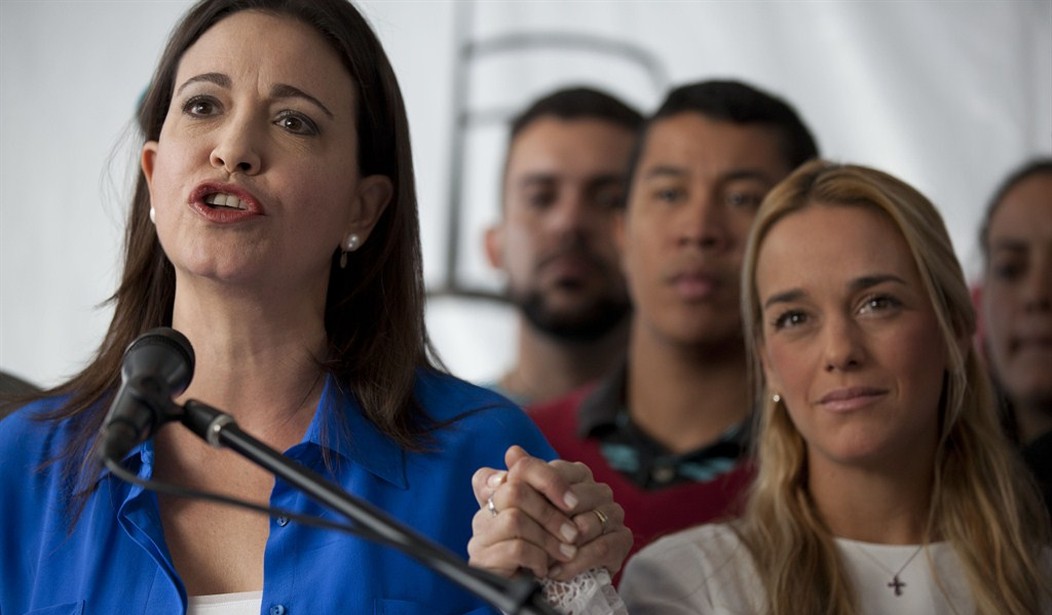
And then there's María Corina Machado herself, the woman who many call the mother of all of Venezuela because she's the one who wasn't afraid to look Hugo Chávez or Nicolás Maduro in the face and tell the truth. She's the one who brought together an opposition so powerful that it almost brought down the regime. She's the one who currently sits in Washington, D.C., advocating for her country to the most powerful men in the world. All of this has cost her so much, including being separated from her own children for a long time because it wasn't safe for them to be by her side or even in the same country.
The mothers of Venezuela didn't ask to be here. Most of them never set out for us to know their names. They simply wanted to hold their families together and watch their children grow up into healthy, happy individuals. Their government failed them, turning them into activists and examples, and forcing them to sacrifice, demand accountability, and preserve the memories of the people the regime tried to bury.
What comes next in Venezuela remains to be seen, but I know one thing. The history books that recount these days must not forget the mothers.