
Screentime is ruining our children. "No kidding," you're probably thinking. I know I've written about it. Many of you have agreed when I do. It's something most of us probably know in the backs of our minds, whether we have young children or grandchildren or not.
And, as it turns out, it may be worse than we thought.
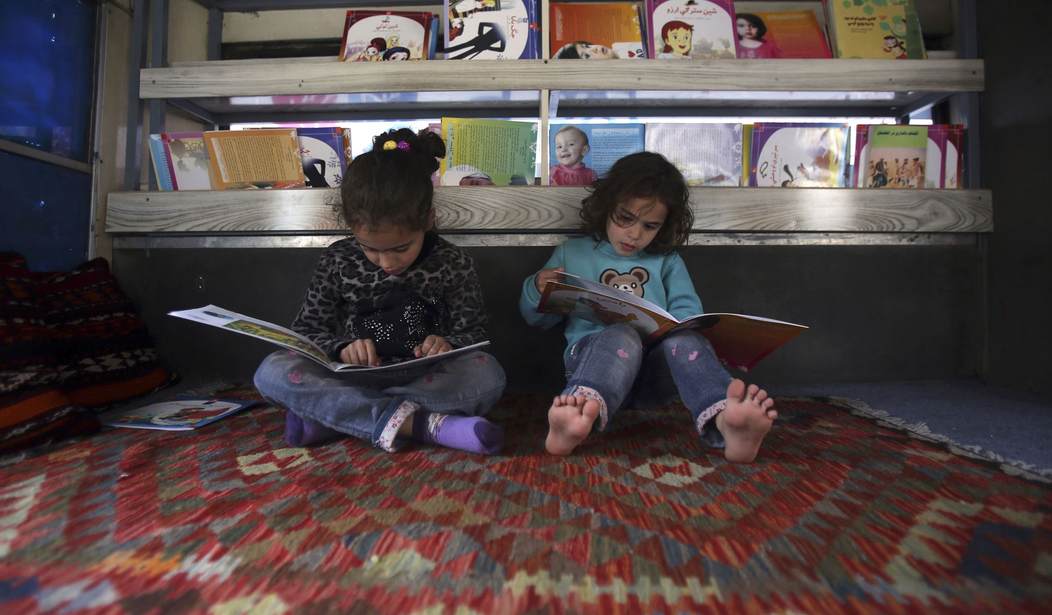
This survey I discovered is out of the United Kingdom, but I imagine it translates to the United States and much of the rest of the Western world. It suggests that about one-third of all four and five-year-olds who are just starting school do not know how to use a book.
It's not that the kids don't like to read or get bored with reading or anything of that nature. It's that actual physical reading material is not something they can comprehend how to operate. Many teachers who participated said that the kids would even tap or try to swipe at the cover and/or pages as if they were operating a smartphone or tablet.
I was floored when I read that.
For what it's worth, the survey went beyond books, suggesting that many kids aren't even independent enough to start school in general, as they lacked basic life skills. Up to 36% of kids weren't fully toilet-trained, and 28% couldn't eat and drink without assistance.
When teachers were asked why they think this is, well over half said that parents spend too much time with their faces glued to their own screens to actually parent.
As someone who grew up with two parents who read and encouraged me to read every chance they got, I've had a had time wrapping my head around this. I do not have children, but if I ever do, sharing that love of books with them would be one of the greatest joys to me — reading stories together, going to the bookstore, visiting the library, filling their shelves with more books than they could possibly read.
I was looking for some information more specific to the United States, and I actually ran across a fairly recent article from the New York Times that paints a grim picture for older children as well. Parents may not be teaching their kids to love books and stories, but don't count on schools to do much better. It suggests that high school English teachers are assigning classes only one or two whole books to read each year, if that.
Twelfth-grade reading scores are at historic lows, and college professors, even at elite schools, are increasingly reporting difficulties in getting students to engage with lengthy or complex texts.
Perhaps that is to be expected in the era of TikTok and A.I. Some education experts believe that in the near future, even the most sophisticated stories and knowledge will be imparted mainly through audio and video, the forms that are dominating in the era of mobile, streaming media.
Knowing this, the Times asked students, teachers, and parents to share their thoughts and experiences. As it turns out, rather than assigning kids entire books to read, many curriculum programs only have students read or even listen to short excerpts from books and audio books. Some even show movies.
One educator said his colleagues don't assign books because they know students won't read them. Others blamed the Barack Obama administration's Common Core — don't get me started on that. Overall, parents and students seemed largely unhappy with the lack of reading assignments. Some even dropped out of classes due to them.
I've written about this, but a few years ago, I returned to the University of Georgia to take some classes. While I wasn't taking English classes, I was shocked that some professors would assign us excerpts of books and articles to read rather than the entire thing. I did have two classes that assigned whole books and had us write papers on them, and when I reflect back on that period, those were actually my favorite assignments. One was a class on landscapes in literature and culture, so that made sense, but the other was actually an entomology class. We read Silent Spring by Rachel Carlson, which I loved, but I digress.
Related: Come Sit on the Porch: Where to Start With Southern Fiction
All hope isn't lost for this generation of children. More research pointed me in the direction of ways schools, libraries, and bookstores are trying to reverse this decline. Some have programs that allow kids to read to dogs and other animals. Some schools are rolling out vending machines, where, instead of snacks and sugary drinks, kids can buy books. A book store owner in Chicago who holds regular book fairs founded a nonprofit that allows people to make donations so that any kid who attends can leave with a stack of books, even if they can't afford to pay for them.
All of this is wonderful, and I love to see it, but at the end of the day, these places can only do so much. If more parents aren't encouraging their child to choose books over screens at home even some of the time, the future looks grim.