
For many people, New Year's Day is the perfect time to start a healthier diet, whether you're feeling guilty about all the junk food you consumed throughout the holiday season, attempting to lose weight for the 838th time, or simply wanting to be healthier overall.
In the South, as we do, New Year's Day is all about food, but we're not so much worried about calories — we're worried about superstitions and bad luck. We tend to be a God-fearing group of people, but we still like to give the Lord a little extra help just in case.
For as long as I can remember, my mom insisted on cooking and forcing me to eat black-eyed peas and collard greens every January 1. When I was younger, I wasn't a big fan of these foods, but she'd insist I eat at least a bite. As I got older, I acquired a taste for them, and when my mom died a few years ago, I tried making them myself, but last year I opted out, thinking it was pointless. I regret that decision now.
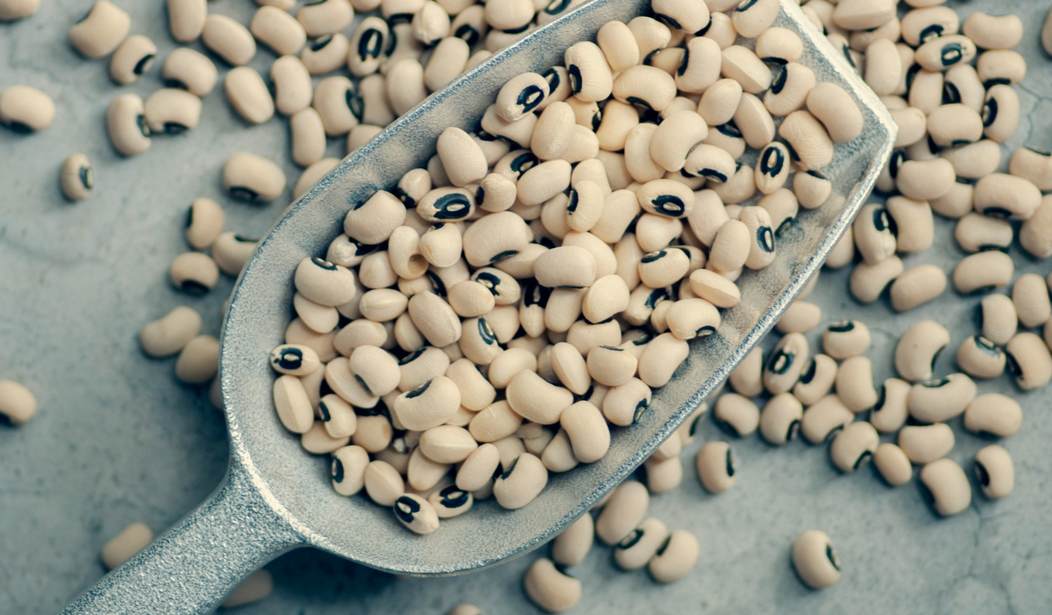
You see, eating black-eyed peas on New Year's Day is supposed to bring you good luck. Eating collard greens is supposed to bring you money, though some say it's all about cash — the peas represent coins and the greens symbolize dollars.
I have to confess that I didn't know this was a Southern tradition until the last decade or so. I thought everyone did it, though I just learned that many Jewish people eat black-eyed peas as a part of Rosh Hashanah, the Jewish New Year.
There are two potential origins of the superstition. One relates back to the Civil War. When the Yankees ravaged Southern farms looking for food, they supposedly skipped over the black-eyed peas, calling it "livestock feed." Because of this, the peas became a "critical food source" for Southerners in a time of desperation. Over the years, it became a symbol of resiliency and survival.
The other suggests that on January 1, 1863, slaves ate black-eyed peas to celebrate their freedom when the Emancipation Proclamation went into effect.
Both are possible and probably true to some extent. Many farmers feed field peas to their cattle and apparently they were seen as "throwaway food" for slaves, as well. Either way, black-eye peas originated in West Africa, and they were brought here through the slave trade.
Collard greens originated in the Eastern Mediterranean area of Europe, though the way we eat them here in the South can be traced back to that "throwaway food" given to the slaves centuries ago: "The slaves of the plantations were given the leftover food from the plantation kitchen. Some of this food consisted of the tops of turnips and other greens. Ham hocks and pig’s feet were also given to the slaves. Forced to create meals from these leftovers, they created the famous southern greens."
Making either dish these days without pork involved is a true Southern crime.
The idea that the collard greens are good luck or will lead to prosperity reportedly comes from the color, obviously, as well as the fact that like most leafy green vegetables, like collards, are hardy and will usually grow during the winter here in the South, so people were grateful to always have access to fresh food.
To round out this delicious meal of edible lucky charms we typically have pork and cornbread. Some people now say the cornbread represents gold — I've never actually heard that beyond the internet myself. I always just assumed my mom made it because it complimented the peas and greens. As for pork, well, my mom refused to eat pork, so we usually had fried chicken. No complaints out of me about that, but this year, I do have a ham for my dad and me.
As I said, I think 2025 is the first year in my lifetime that I skipped these traditions handed down by my ancestors, and I won't make that mistake twice. A few nights ago, I was thinking of making an Instagram reel featuring my "best of 2025" as I did last year, but when I was looking for pictures to add, I actually had to laugh at the absurdity of it all. The year could have been much, much worse, but it was almost like a sitcom. I got knocked down hard, worked even harder to get back up, and then something else would come and knock me down again right after. Little of it was my fault; it was truly a series of unfortunate events.
This month of December is the first time since this past January that I've managed to stay upright. And while I know deep down that what I eat on Thursday probably doesn't have a lot to do with that, I'm not taking any chances. I'm having the collard greens, the black-eyed peas, the corn bread, and the pork. I'll probably even have seconds.
Do you eat something special on New Year's Day? Let me know in the comments.