
"The artificial intelligence boom has pushed semiconductors past oil and gas in global export value for the first time, according to a Deutsche Bank analysis of International Trade Center data," reports CNBC.
Let that sink in for a moment. When the U.S. ended the dollar’s convertibility into gold in 1971, the dollar rapidly devalued. Because global oil was priced in dollars, oil-producing nations saw their real purchasing power plummet overnight. In response to currency devaluation and war in the Middle East, OPEC embargoed exports and unilaterally quadrupled oil prices from roughly $3 to nearly $12 a barrel (and later over $35 after the 1979 Iranian Revolution). Overnight, petroleum became the single most valuable commodity in international trade.
The U.S. signed trade agreements with OPEC members that kept the international price of oil in dollars. This assured U.S. primacy in the international economy and our position as an economic superpower.
Today, our economic primacy is assured by our dominance in the semiconductor chip market. No one builds them better. And the top chipmaker in the world is Nvidia, the leading producer of advanced chips that are powering the AI boom.
“For decades we’ve talked about the petrodollar. Perhaps increasingly we need to think about the chip dollar,” Jim Reid, global head of macro and thematic research at Deutsche Bank wrote in a report this month.
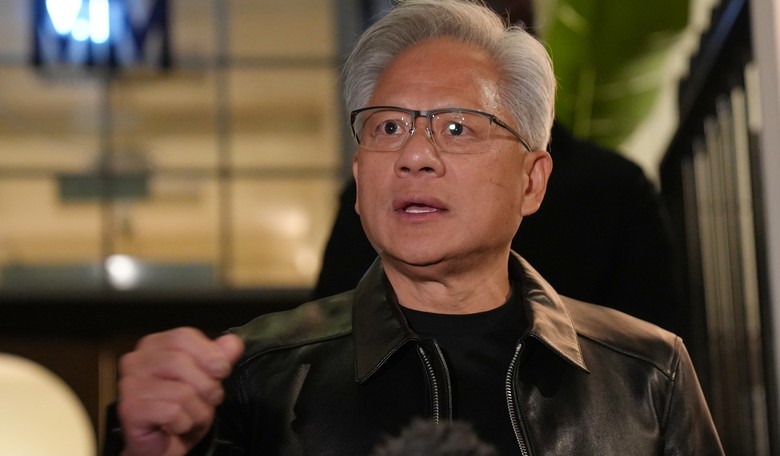
In effect, Nvidia was "too big to fail." Donald Trump's "suggestion" that Nvidia reinstate CEO Jensen Huang following a Chinese spy scandal had nothing to do with Trump's personal stake in Nvidia; it was about the bottom falling out of the AI boom and taking the rest of the stock market with it.
"Given its central role in an AI bubble that seemed to be bursting, Nvidia had to be rescued," writes Project Syndicate. "It has been driving the AI buildout—and US economic growth—by lending to data-center developers that then buy its chips."
Semiconductor exports overtook oil and gas for the first time during the January-March quarter of 2026, reaching about $1.61 trillion, compared with $1.53 trillion for oil and gas, the report said, using four-quarter rolling totals.
The gap widened in the second quarter, when semiconductor exports totaled about $1.60 trillion and oil and gas exports reached about $1.47 trillion. Disruptions to oil supplies through the Strait of Hormuz after the Iran war helped widen the gap. Daily oil flows through the Strait collapsed nearly 77%, to 4.9 million barrels in the second quarter of 2026 from 21.6 million barrels in the fourth quarter of 2025, according to the U.S. Energy Information Administration.
"Yet the demand for semiconductors has proven insatiable in the face of soaring data center construction, boosting global trade in the increasingly scarce AI component," reports CNBC. "Hundreds of billions of dollars of orders for graphics processing units and data centers aim at providing AI computing power, Rothschild & Co. Redburn wrote in a report last Thursday."
“Compute will be the new commodity fueling this transformation on a global scale,” Rothschild analyst Cara Thomson said.
As AI chip demand grows, the economic dominance of the U.S. will not only be assured, but it will alter our relationship with China. The other major AI chipmaker, TSMC (Taiwan Semiconductor Manufacturing Company), is not keen on giving Beijing any AI advantage by selling it advanced chips. China will have to restrain itself in its competition with the U.S. if it wants to keep its own AI industry from floundering.
The shift toward chips has macroeconomic implications just as the explosion in oil trade did in the 1970s.
Oil-exporting countries historically recycled much of their surpluses into the purchase of U.S. Treasuries and other bonds, helping finance U.S. deficits and underpin demand for other government debt.
Reid at Deutsche Bank said that since semiconductor-surplus countries in Asia are more closely tied to U.S. tech companies, some chip-export earnings could flow back into U.S. technology stocks, startups and data centers, further helping to finance the AI investment cycle.
Concerns about an "AI bubble" popping miss the reality on the ground: The physical buildout of American compute is already too massive, and too vital, to unwind. Just as oil dictated geopolitics in the 20th century, advanced semiconductors will define the 21st. Maintaining that edge isn't merely good for Wall Street; it is the cornerstone of U.S. national security.
Exclusively for our VIPs: SpaceX Gets Approval to Launch 1 Million Data Center Satellites Into Orbit