
I like being a political writer most of the time. Then there are days when I have to really dig to find something to write about. On those days, I thank the Lord for polls.
Polls are the horse race aspect of politics. In fact, as Theodore H. White pointed out in his book, The Making of the President 1960, "political reporting" is a fairly recent phenomenon. Politics was a different animal until post-war America. Before the war, the day-to-day political battles held little interest for the American people. All people were really interested in was who was winning (or on top) and who was losing. That's why most early political reporters got their start as sports reporters.
For example, Ring Lardner was best known as a legendary short-story writer and satirist. He began his career as a sports columnist for papers like the Chicago Examiner and the Chicago Tribune. His eye for people's foibles and sharp witticisms eventually led him into broader literary and cultural commentary. And Heywood Broun was a fierce champion of social justice and a founder of the American Newspaper Guild. He began his career at the New York Morning Telegraph covering baseball and sports before becoming one of the era's most prominent political and literary columnists.
Polls are irresistible. Any writer who can't clip 500 words from a poll needs to sit in a corner or go back to school.
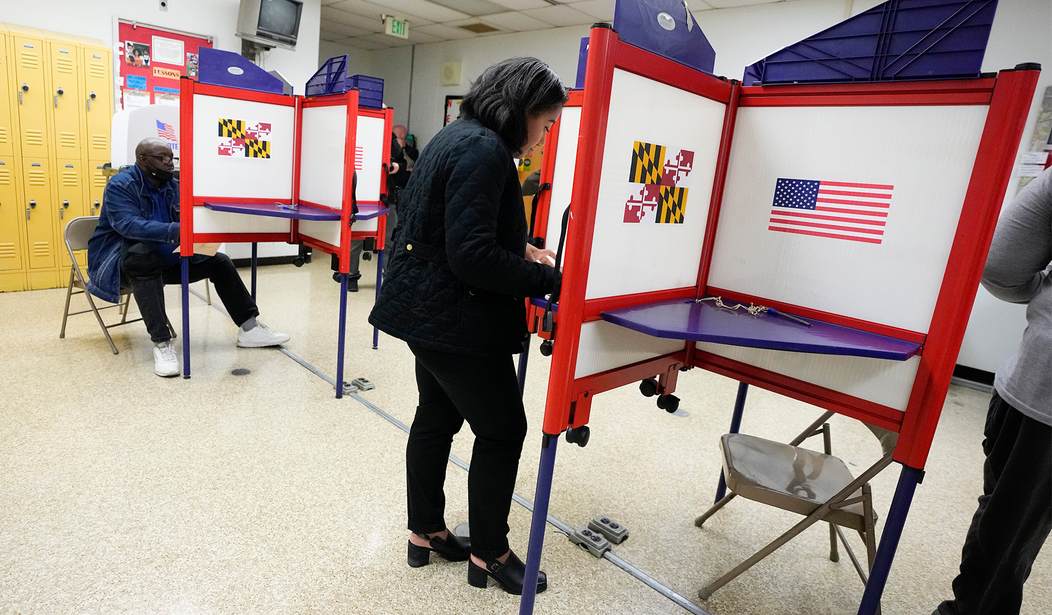
A close cousin of polls is the results of early voting. This is a recent entry in the contest for "useless information." RealClearPolitics Senior Elections Analyst Sean Trende points out a dozen reasons why trying to glean much useful information from early voting results is difficult.
Election results can be thought of as a sort of formula. You take a party’s share of the early vote and multiply it by the number of votes cast before Election Day, and then add the product of the party’s share of the Election Day vote and the number of votes cast on Election Day. This gives you the party’s overall vote total. So if you know these four quantities (number of early votes, number of Election Day votes, Party A’s share of early votes, Party A’s share of Election Day votes), you can figure out the election result.
Here’s the rub: Early voting gives us only one of those quantities, and only after early voting wraps up. All we really know is the number of early votes at a given point in time. Now we can use demographics and past precinct results to estimate the voting patterns of individuals who have returned ballots or who are identified as having voted early, but these are estimates. Worse, we know relatively little about the composition of the Election Day electorate.
Releasing results of early voting piecemeal is something akin to a push poll. The practice is not designed to inform the public as much as it is designed to cheer some partisans while depressing others. The goal is to excite your voters to go to the polls either before the election or on election day while sending your opponents to the corner tap to drown their sorrows.
Related: AI Deepfake Ads Are Flooding the Campaign Airwaves. Is This a Problem?
Trende points out that there isn't much history to base early voter projections on, and changing party strategy can negate statistics from previous election cycles.
The upshot is that we lack a straightforward, stable baseline for cross-race comparisons. We see this in some online debates. You can compare early vote return rates to the rates at a similar point in 2022, but you’ll miss the shift in Republican strategy that occurred in 2024 (assuming that strategy carries over to this year). You can use 2024 as a baseline, but that requires comparing presidential years to midterm years, and 2024 could have been a one-off aberration in GOP voting patterns, with mean reversion this year.
On top of all of this, even if we somehow get the turnout rates right, we still don’t really know how these voters are going to vote. We can generate estimates based on poll data, demographics, and precinct characteristics, but we start piling inference upon inference to get our final estimate.
If you pile "inference upon inference" or, more prosaically, guess upon guess, you tend to get further and further from an answer. It's why Trende and many other analysts strongly recommend not reading too much into early voting results.