
One of the fiercest debates in archaeology is over the question of when humans first crossed the land bridge between Siberia and North America ("Beringia") and began populating the land.
For decades, the dominant scientific consensus was the Clovis-first model. It held that the Clovis people were the first widespread inhabitants of North America, arriving around 13,000 years ago by crossing the Bering Land Bridge after an ice-free corridor opened. ("Clovis" refers to the site in Clovis, N.M., where the first double-fluted Clovis spear point was identified and dated.)
But even 50 years ago, there were scientists who insisted that humans were in the Americas much earlier. They found tantalizing clues, but very little evidence to support the theory. A campsite in South America, some artifacts in caves that suggested human habitation 20,000 years or more ago, but no concrete evidence that would definitely answer the question.
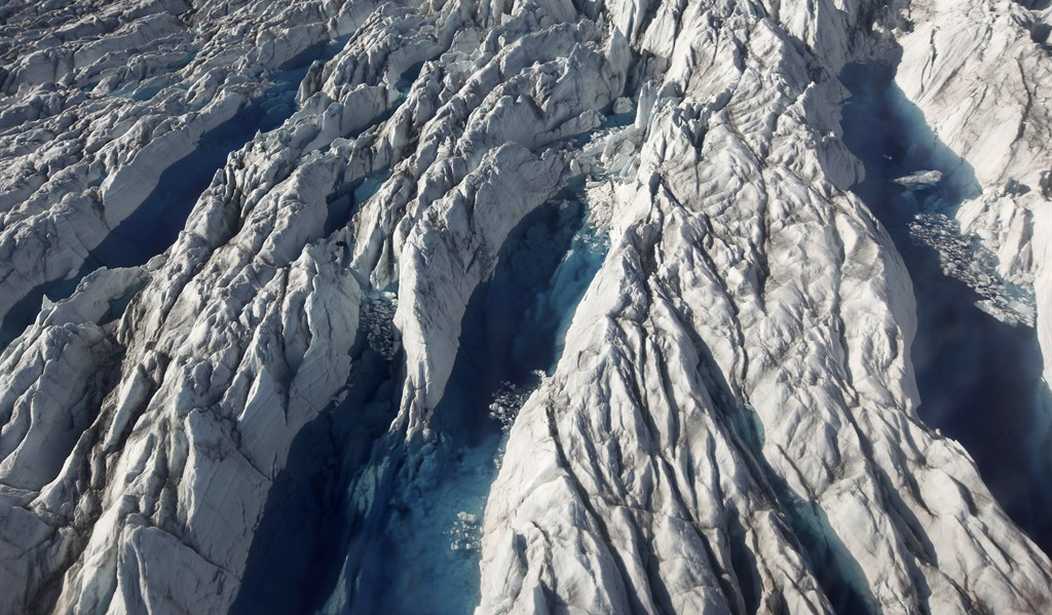
Today, more evidence and more sophisticated tools have begun to roll back that date considerably. In fact, recent evidence is changing not only our timeline for when humans arrived on our continent, but also our understanding of the ice sheet that covered North America, which was up to two miles thick.
High in the Beartooth Mountains of Montana, archaeologists discovered human artifacts where they shouldn't have been: 9,000 feet above sea level in the Greater Yellowstone high country.
“I wouldn’t say it’s impossible,” archaeologist Scott Dersam told Nick Mott in a lengthy report for Mountain Journal, “but in standard paleoecology in the surrounding ecosystem, all the glaciology experts, this is just not something that should exist given the ecosystem we believe we had.”
The artifacts were found in a place that, according to the current theory of the ice sheet over North America at the time, should have been covered by several thousand feet of ice.
“We could have the oldest Clovis sites in North America here, and it happens to be in a place that shouldn’t exist in an ecosystem that shouldn’t exist,” Dersam said. “It’s more than a monkey wrench to the current paradigm. It’s a full kick to the chest.”
The questions actually started in 1968, when construction workers unexpectedly dug up the so-called “Clovis Child” at what’s now known as the Anzick Site in Park County, which is north of Yellowstone National Park near Bozeman, Montana.
The oldest-known Clovis burial site in North America included the remains of a young child, an antler, and roughly 100 stone artifacts. Extensive testing from Texas A&M’s Center for the Study of the First Americans, in conjunction with colleagues from the University of Oxford and Stafford Research of Colorado, concluded the remains and artifacts were “confidently shown to be the same age and date between 12,725 and 12,900 years ago,” Michael Waters, Texas A&M researcher, said in a statement.
The Clovis people represent the first widespread prehistoric culture in North America, appearing around 13,000 years ago. Experts believe the Clovis people originated south of the large ice sheets that covered Canada at the time, and were the direct descendants of the earliest people who arrived in the New World around 15,000 years ago.
As with many such finds around the world, weather played a huge role in unearthing the discovery. Heavy rains led to flooding at high elevations. The water washed away several layers of sediment, revealing a massive find of human artifacts.
Jackpot.
“This is the first time we don’t have just one or two Clovis points,” Dersam said. “We have full sites. Everything but the kitchen sink.” It all points to an unknown history of Montana’s ancient ecosystem, upending our belief that it was covered with ice, and indicating instead that it was teeming with mammoths, bison, and, evidently, an entire ancient culture.
Experts now widely recognize that human arrival occurred well before Clovis — with the earliest people arriving in the New World at least 15,000 years ago (and some sites under debate suggesting even earlier dates, such as Ice-Age humans in Maryland or other pre-Clovis locations).
What happened to the pre-Clovis people? What happened to the Clovis people, for that matter? There were other migrations across Beringia, and evidence is accumulating that there was an ice-free route that skirted the Pacific Coast from Alaska all the way to South America. Most of that evidence is underwater today because melting ice raised the sea level by several hundred feet.
Slowly, in fits and starts, a new picture of migration to North America is emerging. Maybe the ice sheet wasn't all-encompassing. Perhaps large areas lay open for humans and animals to travel. It might be that our entire theory of ice and how it moves is wrong. Glaciers are in constant motion, so a north-to-south path might open and close within a few years.
Once considered a settled scientific matter, the quest to find the first humans who entered North America has become an exciting field of study.
Also for our VIPs: In 1960, Some Scientists Predicted the End of the World Would Happen on Nov. 13, 2026