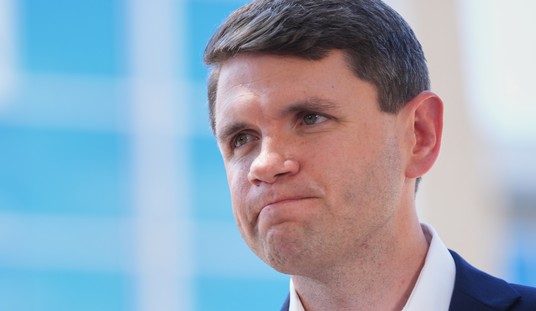
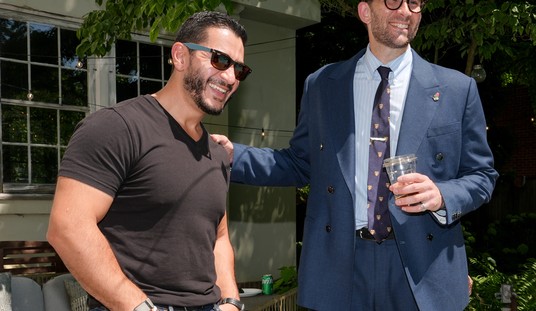
"Is consciousness completely reducible to brain activity?" asks the John Templeton Foundation's Martha Park. "Are the tools of third-person, objective science sufficient to explain consciousness?"
Michael Pollan, author of A World Appears: A Journey Into Consciousness, delves into the fierce debate in the scientific community over the origins of consciousness and whether it is a purely physical manifestation of brain activity or something more.
Australian philosopher David Chalmers is in the "something more" camp. He divided the study of consciousness into the “easy problem," explaining how phenomena like learning, memory, perception, and behavior work, and the “hard problem," explaining how consciousness arose and why we have conscious, subjective experiences in the first place.
Chalmers is convinced that simply examining the brain in greater detail, with ever more sophisticated machines and new technologies, may answer questions related to the "easy problem" but will never answer questions about the origins of consciousness. "It might require adding an 'extra ingredient' to the fundamental components of reality identified by physics—matter, space, energy, and time," writes Park.
Chalmers made his "easy-hard" argument at the turn of the 21st century. At the time, Christof Koch, a young German-American neuroscientist, bet with Chalmers that in 25 years, science would have found the exact location in the brain where subjective experience resides.
At an event in New York City in 2023, Koch conceded that he had been wrong, although he pointed out that through his research, he had discovered an area in the back of the brain’s neocortex, where he believed there were "neural correlates of consciousness," as Park describes. But even Koch had to admit the "hard" problem had eluded him.
“Whether you believe in materialism or panpsychism or whatever, we can agree that there are physical mechanisms in the brain that correlate with consciousness,” Koch told Pollan at the conference. “But finding those mechanisms is never going to explain how consciousness arises.”
Pollan wrote in A World Appears: A Journey Into Consciousness, “I cannot guarantee that by the end of this book, you will know more about consciousness than you do now.” He added, “Like me, you may find that you know less than you do now.”
That is the trap of the modern search for the origins of consciousness. Just when you think you're on the verge of a breakthrough in understanding the essence of consciousness, Lucy pulls the football away, and you land on your butt.
There are limits to science that most scientists have to learn about the hard way.
The John Templeton Foundation:
Modern science is built on a foundation of binaries. To achieve precise knowledge about the nature of the universe, Galileo confined scientific exploration to the objectively measurable, material world, relegating anything involving subjective, interior experience beyond its purview. Descartes, similarly, divided the world into two distinct categories: matter and mind. But consciousness blurs these neat and tidy delineations.
For those who assume consciousness is purely the result of brain activity, the question remains: how does matter produce minds? From electrical impulses and firing synapses, how do we end up with subjective experience, a sense of self, and the awareness of our own awareness?
The leading brain-based theories of consciousness see it as a computational operation conducted by the brain. Pollan links these theories with the rise of the brain-as-computer metaphor that emerged in the 1940s: “This is the reductive faith of our time,” Pollan writes, “the belief that the brain is essentially a computer and that conscious awareness emerges, somehow, from the processing of information.” That “somehow” is doing a lot of work, Pollan says, functioning as an “abracadabra.”
"Some [scientists, philosophers, and researchers] see consciousness as an embodied biological trait, not an algorithm that can be reproduced on microchips," writes Park. "In an interview with Templeton Ideas, the British neuroscientist Anil Seth said, 'I think it’s more likely that consciousness is a property of life, of our nature as living creatures, than that it’s a property of computation.'"
Except one emerging idea is that the physics of time contributes to the origins of consciousness. In the late 1990s and early 2000s, neuroscientists using fMRI discovered that remembering the past (episodic memory) and imagining the future (episodic future thinking) rely on the exact same core neural network. Consciousness may reflect this "mental time travel" (MTT) process. Neuroscientists treat the subjective "present" not as a single infinitesimal point in time, but as a constructed mental window in which specialized neurons act as internal clocks, firing sequentially to organize the temporal order of events as they happen.
Is that where "subjective experience" originates?
Even if it is, that doesn't explain the "hard" problem of "why." Why are we conscious? Where does this magical, awe-inspiring thing we refer to as "subjective experience" come from?
“Literature, philosophy, and religion have been thinking longer and harder about consciousness than the sciences have,” Pollan writes, “and I discovered that they have at least as much light to shed on the phenomenon" as scientists.
Pope Leo's seminal encyclical on AI, Magnifica Humanitas ("Magnificent Humanity"), was subtitled, "On Safeguarding the Human Person in the Time of Artificial Intelligence." Leo hit the nail on the head when he wrote, “No computational system, however sophisticated, can create a heart that gives itself, or a conscience that discerns good from evil.”
“To the extent that we value LLMs [Large Language Models] and agentic AI more and more,” Koch said, “we’re going to de-emphasize what’s really unique about us, which is the fact that we can love.”
Ultimately, the origins of consciousness will continue to elude us. Perhaps what we're dancing around is an attempt to explain the soul. That explanation awaits us when all mysteries are revealed after we die.