
The huge success of the U.S.-Israeli war against Iran is the primary reason that reaching a deal with Tehran may be impossible.
The Iranian leadership structure, as chaotic and contentious as it is in peacetime, was shattered by the decapitation strikes that not only took most of the key decision makers off the board but also drove a hysterical paranoia among the survivors, pitting the major factions against each other in suspicion and fear.
The Islamic Revolutionary Guard Corps (IRGC), always a power behind the throne since the founding of the Islamic Republic, was forced to step into the spotlight and take over.
When the IRGC solidified its de facto takeover of Iran's governance, the process did not resemble a traditional, bloody military coup d'état with immediate firefights or visible execution squads in the hallways of parliament. Instead, it was a structured, bureaucratic, and coercive strangulation of the civilian government.
Within the regime's upper echelons, the takeover itself was achieved through systemic political coercion rather than public internal executions. Instead of an armed assault on civilian leaders, the IRGC implemented what intelligence reports described as a "security cordon." They systematically blocked appointments made by President Masoud Pezeshkian, physically isolated key figures, and sidelined civilian executives from critical decisions. Instead of open civil war among regime factions, the IRGC used intense political pressure, systematic disqualifications, and the ongoing wartime emergency to force civilian politicians into submission.
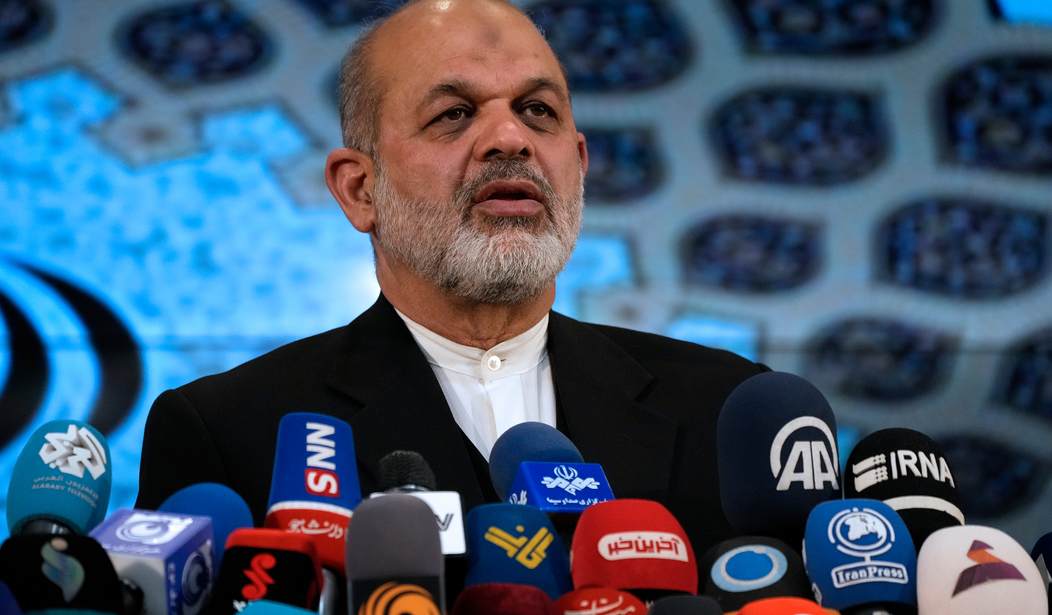
The IRGC's frontman is IRGC Commander Major General Ahmad Vahidi, a former interior minister and the commander of the Guards' most ruthless unit, the Quds Force. Quds carried out assassinations of dissidents and managed sabotage campaigns in foreign countries, and Vahidi answered directly to the supreme leader. He is reportedly very close to the current supreme leader (if he's alive), Mojtaba Khamenei. Khamenei the Younger has still not been seen or heard from since he was "wounded" in the first hours of the war when his father was successfully targeted for death.
Vahidi is the hardest of hardliners, ordering the attacks on Gulf states and U.S. bases in the region. When President Masoud Pezeshkian apologized to those countries, promising it would never happen again, Vahidi reportedly went ballistic. He severely reprimanded the president, and the attacks resumed.
His biggest problem is that even after sidelining the pragmatists like Pezeshkian and Mohammad-Bagher Ghalibaf, the current speaker of the Iranian parliament, other factions with diverse economic, religious, and policy goals complicate his job enormously. As much as Vahidi may want to be a dictator, the bureaucracy won't let him. He can only do so much to influence events.
The first interest of the IRGC is regime survival, but only as long as they preserve their highly privileged status within it. The shocking superiority of the Israeli Airforce over Tehran’s skies and the assassination of much of the Iranian leadership humiliated the Revolutionary Guards beyond anyone’s imagination. Many Iranians no longer see them as effective Guardians of the Revolution. More than by religious fanaticism, they are moved now by the understanding that they cannot afford another humiliation. To preserve their status, they need to be able to declare some victory.
They therefore have four core goals. One: no immediate concession on the nuclear issue. Two: resources for the resuscitation of the economy, namely, a complete end to the Western embargo. Three: iron-clad guarantees for the eternal end to the American-Israeli attacks. Four: de facto international recognition of their sovereignty over the Strait of Hormuz. The latter has already been achieved, as scores of vessels are coordinating their passage directly with Tehran.
While the pragmatists may be sidelined, Vahidi will have to get their support for any deal the negotiators make with the U.S. and Israel. The foreign policy apparatus is firmly in the hands of Abbas Araghchi, the current foreign minister, who works closely alongside Pezeshkian.
In the current political climate, Iranian pragmatists frequently find themselves taking a back seat to the more dominant, hardline factions of the IRGC. While they are often utilized by the state to lead complex international negotiations or project an image of moderation to the outside world, their actual power to dictate state security decisions remains heavily constrained by the clerical and military hardliners who control the ultimate leverage in Tehran.
The clerics, while little more than figureheads, are nevertheless important to the legitimacy of the Iranian regime. Vahidi and the rest of the IRGC must pledge their allegiance to the supreme leader and at least appear to obey the clerics.
"Iran is an 'Islamic Republic," writes Amatzia Baram of the Middle East Forum. "Constitutionally and in the eyes of many Iranians, 'The Rule of the [Islamic] Jurist' (velayat-e faqih), the legacy of former Ayatollah Ruhollah Khomeini, is still binding."
Nour News, an outlet affiliated with Iran’s Supreme National Security Council, "acknowledged what it described as a growing 'chronic disorder of governance' inside Iran, arguing that the country suffers not from a lack of information or resources, but from an inability to make 'timely, decisive and rapid decisions.'"
A society that is daily bombarded with conflicting news, half-baked decisions, and broken promises gradually loses its social capital. People may endure many hardships, but it is difficult to trust a structure that is hesitant and eroded even in the simplest decisions.
Perhaps one of the country's most important needs today is not simply to change policies, but to restore the "courage to make decisions" in the governance system; a return to this simple but vital principle that the government, ultimately, must be able to make decisions, accept responsibility, and clarify the task of society.
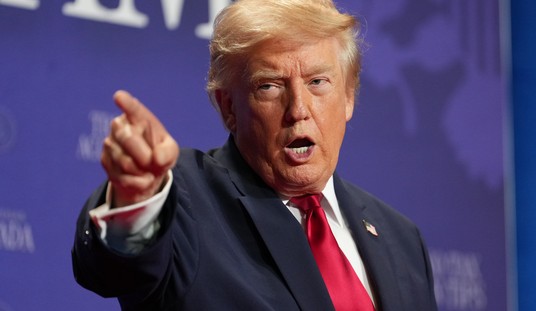
This is what Donald Trump and his negotiating team are facing. The only way Vahidi will come to an agreement is if he's certain that he can sell it as a smashing victory for Iran.
This, Trump will not and cannot allow.