Catherine Salgado wrote about Iran on Thursday, reminding us not to forget about what's happening there. Indeed, with the internet still down and people still being killed in the streets, trying to keep these world-shaking events front and center is a challenge.
The Human Rights Activist News Agency said it has verified 5,002 deaths during the protests that began in late December. This makes the January 2026 crackdown the bloodiest in the bloody history of the Iranian theocratic regime. Some activists claim the death toll is over 20,000. It's very difficult to separate anti-regime propaganda from the facts.
The crackdowns on the 2026 protests are bloody, but not as horrific as the judicially sanctioned executions that make the Shah's Savak killings look like child's play.
The "Cultural Revolution" of 1980-83 saw several notable massacres. Between June 1981 and March 1982, an estimated 3,500 to 8,000 people were executed for "wrong-think" and other "crimes." Tens of thousands were arrested.
Then, in 1988, another purge of intellectuals, conservatives, and Kurdish revolutionaries (MEK) resulted in up to 30,000 executions.
Not just the MEK, but also Marxists, socialists, liberals, and members of the Baháʼí Faith. Notably, about 10% of the identified victims in Tehran were minors under the age of 18.
"Special Commissions" were formed across the country. These panels, known to survivors as Death Commissions, conducted re-interrogations that lasted only minutes.
Prisoners were asked questions to test their "steadfastness." For MEK members, the question was often: "Are you willing to denounce the Mojahedin?" For leftists and atheists, the questions were religious: "Do you pray?" or "Was your father a Muslim?"
A "wrong" answer resulted in immediate transfer to the execution site — usually a gallows or a firing squad. A notable member of these commissions included Ebrahim Raisi, who later became President of Iran.
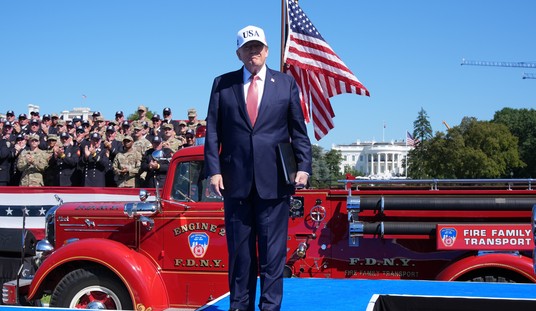
The killing isn't over. So why did Trump fail to mention Iran during his Davos speech?
The notion that Israel vetoed a strike on Iran that Trump was prepared to make last week apparently doesn't hold water. And the U.S. continues its military buildup in the Middle East.
At the same time, American F-15E jet fighters landed in Jordan on Sunday. The United States Ship Abraham Lincoln, an air carrier, is sailing to the Persian Gulf from the South China Sea. Destroyers, F-35 fighter jets, and electronic-jamming aircraft are part of the Lincoln strike group. Patriot batteries and other air defense systems are also being rushed to the region.
Mr. Trump cancelled a military strike on Iran last week, reportedly under pressure from Gulf countries and Israel, which were unprepared to defend against a possible counter attack from the Islamic Republic. Israeli military industries are now pushing back against those reports. An urgent uptick in manufacturing, they say, has successfully produced enough systems to defend the country against up to 700 ballistic missiles. That is more than the 500 salvos that Iran launched at Israel during the war last June.
Putting further doubt on Israel’s reported lobbying against a strike is Jerusalem’s long declared goal of ending the Islamic Republic regime, which etched the enmity to the Jewish state in its ideology. “Strategic cost-benefit assessment in Jerusalem remains fundamentally unchanged,” YNet is reporting. “In the view of Israeli decision-makers, if a military operation could lead to the collapse of the Iranian regime, the price would not only be acceptable but worthwhile.”
"White House advisers are reportedly also cautioning the president that there is no quick fix that could collapse the regime and prevent an uncertain future afterwards," reports the Sun. The Wall Street Journal is reporting that "the continued discussions [on striking Iran] show Trump hasn’t ruled out punishing Tehran for killing protesters in the midst of Iran’s spiraling economy."
It's tempting to believe that with the Iranian economy in freefall, a healthy push over the edge by striking oil facilities like Kharg Island could bring down the mullahs once and for all.
It's possible, but not likely. What the recent bloody massacres show us is that the Iranian leaders will go to any lengths to stay in power.
World opinion be damned.