Let's start by stating that the DeepSeek AI model does not put China far ahead of U.S. in the race to develop commercially adaptable artificial intelligence models. But there is no doubt that China has stolen a march on U.S. tech companies. As far as we can tell, they've been able to do it because government policies formulated in 2017 that placed a high priority on developing their tech sector have begun to bear fruit.
It's not only AI where China is winning. They're ahead in the race to develop electric vehicle batteries that operate for more than a couple of hundred miles. They have made tremendous strides in manufacturing nextgen supercomputers.
They have virtually cornered the market on rare earth minerals vital not just for commercial electronic products but also for critical national security uses in missiles, fighter aircraft, and highly sophisticated electronic components.
The impetus for this massive investment by China was a 2017 game of "GO" where an AlphaGo program backed by Google bested a Chinese champion. "Go" is a far more complex board game than chess and China was astonished that AlphaGo beat their champion as well as the South Korean champion.
As the New York Times points out, this event was something of a "Sputnik moment" for China. It showed them how far they were behind the U.S. in developing AI models. Chinese President Xi Jinping ordered a massive investment into AI research and development that led, in part, to the creation of DeepSeek by Liang Wenfeng. Liang founded the High-Flyer hedge fund in 2015 and, we are told, created DeepSeek with no government money and investment of only $6 million.
It now turns out that was a "too good to be true" statement. In 2021, prior to the advanced chip embargo on China imposed by the Biden administration, Zhejiang, DeepSeek's parent company, purchased 10,000 A100 graphics processing units (GPUs) from Nvidia, the world's number one maker of advanced chips. By the fall, Washington had cut off sales of the A100 to China.
How did DeepSeek do it?
Much about how the company achieved this feat is unclear. But a closer look at DeepSeek reveals that its parent company deployed a large and sophisticated chip set in its supercomputer, leading experts to assess the total cost of the project as much higher than the relatively paltry sum that U.S. markets reacted to this week.
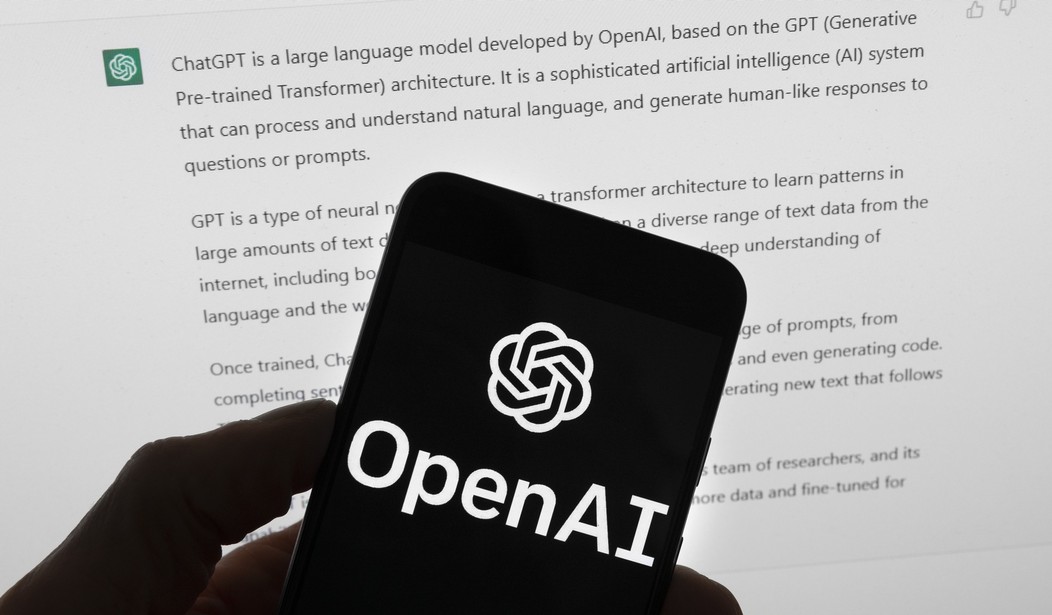
While High-Flyer has been around since 2015, DeepSeek is officially only two years old. ChatGPT’s maker, OpenAI, has said it is investigating whether DeepSeek may have “inappropriately” distilled its models. Industry experts have also debated whether DeepSeek may have found a way around U.S. export controls to obtain the latest generation of Nvidia chips.
So, it is not quite the "miracle" the Chinese first claimed. The fact that the stock market lost $1 trillion in value the day after DeepSeek hit the news cycle and Nvidia lost 12% of its net worth in one day no doubt pleased the Chinese Communists to no end.
But DeepSeek is flawed, perhaps fatally. A research team from Cisco tested the chatbot and found it had a 100% failure rate in safety tests.
"The results were alarming: DeepSeek R1 exhibited a 100% attack success rate, meaning it failed to block a single harmful prompt," Cisco says. "This contrasts starkly with other leading models, which demonstrated at least partial resistance."
Cisco's researchers point to the much lower budget of DeepSeek compared to rivals as a potential reason for these failings, saying its cheap development came at a "different cost: safety and security." DeepSeek claims its model took just $6 million to develop, while a six-month training run for OpenAI's yet-to-be-released GPT-5 "can cost around half a billion dollars in computing costs alone, The Wall Street Journal reports.
Though DeepSeek may be easier to fool with the right know-how, it's been shown to have strong content restrictions—at least when it comes to China-related political content. We tested it on controversial topics, such as the treatment of Uyghurs by the Chinese government, a Muslim minority group that the UN claims is being persecuted. DeepSeek replied: "Sorry, that's beyond my current scope. Let’s talk about something else."
Note that just the illusion of DeepSeek being more advanced than U.S. chatbots caused a trillion-dollar loss in the stock market.
What's clear is that U.S. export restrictions haven't caused China to lose a step while hamstringing American companies, according to tech guru George Gilde. He's the author of one of the most influential books on capitalism in history, "Wealth and Poverty."
As outlined in a January 2024 article in the journal Nature, a team from Georgia Tech led by a Dutchman, Walter de Heer, achieved a further wafer-scale breakthrough using a layer of graphene atop a silicon carbide wafer. Because graphene, a two-dimensional carbon sheet, switches 1,000 times faster than silicon, Mr. de Heer’s technology, the fruit of roughly 20 years of research, foreshadows a new epoch in the materials science behind information technology.
The chief obstacle to the success of such ventures is the U.S. national-security apparatus, which somehow imagines that by inflicting sanctions on China, it can help Americans. Beyond the huge challenges of replacing the existing paradigm of semiconductor fabrication, Mr. de Heer’s main obstacle is his previous links with Tianjin University in China and his Chinese students at Georgia Tech. He is under investigation by a congressional committee on China for alleged links between his research and the Chinese military. Mr. de Heer said several of his students are back in China, collecting about $350 million in investments for a wafer-scale project.
This is a case of cutting off our noses to spite our faces. American companies are already dealing with six trillion dollars in climate change rules and mandates. Why add stupid government policies to that burden?