
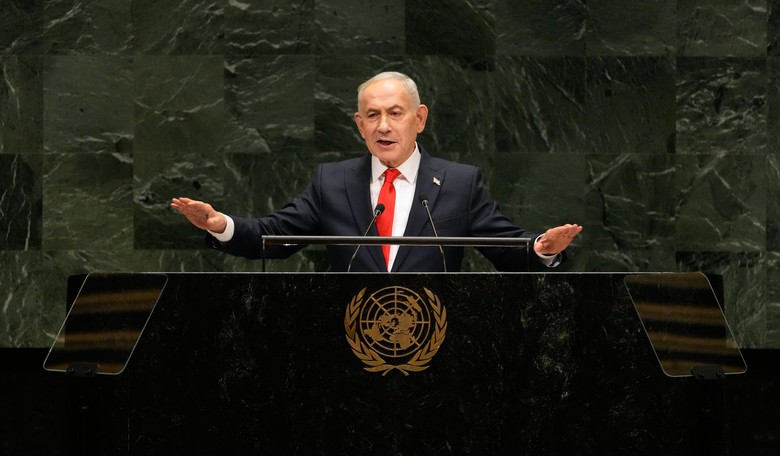
In three weeks, Israelis will head to the polls to decide their country's future and the political and legal fate of one charismatic, passionate, brilliant, courageous, devious, and stubborn politician.
Benjamin Netanyahu has served as prime minister three times since 1996. He is the most dominant political, social, and cultural figure in Israel's history. His enemies rage against him while his supporters worship him. He has presided over the most cataclysmic and dangerous period in the short history of his country, bringing it safely through a massive, wrenching attack, two wars, and huge political upheavals.
It's hard to imagine Israel without Netanyahu. Critics have pointed out that a more centrist government would have led Israel with less confrontation and controversy. This includes the 2023 judicial reform law, which sparked massive demonstrations that split the military reserve corps and deeply polarized Israeli society. Without his far-right coalition's push, these massive domestic divisions would have been largely avoided, preserving greater internal cohesion leading into the October 7 attacks.
Nevertheless, confronting Hamas, Hezbollah, and particularly Iran remains a point of widespread political consensus. Any Israeli leader would have acted to eliminate the terrorist threat and the prospect of an Iranian bomb.
Netanyahu's political future is on shaky ground. The far-right coalition he and his Likud Party lead is wobbling. Polls are all over the place (as they are in the U.S.), with some polls showing Netanyahu winning a smashing victory while others show a deadlocked nation.
Even the most pessimistic polls for the prime minister show a way forward for him to stay in power. Whether he will have to share that power with the center-right remains to be seen.
Old Middle Eastern hand Elliot Abrams puts Netanyahu's legacy in context.
This third anniversary is a time for renewed reflection on Israel’s damaging failures and soaring achievements: defeats like October 7 but victories like the attacks on Iran’s nuclear weapons program; growing political isolation but also growing military partnerships; unending hostility in parts of Europe and the Arab world but some new alignments that bolster Israeli security. The election itself, with Israel’s longest-serving prime minister in office and running again, contributes force to the desire to take stock.
And the Israelis would love to "take stock" and put the October 7 attacks in the rearview mirror. It is not to be. Netanyahu has decided not to convene an independent commission, like the September 11 Commission in the U.S., to get to the bottom of the obvious security lapses that led to the worst loss of Jewish life since the Holocaust.
Netanyahu refuses to take responsibility for these lapses even though every other national security official who was in office at the time of the attacks has resigned.
Netanyahu is taking the low road. He is blaming his security chiefs for deliberately keeping him in the dark. Some of his supporters started a whispering campaign that the chiefs betrayed Netanyahu for ideological reasons.
There is other evidence that points to intelligence given to Netanyahu that he didn't act on.
Haaretz reported that United Arab Emirates President Mohammed bin Zayed warned Netanyahu days before the attacks that Hamas was planning a major operation. Three sources with knowledge confirmed to Axios that UAE intelligence gave a general warning to its Israeli counterparts and that MBZ spoke to Netanyahu to make sure he received it. A former U.S. official said then-CIA Director Bill Burns was told several months later by MBZ that he had warned Netanyahu.
Other outlets including the New York Times also confirmed the story.
The Atlantic and the Wall Street Journal reported that Netanyahu received a similar warning ahead of Oct. 7 from Egyptian intelligence chief Abbas Kamel.
Netanyahu denied ever receiving warnings from the UAE or Egypt and sued several media outlets and journalists that reported he had.
It's worth pointing out that this election will also determine Netanyahu's legal future. He has three corruption charges hanging over his head since 2020, as the prosecutors have presented dozens of exhibits and hundreds of witnesses showing he received gifts and granted favors to powerful interests. The trial is in limbo after the defense rested in June 2026.
Because the trial has dragged on alongside major regional developments and upcoming parliamentary elections, Netanyahu’s opponents view the charges as proof he is unfit to govern, while his supporters argue the cases were fabricated to remove a right-wing leader from power.
Netanyahu's major defense is that it was politics as usual and that the favors and gifts he received were part of the push-pull of tumultuous Israeli politics. As long as Netanyahu is prime minister, any resolution isn't possible.
Like Donald Trump's legal troubles, the Israeli voter has already made up their mind about the candidate, and the court proceedings won't affect their vote. Nor will any minds be changed about Netanyahu and his policies. He doesn't hide what he stands for. Everyone, including opponents and supporters, knows exactly where he stands.
Abrams explains what may become known as "The Netanyahu Doctrine."
"Believe those who say they want you dead and gone, and count their missiles and soldiers." Abrams writes. "Always be ready to act first, and to attack in the enemy’s territory."
That's sound advice for anyone who leads a country with a knife at its throat for almost 80 years.