


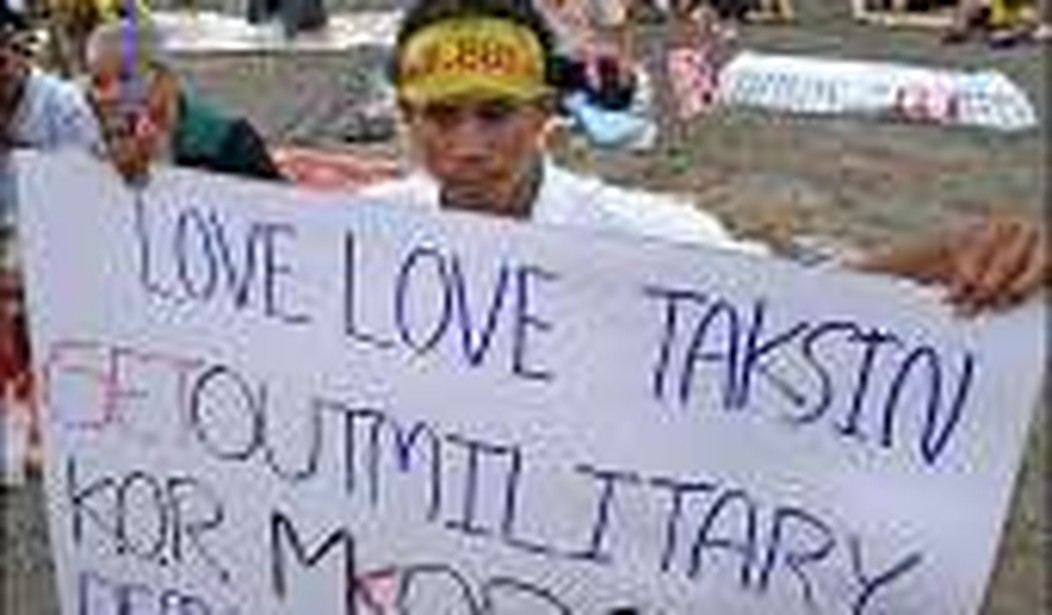
On August 19th, 2007, eleven months after the coup that ousted former Prime Minister Thaksin Shinawatra from power, Thais are going to the polls to vote on a new constitution; the 17th constitution since 1933. Within Thailand there is plenty of debate on the pros and cons of the draft. Pundits from both sides have mobilized and there is no shortage of leaflets, pamphlets and other literature regarding the vote.
The Thai government has printed and distributed millions of yellow covered booklets that outline the draft constitution and its provisions as well as provide a glossary and instructions regarding the vote. The Constitution Drafting Assembly (CDA) is touting this new constitution as way of protecting Thailand from future government corruption, vote buying and parliamentary dead-lock, the likes of which were seen under Thaksin’s rule
Those who oppose the new draft have organized under the “We Vote No” banner and can be found at every shopping mall and market handing out information. Their argument against the new constitution seems to revolve mostly around the idea that there was nothing wrong with the last one and the coup leaders had no business writing up a new one.
The international media however can’t seem to get past their horror that there was a coup in the first place. But to understand the new constitution and the motivations behind it, one has to take in account why there was a coup and how Thaksin went from being so hugely popular to being despised.
Thaksin was a billionaire before he entered politics. He owned a variety of telecommunications companies, TV stations and other media interests. Despite his money he managed to endear himself to the common Thai by playing the role of populist and outsider in Thailand’s “high society.” His Thai Rak Thai (Thai Love Thai) party was highly nationalist and he promised to sort things out, get rid of all the nasty foreigners (Farang) and make Thailand as wealthy as Singapore.
By 2003, those living in areas where there were newspapers or television stations independent of Thaksin’s control began to turn away from him. This may have started when he launched his bloody “war on drugs,” declaring that Thailand would be “drug free” in three months. The result was 2,500 killed in extrajudicial killings and a strong reprimand from the King who wanted to know why so many of his subjects had been killed without any due process. Thaksin had replaced most of the police commanders with his own picked men by this point and was starting to do the same with the military. (One of the main reasons the Islamist violence got such a foothold in southern Thailand was Thaksin’s disassembly of the intelligence and command structure in that region.)
Thaksin was no friend of a free press. Newspapers suddenly found themselves under legislative threat to tow the line and not criticize him. In 2005, Thailand held a general election and Thaksin once again claimed victory. Almost immediately there were accusations of vote buying, ballot rigging, and bribery complete with video of Thai Rak Thai party members paying off election officials. At the same time various allegations regarding his business dealings started to come out.
With the election results in question and with allegations of corruption and influence peddling, rampant calls began for Thaksin to step down. He simply refused. Instead he called a snap election in early 2006. The opposition parties refused to participate citing that they had been given insufficient time to prepare. In the end the results were in question and the Thai parliament was dissolved because under the 1997 constitution there were insufficient MPs for it to operate.
From February to September 2006 the anti-Thaksin movement took the streets. Bangkok saw nearly nightly protests where the numbers reached the tens of thousands. The protests were peaceful if not festive, and those who couldn’t attend would tune in and enjoy the proceedings, the highlight of which was a scathing satire of Thaksin and his family done in the style of Chinese opera. Needless to say Thaksin was not amused. These protests continued but were largely ignored by the international press and went on unknown to those in rural areas where Thaksin’s media was available.
As the summer of 2006 came Thaksin began to employ violence to try and quell the protests. This began with coordinated assaults on various protest leaders while the police stood by and did nothing. Later during the summer a “car bomb” was reported to be set near Thaksin’s home which prompted him to start accusing various military officials of having it out for him. But the car bomb itself came into question when the car was found, as the contents differed from the later contents detailed on the police report.
Thaksin’s real mistake might have been drawing the ire of the King. No Thai official before him had received so many public rebukes from His Royal Highness. The King also scolded Thaksin for his arrogance, which reached a peak with his attempt to buy a stake in the Manchester United Football Club using Thai public funds. At the King’s 60th Jubilee, Thaksin annoyed the Royals further by refusing to follow the proper etiquette.
The coup was staged on the evening of September 19th as Thaksin was in New York preparing to give a speech on “Democracy.” A huge anti-Thaksin rally was scheduled for the 20th of September, but with rumors that Thaksin was planning to employ the paramilitary “Forest Rangers” who patrol Thailand’s northern boarders to violently quell the demonstration, the military took control. The initial fear of residents of Bangkok was that Thaksin was behind the coup. However, when it became clear that the army was ousting Thaksin the soldiers suddenly found themselves being given food and flowers.
The draft constitution may or may not be better than the previous one. It features the standard boiler plate of rights that those in the West completely take for granted and it even has a section that bars media moguls from holding office. It does contain a provision for an unelected senate which might not be such a good idea if one looks at similar arrangements in places like Canada. However to simply dismiss the constitution and the referendum on it as “bad” because it was brought to be by a “military coup” ignores the history and events leading up to the coup. At least the Thai people are being given a chance to vote on it which is more than many countries in the West might boast of.
[English translation of constitution (95 pg PDF).]



Join the conversation as a VIP Member