
In 1981, the median age of first-time U.S. homebuyers was 29. Now it is 40. In 1980, the median price of an existing single-family home in the United States was $62,200, while median household income was $17,710. By 2025, the median existing single-family home price had climbed to $419,300, while median household income had increased to $87,460. In other words, the typical existing single-family home went from costing approximately 3.5 times the median household's annual income to 4.8 times that income.
One paycheck today faces greater pressure from several high costs than it did before, including housing, groceries, transportation, and healthcare, especially for younger generations. Today, it is harder than ever to own homes, harder than ever to provide for a family, harder than ever to get quality healthcare for young people.
Many young people are priced out of buying things like stocks and real estate because many of the economic decisions made in previous years have largely benefitted older generations over younger ones, especially during the Biden administration, where prices inflated substantially.
To take some examples of this pricing-out phenomenon of the younger generation, major cities like Los Angeles, San Francisco, Portland, and New York City have kept zoning laws that limit building more housing, which benefit existing homeowners (who tend to be older) because the home becomes scarcer and thus higher priced.
Following the 2008 financial crisis and during the COVID-19 pandemic, the Federal Reserve's radically low interest rates inflated stock and housing prices, benefiting existing asset owners while making it harder for younger generations to enter the housing and stock market and build wealth.
Meanwhile, younger generations face the consequences of decades of rising university tuition. According to the College Board's 2026 report, inflation-adjusted published tuition at public four-year universities increased by 94% over the past 30 years, while private nonprofit university tuition increased by 68%. At the same time, 657 American colleges and universities reported a combined $944.3 billion in endowment assets in FY2025. The enormous size of these funds definitely needs to be investigated and dealt with appropriately, which we don't even talk about.
It has gotten so bad that young generations like Gen Z are now using “Buy Now, Pay Later” (BNPL) methods, a very predatory form of installment credit, where you can split buying needs into 4 payments, including things like groceries or skin care. According to LendingTree’s 2026 Buy Now, Pay Later survey, most Gen Z users say they need these loans to make ends meet.
Moreover, Gen Z is now increasingly refusing to do traditional 9-5 work because their salaries have not kept up with the soaring cost of living, which is getting higher and higher.
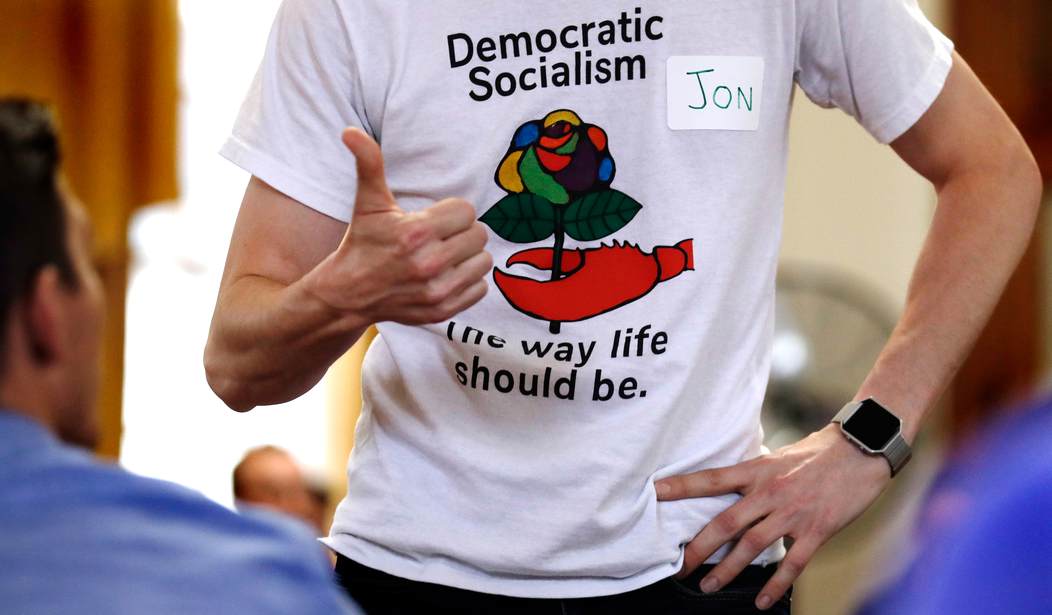
Enter the Democratic Socialists of America (DSA). Socialism is becoming more popular for younger people, exemplified by the surprisingly high youth vote for Zohran Mamdani, in which 75% of voters ages 18–29 supported Democratic Socialist Zohran Mamdani. Remember that socialist Sen. Bernie Sanders also won the Democratic primaries before.
We know historically socialism always fails, but socialist economics is so enticing because you can explain it easily, and on the surface it seems to give more power to the working class, where most people are. It also blames the wealthy and offers a promising solution: “The wealthy have exploited you and have everything, but you own nothing. Let’s come together and seek revenge!”
Conversely, capitalism seems to be less appealing these days, despite the overwhelming historical evidence that it is superior to socialism, because the younger generation is stuck and is angry at the inability of their salary to buy homes or keep up with living costs. Why would I want to continue working hard in the current system, get up early to get ready, commute in the freezing cold morning, deal with bosses and customers, to own nothing and barely get by?
As a young guy, I see among my younger generation peers a sense of economic hopelessness and anxiety, and an alarming creeping interest in socialism.
From my experience, I do not see much conversation about the fact that the younger generation is economically anxious compared to older generations. In my opinion, it is because the cost of living was not as abhorrent as what the young generation today faces that this status quo is not even imaginable. Perhaps it is the philosophy of being tough and working hard that has guided the older generation to be economically sound when they were once young, and they simply attribute not following this philosophy to the younger generations. However, if we actually look at data, the younger generation, in reality, has to work and suffer so much harder.
Revolutions are historically sparked mainly because of economic anxieties. This is how Hitler took power, how Russia turned into the Soviet Union, and how the French and American revolutions started. All of these events have a radical solution proposal to address the failing economics at the time.
“When a man is starving in the streets, he is not thinking of bread and water, but of caviar and champagne.” —Adolf Hitler
I really believe in capitalism, and I want that system to win. However, we cannot ignore this radicalization, a radicalization I would no longer classify as growing but as active, of the younger generation, angry and embittered by the inability of their salary to keep up with the cost of living, blaming the wealthy as the fault, and lured by the promises of socialism.
DSA, Mamdani, AOC, and Sanders have an opening to take advantage of this frustration to become the radical solution, which they are attempting. I do not want them to win because socialism always ends up as a disaster, but I believe that the ingredients are there to turn into a socialist-style revolution if the cost of living is not addressed.
The Left is incredibly insane nowadays, from open borders to transgender teachings and surgeries on children to soft-on-crime policies to abortion up to birth. Like, what sane population would support this stuff? However, I believe their socialist ideology is what still draws many young people in and maintains their support.
Remember, the cost of living is consistently always the #1 most important issue for voters, and the Left holds a radical economic ideology with radical solutions that the priced-out and economically anxious younger generation can at least resonate with, almost like a movement that “gets it.” The socialists, who really are communists hiding behind the label of socialists, now seek to channel their frustration to seize political power and destroy the scapegoat: “the rich.”
Socialism has a deceptive lure to it, a deadly ideology that deceived so many historically and now seeks to deceive them again today with its alluring radical promises. As conservatives, to win the youth vote, we must make lowering the cost of living for younger generations the #1 priority, demand attention and action from conservative lawmakers to do so, and illustrate the superiority of markets over socialism.
Finally, I'd like to share a video from Dave Rubin showcasing what happens if DSA takes power:
I used AI to create this short film. America, you’ve been warned. https://t.co/YkdVEkkHHe
— Dave Rubin (@RubinReport) October 27, 2026
Editor's Note: Do you enjoy PJ Media's conservative reporting exposing the radical left and woke media? Support our work so we can keep bringing you the truth.
Join PJ Media VIP and use promo code FIGHT to receive 60% off your membership.