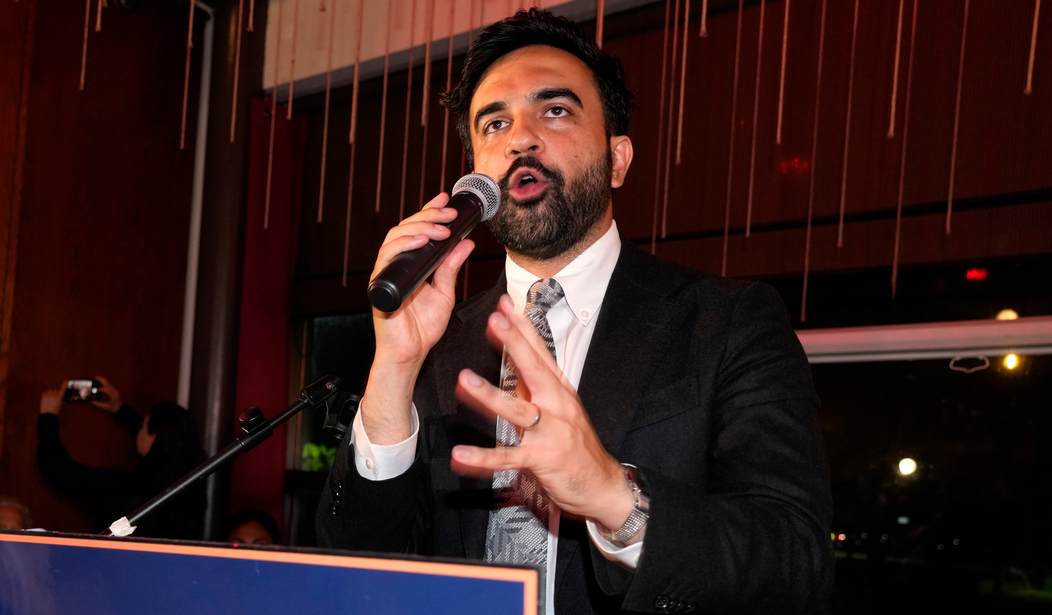

Something is happening inside the Democrat Party that doesn’t bode well for them. A wave of intra-party revolts is toppling sitting members of Congress at a pace unseen in years. I am, of course, talking about the socialist insurgency that is knocking off establishment Democrats nationwide. Is this an echo of the Tea Party wave in the Republican Party back in 2010? If so, what does it mean for the Democrats?
CNN’s chief data analyst, Harry Enten, certainly sees the parallels.
"This summer we have seen Democratic incumbents losing in primaries in ways we just haven't seen before," CNN anchor John Berman said last week. “What, if any, historical precedent is there for this?"
"We have seen something like this before," Enten told Berman. "You have to go back 16 years. Remember, it was that Republican Tea Party wave of 2010. I would argue the Democratic version of it is a new Tea Party, but it's on steroids."
On steroids is the right description.
Enten pointed out that in July 2010, 52% of Republicans still approved of their own party in Congress, a low number but still a majority. Today, just 47% of Democrats approve of their own party in Congress. Democrats dislike their own party more than Republicans did at the height of the Tea Party revolt.
And the proof is obvious. Very few incumbent Republicans lost primaries in 2010.
“You can count it on one hand," Enten said. "But in 2026, so far, it's already five." Even counting Lisa Murkowski's 2010 primary loss in the Senate, a race she survived by winning as a write-in, Republicans only reached three incumbent defeats that cycle. Democrats have already passed that mark in the House alone.
Recommended: Can You Guess Why Newsom’s Nanny State Is Starting to Go Through People’s Garbage?
And it could get worse before the primary season ends.
Enten noted that Kalshi prediction markets have consistently shown an 80% to 90% chance that six House Democrats will lose their primaries this year. If that happens, Enten said, it would be "the largest number in a post-redistricting cycle for Democrats in, get this, over 50 years." Races in Missouri's 1st District, Michigan's 13th District, and Connecticut's 1st District are all being watched as potential upsets.
Enten framed all of this as a mirror image of 2010, and the shape holds up. Barack Obama's election in 2008 and the sharp leftward lurch that followed gave Republican voters a reason to revolt against their own establishment two years later. Democrats are now living through their own version of that reckoning, driven by a socialist wing of the party that has decided the establishment isn't radical enough.
The 2026 Dem insurgency is a new tea party on steroids.
— (((Harry Enten))) (@ForecasterEnten) July 9, 2026
Fewer Dems approve of Dem members of Congress (47%) than the GOP did of GOP members at this pt in 2010 (52%).
More Dem House members are going down in primaries (5 so far & likely rising) than all of 2010 for the GOP (2). pic.twitter.com/MDVuuUi4FO
There's one detail Enten left out, though, and it matters. The Tea Party wave came from inside the Republican electorate itself.
This insurgency is different. Much of it is being organized from outside the Democrat Party altogether, by candidates tied to the Democratic Socialists of America who are simply using Democrat Party ballot lines and infrastructure.
The Tea Party wave in 2010 was a realignment. The socialist wave in 2026 is more like an insurgency or a hostile takeover. And it may hurt the Democrats in ways the Tea Party wave did not hurt the GOP in 2010.
“[Socialists are] winning all these nominations from coast to coast. We're not talking about just Portland and New York City. We're talking about Iowa. We're talking about Pennsylvania,” GOP chairman Joe Gruters told OANN this week. We're talking about across the board, Michigan. They have these radical leftists that are winning these nominations, and it's creating favorable matchups for our candidates.”
He added, “Now [Democrats] have their messaging and it’s coming directly from these Democrat socialists. It's out of control. But certainly it should give us a leg up in these elections in November.”
Make no mistake about it, the Tea Party movement helped the GOP win a massive majority in 2010, while the socialist insurgency is actually threatening to limit Democratic gains in 2026.