Donald Trump's critics had their review written before they'd read a word of it. The ink on the Iran memorandum of understanding wasn't even dry — heck, it wasn’t even written — before the verdict was already in: weak, naive, a gift to the ayatollahs. But a curious thing happened when a few voices on the right tried to make the same case. They ran into a problem nobody on either side wanted to address. What if the entire premise is backward?
That's the question Victor Davis Hanson answered this week, and his answer should embarrass nearly everyone who rushed to trash the deal.
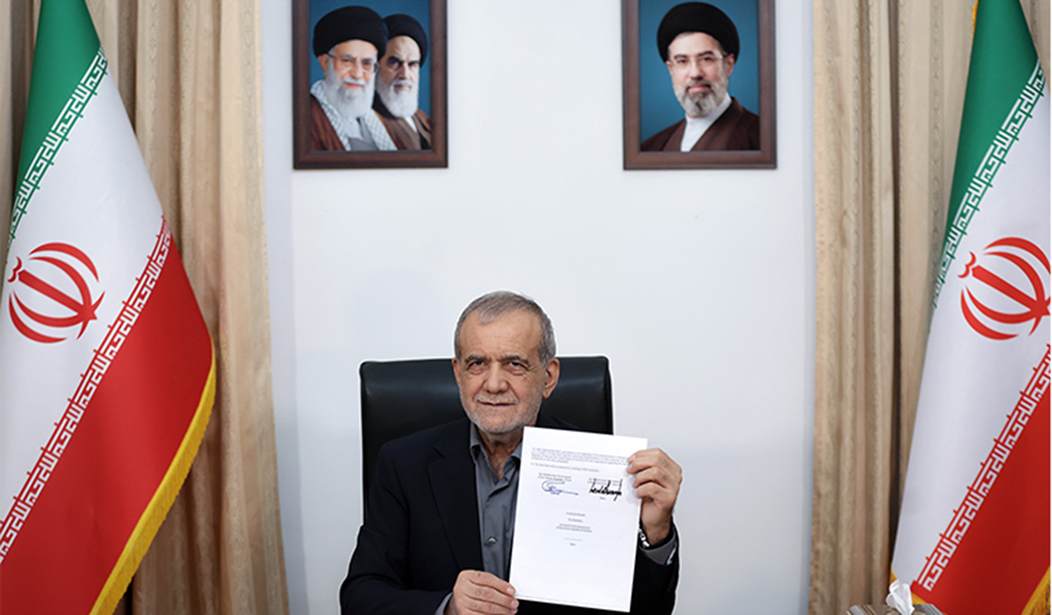
The Memorandum of Understanding with Iran laid out a 60-day ceasefire and a framework for further talks. Detractors zeroed in on the fact that the MOU doesn't require Iran to immediately dismantle its nuclear infrastructure or surrender its enriched uranium stockpiles. Even some conservatives joined the pile-on, despite the administration's efforts to correct the record.
Hanson wasn't having it.
Appearing on Jesse Watters Primetime on Fox News, he laid out exactly why the critics have the leverage equation the wrong way around. Iran, he argued, didn't walk into these negotiations from strength. How could they when they’ve been getting pummeled for months?
ICYMI: Now We Know Why the Obama Center Is So Ugly
"They've suffered probably a half a trillion dollars to their nuclear military industrial complex that took them 50 years to build," Hanson said, taking direct aim at what he called "unhinged" claims that Iran somehow emerged from the conflict stronger than before.
Then there's the Strait of Hormuz argument, the favorite talking point of anyone trying to claim Iran still holds the cards. Hanson dismantled that one, too. Iran's restraint there was never a sign of strength. It was a function of seven straight presidents who refused to call Tehran's bluff. "It was only open because they chose not to cause trouble," Hanson said, because "the last seven presidents said, 'We don't dare touch you. We're not going to interfere with your nuclear programs.'"
Trump broke that pattern. And according to Hanson, Iran knows exactly what that means for the clock.
"They think time is on Iran's side. Time is not on Iran's side," Hanson said, pointing to sanctions and pressure on Iranian oil distribution as evidence that Tehran, not Washington, is the one racing against the calendar.
Vice President JD Vance made a version of the same case during Thursday's White House press briefing, framing the strategy as leverage over blind trust. "They certainly recognize that the United States has great leverage," Vance said. Asked whether that leverage will actually change Iranian behavior, he was refreshingly honest: "I don't know." But he didn't let that uncertainty undercut the strategy. "If so, they don't get any of the benefits of the bargain," Vance said. "But isn't it worth trying?"
Hanson took that logic a step further, arguing Iran's real fear isn't the deal itself. It's Trump after the midterms. "They are afraid that Donald Trump is going to drag it out because if he drags it out after the midterm, after the 250th anniversary, he's going to have a lot more options than he does now when he's worried about gas and the midterm," Hanson said. "So the dynamic is all upside down. They are the ones that have the time clock."
Let's be honest here: critics on the right who are reflexively trashing this deal are doing Iran's messaging for it. They're treating a regime that just absorbed a half-trillion-dollar setback to its nuclear program as though it dictated the terms. It didn't. Trump did.