


The plot of 2075 centers on a new social movement that is spreading like wildfire, particularly on colleges campuses. The "Movement for Optical Justice" (known as "MOJ" or "MOVE") pursues a cause that, at first glance, does not seem at all heartless. Its activists point out that physically attractive people often enjoy advantages in life through no fault of their own. That is, of course, true, and it would be nonsensical to try to deny it.
However, the movement soon adopts a fanatical, cult-like character. As long as this is confined to universities and isolated protests, it is not a major concern.
Soon, however, one of the major political parties, the “Justice Party,” begins to embrace aspects of MOVE’s ideology. Their rationale goes something like this: Of course, MOVE is too radical for us, but their cause is justified, and we cannot simply dismiss their concerns outright.
Before long, the first political measures are taken to combat "visual injustice," such as a special tax on attractive people. Unfortunately, rather than placating the movement, these actions intensify its fervor, ultimately paving the way for a descent into totalitarianism.
Of course, 2075 isn’t really about beauty or “visual justice.” Rather, MOVE is a very clear allusion to the social movements that have taken center stage in universities and across social media in recent years – particularly in the Anglo-Saxon world, but also far beyond.
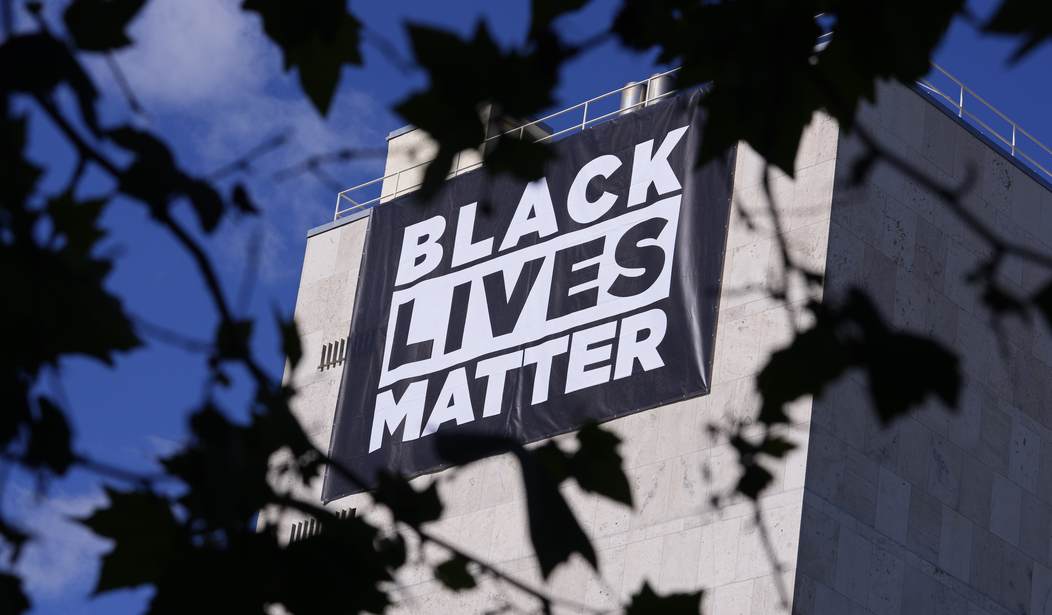
One need only think of the mass hysteria that erupted around Black Lives Matter (BLM) at the start of this decade, or the comparable fervor surrounding the gender movement. Of course, a degree of exaggeration is permissible in fiction, as it is a perfectly legitimate stylistic device, but anyone who wishes to dismiss 2075 as preposterous has simply not been paying attention in recent years.
The social dynamics Zitelmann describes here are not something he has simply plucked out of thin air; they are observable realities in our universities and on social media.
Within BLM and the gender movement, a competition to outdo one another has emerged, with each activist trying to be just a little more radical than their comrades, thereby boosting their own standing within the group.
Even those activists who did nothing to initiate this competition nevertheless feel the pressure to keep pace, leading to a slow but steady process of self-radicalization driven by peer pressure.
From the outset, these movements have also exhibited pronounced intolerance toward anyone who holds opposing viewpoints. Activists for "social justice" often believe that the normal rules of debate do not apply to them.
They justify their actions with thoughts like, “I’m doing all this in the name of the oppressed and disenfranchised. I’m on the right side of history! Why should I be tolerant of people who are likely secret fascists and who are only using their 'freedom of speech' to cement their undeserved privileges?”
In the novel, it is also striking that, when push comes to shove, the moderate left often lacks the courage to confront the radical left. Although they may distance themselves from the most egregious excesses, they are reluctant to fall out with, or sever ties with, these activists.
The dynamic between MOVE and the Justice Party, as described by Zitelmann here, almost exactly mirrors the dynamic between Black Lives Matter and the Democratic Party in the United States.
University administrations, too, often find themselves being led around by the nose by the most radical student activists, as they do not want to be labeled "old-fashioned" or "uncool" under any circumstances.
Thus, a much larger circle of followers and opportunists forms around a hard, ideological core. These individuals are never really fully committed, but they also do not want to incur the wrath of the movement.
That is, however, a short-sighted strategy, to say the least. Anyone wishing to cast Zitelmann as a right-wing cultural warrior should bear in mind that it is often people on the moderate left who find themselves in the crosshairs of movements such as those epitomized by MOVE.
After all, the gender movement frequently directs its animosity toward old-school feminists who, despite being clearly on the political left, do not believe that gender can be altered solely by declaration. Foremost among them is undoubtedly J.K. Rowling, author of the Harry Potter series, who was a major donor to the British Labour Party for many years.
As a reader, I am somewhat biased: I am familiar with Rainer Zitelmann’s non-fiction and know that I largely share his political worldview. However, I do not believe this is a prerequisite for enjoying his novel.
Of course, while you cannot simply ignore the political message, you can also read 2075 as an exciting futuristic novel. If it were “merely” a political novel, there would have been no need to set the plot so far in the future: the year 2026 would have sufficed. There is a reason why the novel is set in the 2070s instead, namely that the author is currently deeply engaged with the topics of space exploration and the space economy.
Rather than a prophecy, 2075 serves as an exploration of the milieu of the "progressive" movements of our time, combined with well-founded futurology. It is to be hoped that technological advancements over the coming years and decades will proceed more or less in line with Zitelmann’s vision, while at the same time we will be able to move past the political ideologies that inspired the novel in the early 2020s.
Editor's Note: Do you enjoy PJ Media's conservative reporting that takes on the radical left and woke media? Support our work so that we can continue to bring you the truth.
Join PJ Media VIP and use promo code FIGHT to receive 60% off your membership.




Join the conversation as a VIP Member