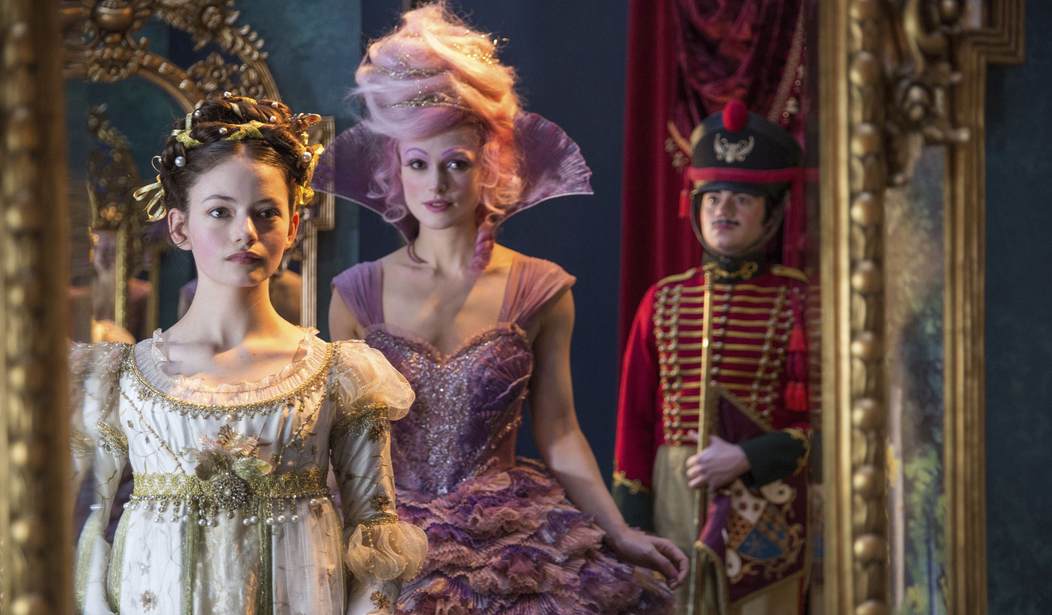

Every fall, dozens of ballet companies across the United States start rehearsals on the production that helps balance their annual budget. Thursday, Dec. 18 marks 133 years since the premiere of what has become a Christmas tradition: The Nutcracker.
The first performance by the Imperial Russian Ballet in 1892 failed to impress the audience. Even Tchaikovsky wrote to a friend, “it did turn out to be a little boring.” It would be another 25 years before the ballet was seen again.
Today, hundreds of little girls (and a few brave boys) across the country audition to win a coveted role. Which of the youngest dancers will be a bon-bon emerging from under Mother Ginger’s skirt? Which students will dance in the first act Christmas party scene? Most importantly to the young teenager girls: who will win the coveted role of Clara, the girl who receives a magical nutcracker from Herr Drosselmeier and is then transported to the Land of the Sweets?
Did you know?
- Macaulay Culkin started as the Nutcracker in a full-length film version in 1993.
- In the NYC Ballet production, Mother Ginger’s costume requires three handlers to help the dancer move.
- The magical Christmas tree grows from 12 feet to 41 feet in the NYC Ballet production.
- in 1944 that the San Francisco Ballet inaugurated the annual tradition of the Nutcracker each Christmas season.
In 1976, I was one of those many little girls vying for a role. I had my heart set on becoming a bon-bon. I didn’t win that, but due to my short hair – and the lack of boys in our ballet school – I got to play the Marquis’ son in the Christmas party scene. At one point in Act One, we "boys" stormed the stage with wooden swords and terrorized the younger girls dancing with their dolls. Months of rehearsals all led up to three nights I'll never forget, and made me a balletomane for life.
Alexandre Dumas père created the ballet’s story as a gentle retelling of Hoffmann's fantasy tale, The Nutcracker and the Mouse King. Dumas omitted all the darker parts of the original story, leaving a festive Christmas party, the Waltz of the Snowflakes, magical Spanish, Arabian, Chinese, and Russian dances, and the Sugar Plum Fairy and her cavalier.
Besides the stunning stage sets and effects, most attendees cherish the music. Astonishingly, Tchaikovsky composed the score based on extremely specific instructions from choreographer Marius Petipa, who sometimes detailed his wishes measure by measure. Tchaikovsky even smuggled a new instrument into Russia from France – the celestina – to give just the right sound to the Sugar Plum Fairy.
Sadly, Tchaikovsky would die before he knew that the ballet he wrote off as “boring” had captured the hearts of audiences around the world.
His grand music lives on every Christmas with every new performance.