





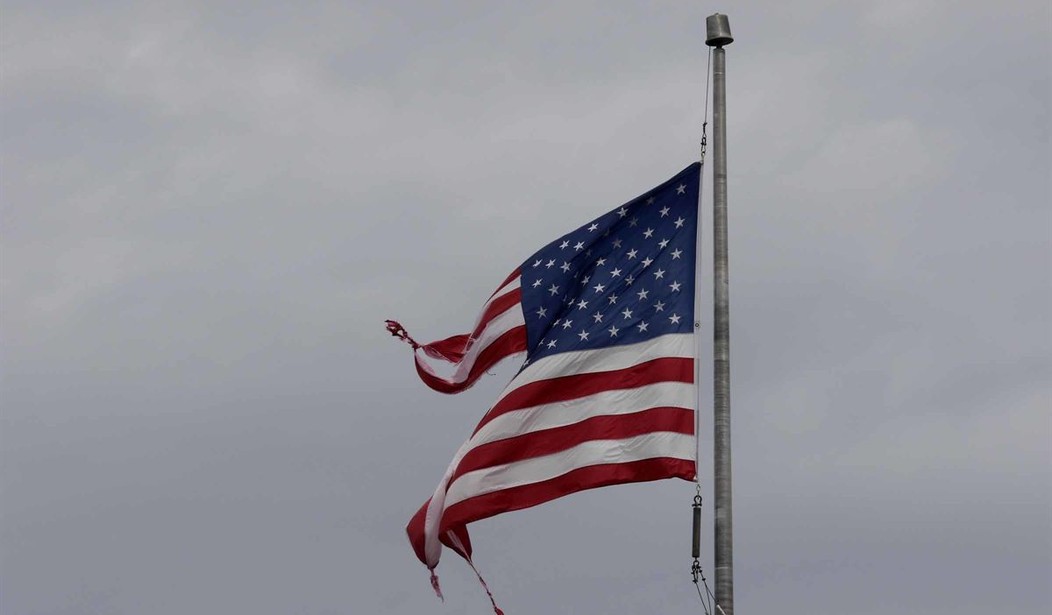
America doesn’t feel right anymore. Everyone senses it, even if they can’t explain it. You hear it in line at the grocery store, see it in the tension on people’s faces, feel it in the way conversations veer off-course for no apparent reason. It’s not just social media poison or political polarization. Something deeper is off-kilter.
A neighbor makes a harmless comment, and suddenly someone treats it like an attack. A discussion at work derails because two coworkers start with assumptions so far apart they might as well come from different planets. You watch the news and wonder how the people being interviewed can live in the same country you do. Sometimes it feels like we’re speaking different languages.
It’s not your imagination. We are speaking different languages — not grammatically, but culturally.
There used to be a shared American baseline, a sense that, whatever our differences, we lived inside the same general moral framework. That framework didn’t make us saints, but it made us predictable. It gave us room to disagree vigorously without assuming the worst of each other.
That baseline is cracked now. In some places it's completely gone. What we have instead is a country split between high-trust and low-trust cultures, two moral universes sharing the same land, the same institutions, the same Constitution, while inhabiting different psychological realities. These groups don’t simply disagree on issues. They disagree on how people are supposed to behave and whether people can be trusted at all.
You feel this fracture most clearly in the arguments that never go anywhere. The same conversation, the same talking points, the same bewilderment: How can they not see it? How can they not understand?
Because they’re not starting where you’re starting. They don’t assume what you assume. They don’t believe people behave the way you believe people behave.
This trust divide sits under nearly every argument we have. And nowhere is it clearer than in the gun debate.
Gun Control as a Trust Litmus Test
If you want to see America’s trust divide in its purest form, look at the gun debate. Not the yelling, not the statistics thrown around like grenades, but rather the assumptions underneath. Guns expose something deeper than policy preferences. They reveal two incompatible beliefs about ordinary people.
Walk into a rural hardware store in Tennessee, Montana, or Oklahoma. Guns sit behind the counter like power tools. Hunters swap advice. A teenager buying his first rifle gets a quiet lecture about responsibility from the old man behind the register. Nobody is afraid. Nobody is tense. It feels… normal.
Now walk into a faculty meeting in a blue-city public school and bring up concealed carry. The temperature in the room drops twenty degrees. People stiffen. Someone says, “That’s insane. Someone would get killed.” Heads nod. The fear is palpable.
Same country. Same Constitution. Two different worlds.
High-Trust America’s Assumptions
- People are generally responsible.
- People can handle dangerous tools.
- If someone abuses a gun, that person is the problem — not the entire population.
- Communities regulate each other through norms and reputation.
A gun is a tool. A serious one — but ordinary adults can be trusted with it.
Low-Trust America’s Assumption
- People are unpredictable.
- People are emotional and impulsive.
- If guns are widely available, disaster is inevitable.
- The average person is not stable or competent enough to be trusted.
Here, a gun isn’t a tool. It’s a loose spark near gasoline.
This isn’t about firearms. It’s about anthropology.
Why High Trust Matters (and What Happens When It Disappears)
Before we go any further, it’s worth asking a simple question:
Why does trust matter so much?
Because trust — or the lack of it — determines how a society functions. It shapes how people behave, how institutions operate, how expensive life becomes, and how safe communities feel.
Francis Fukuyama wrote that high-trust societies grow richer and freer because people can rely on each other to behave predictably. Trust lowers the cost of doing everything.
High-trust environments are effortless. Neighbors watch each other’s kids. Small businesses thrive. Agreements mean something. The whole machine runs quietly.
Low-trust environments are exhausting. Paperwork. Oversight. Enforcement. Suspicion. Institutions balloon. Ordinary life turns into an obstacle course.
- High Trust = Freedom.
- Low Trust = Control.
You see it globally. In Japan, Switzerland, and early America, societies were and are marked by high trust and high stability. In late Rome, modern Brazil, and bureaucratic Europe, low trust and heavy control are hallmarks of both government and society. Once trust drops, everything else drops with it: economic vitality, civic life, social stability, the ability to live without fear.
Other Flashpoints Where the Trust Divide Explodes
The gun debate may be the cleanest example, but it’s far from the only one. The trust divide appears everywhere.
1. School Choice
- High trust: parents know best.
- Low trust: parents cannot be trusted; experts must decide.
2. Central vs Local Government
- High trust: empower communities.
- Low trust: locals will mess it up; centralize authority.
3. Policing
- High trust: police are community partners.
- Low trust: police are a threat; bureaucracy must monitor everything.
4. Welfare
- High trust: short-term help, accountability, dignity as a goal.
- Low trust: open-ended aid; assume people cannot manage themselves and will need help throughout their lives (as in Life of Julia).
5. COVID
- High trust: “Give us data; we’ll decide.” We choose whether or not to mask.
- Low trust: “People won’t behave unless forced.” Mask up or go to jail.
Different issues, same fault line.
Related: The Death of Shame and the Birth of the Modern Identity Crisis
Conservatism as High-Trust, Progressivism as Low-Trust
At this point, the pattern is undeniable. The real divide in America isn’t left vs. right — it’s trust vs. fear, responsibility vs. fragility, self-government vs. supervision. That divide traces back to two very old visions of human nature.
Conservatism follows the tragic, realistic view: Humans are flawed but capable. Civilization shapes us. Responsibility strengthens us. Treat people like adults, and they rise to it. This is the world of Voltaire.
Progressivism follows the innocence myth: humans are pure until corrupted by society. Rules, expectations, and traditions are all oppressive. People must be protected from harm, including harm they might cause themselves. This is Rousseau.
From the visions of these two rival French philosophers come two incompatible cultures and two moral universes. We have a single nation but a split foundation. High-trust America says: “People are flawed, but capable. Freedom works when character is strong.” Low-trust America says: “People are fragile and easily led astray. Freedom must be managed to prevent harm.”
Once you understand that split, everything else falls into place: the policies, the cultural clashes, the outrage, even the vocabulary. We are not fighting over issues. We are fighting over anthropologies — two competing theories of what a human being is.
High-trust societies only survive when a critical mass of people believe humans can rise to responsibility.
Low-trust societies form when a critical mass believes the opposite.
Which leaves us with one final question: how do we preserve the culture that actually works best?
Rebuilding High Trust in a Fragmented Nation
High-trust America still exists — not everywhere, but in enough places that the future isn’t lost. Our culture isn’t dead; it’s just battered. The habits that make high-trust societies flourish are still alive in families, churches, towns, volunteer groups, small businesses, and circles of people who expect adults to act like adults.
The work now is to keep that culture viable and growing while national institutions drift toward low-trust instincts.
Here’s what that looks like in real terms:
1. Rebuild Locally. Trust grows face-to-face. Join the groups that work. Build new ones where necessary.
2. Support Competence. Reward institutions that actually function, while starving the ones that survive through ideology or fear.
3. Push Power Downward. Local governance builds trust. Centralized power destroys it. Vote for people who want to shrink the federal and state governments and empower the local authorities.
4. Model Predictability. Trust comes from reliability — showing up, telling the truth, keeping your word. Be that person.
5. Teach the Tragic View of Human Nature. Teach kids that people are flawed but capable, and that responsibility is strength.
6. Build Parallel Structures When Needed. When national institutions fail, new ones must rise beside them. This isn’t rebellion. It’s self-preservation.
7. Stop Outsourcing Courage. High-trust societies depend on ordinary people acting with dignity and moral clarity.
8. Reward Trustworthiness and Shame Betrayal. Some things require laws. Most things require standards. Expect standards from others and model them in yourself.
High Trust Is a Daily Personal Choice, Not a System
A divided nation can survive disagreement. What it cannot survive is the collapse of trust. But high trust can be rebuilt. Not by Washington, billion-dollar programs, or even national movements.
It can be rebuilt by us, in the way we talk and model things, the way we show up, and the way we act as if we still live among capable, responsible adults — and expect the same in return. High-trust America still exists in the people who keep this country upright in quiet ways: raising children, fixing cars, coaching teams, running businesses, supporting neighbors, and taking responsibility.
They are you.
And if enough of us keep choosing trust — not blind trust, not naive trust, but trust rooted in responsibility and character — then this fractured nation still has a future.
High-trust America is not gone. It’s simply waiting for its builders. And we are the ones who show up.
Editor’s Note: Do you enjoy PJ Media's conservative commentary that helps bring clarity to a confusing world? Support our work so that we can continue to bring you the truth.
Join PJ Media VIP and use the promo code FIGHT to get 60% off your VIP membership!

Join the Conversation
VIP members get the ability to comment on articles.