
I drove past my old grade school on a Saturday last winter.
I hadn't stopped there in years—no real reason to, unless you count the school officials or the local cops taking issue with a stranger parked in an empty lot. I'd driven by plenty of times, but this time, purely on a whim, I pulled in. Nobody was around except the folks who live along the perimeter of the grounds, and being mid-winter, I figured they had better things to do—like staying warm. It was a Saturday, so the building sat closed up drum tight.
The moment I pulled in, the place pulled me straight back. I could see my sister and me walking toward that school, decades ago. It had to be 1961—I was four, and we were walking home from the shopping plaza a block past the school from my house. I remember watching cranes lower the huge steel beams into place, the same beams that still hold up the roof today. I wanted to stay and watch longer, but my sister was in a hurry that day.
"You'll go to school there," she told me, as we walked along on a warm, breezy day. I don't remember going back until the day I actually started. But I've never forgotten that brief glimpse of my own future. After that first day of classes, I walked the eight blocks to school every day—rain, snow, sleet, didn't matter. These days, they bus kids that same distance. Supposedly, cars might hit them if they walked.
Back in the present, I parked the truck, got out, and wandered over to the window of one of the rooms that I had sat in for a year. Immediately, the place felt both changed and exactly the same. I could have walked it blindfolded, going strictly by memory—except for the handful of spots that had changed over the years, like the bigger center entryway.
It looked like they'd turned the lunchroom into a library. These days the kids apparently eat in their own rooms instead of getting herded like cattle into the big, industrial gray room with the little wooden stage at one end, where I ate more cheese sandwiches than I can count. I can still taste them. That room now holds the library—which makes sense, since the original library space always felt cramped anyway.
Outside of a few temporary buildings out back, not much has changed. The baseball diamond where I played kickball, softball, and soccer still sits in the same spot. The swings and the old jungle gym are still there too, though they've added a few new pieces where the white birch trees used to stand.
I made my way to the window of my old classroom, looked in through the still-open blinds, and a wave of memories hit me—ones I hadn't thought about in years.
I remembered amazing my very first teacher, Mrs. Madison, sixty years ago, just by reading her name off the door on my first day of kindergarten. Blew her mind. First impressions, you know. I couldn't figure out what was so special about simply reading until I noticed a lot of the other kids couldn't do it. Looking back, I probably came across as something of a threat. That slight head start bored me stiff through most of that first year. I'd already been through the material, in a sense, and wanted to move on.
I don't remember much else from that year besides naps, which I considered a tremendous waste of my time. I doubt I ever actually fell asleep during one. The year ended, and I moved next door to first grade. I saw Mrs. Madison only occasionally after that—she took another job somewhere else before long. If she's still with us, she'd be pushing 90 today.
School was never my favorite place, not once in those thirteen years. But despite that, the memories came rushing back anyway—vague ones and sharp ones both. I remembered every single teacher. Third grade brought a real character: a Jewish lady named Mrs. Ruben, strange in her manner but with the caring showing through unmistakably. Comparing her to everyone else I've met since, she was the proverbial Jewish mother, every positive of the stereotype rolled into one person.
Mrs. Ruben used to fascinate us with stories about the squirrels in her backyard. Possibly without meaning to, she opened our eyes to the small wildlife around us—a lesson that's stuck with me ever since. In a lot of ways, her manner taught us more than the academics that year ever did. There's more to learning about life than books, after all.
I remember how she calmed us down during those huge black-clouded thunderstorms that would roll in out of nowhere. "See those beams up there? Those are strong, kids—they're not coming down." My dad, for what it's worth, always made a point of sitting out on the front porch to watch the rain and lightning and listen to the thunder. Mother Nature's show, he called it—free entertainment. I've loved a good thunderstorm ever since. But calm as I stayed, as much as I regarded them as entertainment, plenty of fear showed in the other kids' eyes when those storms hit. Mrs. Ruben always kept the class steady, and she'd even turn it into a quick science lesson on the spot. A real talent—teaching whatever the weather or the calendar happened to throw at her that day.
Standing there in the cold, looking in, I still remembered the kids I went through every grade with. I remembered an end-of-year party in fourth grade where somebody lobbed a water balloon and nailed one of the staff—nobody ever figured out who threw it. In a world worried about weapons and drugs showing up in grade schools, that sounds almost quaint now. But at the time, half the class trembled waiting for the fallout.
I remembered the support staff too. The janitor lived just up the street and drove a sharp mint-green 1962 Chevy Apache pickup to work every day. Pickups were rare back then, and his stood out even in that small crowd. My dad always kept a clean vehicle and taught me to appreciate one, so I figured any man who could keep a truck looking that good could make short work of a school building. And at that age, anyone driving a pickup automatically ranked at the top of "cool." Here was a guy you could trust with things. He knew every kid's name on sight, too—a rare gift.
I remembered, of all things, the noise the HVAC compressor made, including the funny little squeak it let out at the end of a pump cycle. It sounds a bit different today—they've evidently swapped the system out. Sound sticks with me; I remember it better than almost anything else.
Take, for instance, the way a voice echoed in that gym, which felt enormous at the time—and felt even bigger as I tried climbing the rope hanging from the ceiling, something I managed exactly twice in my life. Not being athletically inclined, I never much cared for the gym teacher, who clearly felt I wasn't putting in enough effort. Looking back, she was probably right.
My disdain for her methods hit its peak whenever she wheeled out the massive Califone record player—infinitely variable turntable speed, cork platter, looking every bit the professional piece of equipment for its day—and dropped the needle on a record called "Chicken Fat." Go you chicken fat, go away—sung, of all people, by Robert Preston. Odd, since I've always liked Preston (think The Music Man and The Last Starfighter, both written and scored in a style only he could pull off, courtesy of Meredith Willson). In a rock-and-roll world, none of that qualified as cool. She played that one record at least twice a year in every classroom in the building, and it apparently made the rounds of every grade school and middle school in the district. By the time I hit high school, the thing had worn down to nothing—not that it stopped anyone from still using it.
Sweating my buns off on a hot gym floor wasn't cool either, especially heading back to class afterward smelling like a goat. Things got worse whenever she decided we weren't sweating enough and cranked that variable-speed Califone up a few notches, turning Robert Preston into a chipmunk with a faster beat to match.
Not that I lacked victories in that gym, or in any room in that building, for that matter. Those wins don't look nearly as large now, measured against everything I've accomplished since—but at the time, they filled those rooms as big as the rooms themselves felt. It's strange how much smaller it all looked, peering in through the frosted glass.
I remembered singing in the school chorus, and making the annual trek to the high school for what they still called the Christmas Concert. I remembered the sheer terror of standing on that huge stage in front of an even bigger room. Turned out fine—the lights blinded me so completely I couldn't see past the edge of the stage anyway. I found out I actually liked being up there, and it set me on a path toward a career in radio and mobile DJ work. That Christmas show ran smoothly right up through "Silver Bells," the third or fourth song in, when the light board—a 1964 rheostat-fader unit running roughly 48 channels—blew its 100-amp master breaker.
The clang that thing made, followed by every stage light and house light dropping out at once, brought the terror right back. I laughed about that whole incident years later in high school, since by then I'd learned that light board inside and out and could have fixed the problem in under a minute. What sounded like the end of the world to a terrified eight-year-old turned out to be completely normal behavior for that particular breaker.
Back then, though, the teacher had her hands full just holding herself and the class together. It took about five minutes to track down someone who knew the fix. At eight years old, scared out of your mind, five minutes stretches out like a lifetime. Somehow the lights came back, and nobody suffered any lasting damage.
The music teacher there was a kind woman and a neighbor of a family friend, which made her one of the few teachers I actually knew outside of school. That's how I first learned what "a friend of a friend" really meant.
The school secretary lived around the corner from me too, and I ran into her kid often enough—though she wasn't technically a teacher, so she didn't quite fit that same equation in my head. Funny thing: without those two relationships, I doubt I'd have thought much about teachers having personal lives at all. At that age, you don't picture them that way—like they exist somehow above ordinary life. Or maybe, that's just the image they wanted to project.
Standing there, I remembered the sights, the sounds, the smells of the place, and the faces of the other kids. I haven't seen or heard from most of them in fifty years. I still remember every one of them anyway. I wonder sometimes if they remember me—and if they do, whether it's a kind memory.
Eventually the cold won out and dragged me back into the present. I must have looked like a kid pressed up against a candy store window—I stood there a good ten minutes without moving, just thinking, remembering. Amazing what a single place can dredge up after decades of staying buried.
Time to go.
I walked back to the truck and climbed in. Reminiscing like that refreshes you and reorients you—it's a valid thing to do—but at some point you have to set it aside, at least partly. (You can never fully set memories aside, of course. They make us who we are.)
I decided I'd better get moving. The neighbors probably wouldn't take kindly to a 67-year-old man staring into the school building. I was glad it was winter—in summer, they might've pegged me as a dirty old man scouting for kids, or someone casing the building, or shorting out a few spark plugs for fun. An encounter with the police wasn't on my agenda that day.
No, I never got inside the building, and I never expected to. It would've been nice, sure, but not necessary—and given how much has changed, both in reality and in my own perception (good grief, were the rooms always this small? Oh, right, they redid that too), going inside might've done more damage than good to those memories. As it stands, my memories came back refreshed and mostly untouched. That counts as a win.
I started the truck and took one last look at the layout before pulling away. Driving off, I found myself wondering about the kids sitting in those same classrooms today.
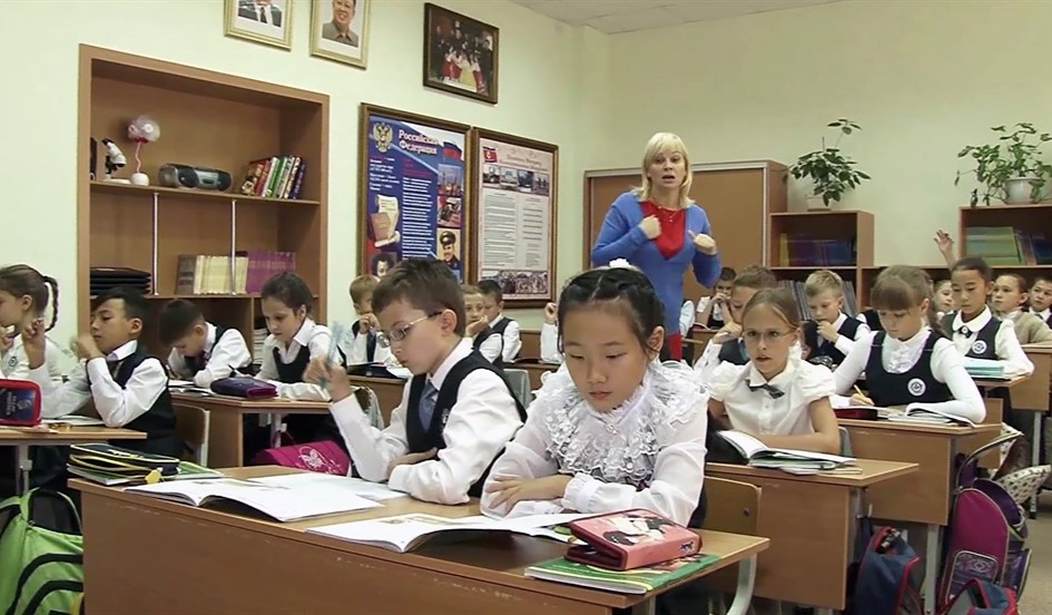
When I got home, I looked up the school's website and found a photo of kids currently attending those same classrooms. I don't know a single one of them, and for this purpose, it doesn't matter. What matters is what I can see in their faces—an awful lot of myself and my old classmates staring back. What will these kids be doing forty years from now? What kind of world will they know? I wonder if a few of them will find themselves back at that building some Saturday decades from now, lost in their own memories, looking the place over.
Names change. Faces change. Personalities shift, and so does the physical plant, year after year. But at some more basic level, my old school hasn't moved much, best I can tell. The kids and the teachers still face their own challenges, chase their own thrills, and build the memories and friendships that last a lifetime.
It's good to know someone else is living out a reality that mirrors my own memory so closely. That continuity, in a world that changes as fast as this one does, reassures me in ways I can't fully put into words. I doubt I need to, though. If you've made it this far, you already know exactly what I'm talking about.