
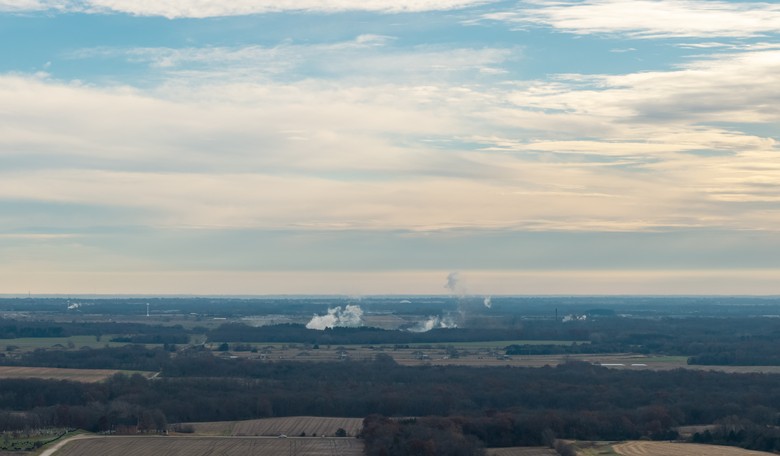
The EPA found no detectable lead in 38 samples it took from public water supplies after the Army’s blast in Middletown, Iowa. The agency released those first lab results on November 28, three days after the Army disposed of degraded lead azide at the Iowa Army Ammunition Plant.
From the EPA:
At the time of this press release, initial lab results from EPA’s post-detonation sampling show that the controlled detonation did not result in an elevation of lead in water bodies that serve as sources of drinking water. EPA found no lead in the 38 water samples taken post-detonation at public water supplies, which included samples of finished treated drinking water and untreated water at the intake. This builds on EPA’s air monitoring operations which reported 0.0 µg/m3 readings (otherwise referred to as zero detect or non-detect) of airborne lead for 30 consecutive hours after the controlled detonation using the Xact air monitoring systems.
EPA sampled 35 drinking water sources across Iowa, Illinois, and Missouri before the controlled detonation to set a baseline. Though none of these locations were within the area that the plume actually traveled, and all samples were from untreated source water, EPA is sharing the data publicly to ensure transparency.
The samples included both untreated water collected at intakes and finished drinking water. People near the plant are still waiting for a different set of tap water results.
The distinction is worth keeping straight. An intake sample tells you what was in the water entering a public system when it was collected. A finished water sample tells you what was in the water after treatment at the point where it was sampled. A tap sample comes from farther along the route, after the water has traveled through the system and reached a building.
So far, the EPA’s published findings cover the first two points along that route. The agency said it was preparing to receive, validate, and release the tap results when it issued its update. The EPA also gave a sample count, which is worth preserving. Thirty-eight samples may include more than one collection at the same public system.
The release gives no tally of 38 separate systems.
The agency also tested untreated water from 35 drinking water sources across Iowa, Illinois, and Missouri before the detonation. Four of those locations had low lead levels. All four findings came before the blast, and the EPA said none of the 35 baseline locations lay in the plume’s actual path.
The agency said it couldn’t determine where the lead in those earlier samples came from. If you see those four results on a map or in a screenshot, check the collection date before drawing a conclusion about the blast.
The water results follow earlier air readings. EPA monitors reported no detectable airborne lead for 30 consecutive hours after the blast. The air instruments and the water lab were measuring different things. Soil and dust results will answer a different question: what investigators find on the ground and on surfaces.
When we get those results, the dates and locations will matter just as much as the numbers. A sample from an indoor surface tells you something different from one taken outside, and comparing samples from the same property before and after the blast can help you show what changed.
By Saturday, the EPA said its teams had collected more than 3,200 samples of air, water, soil, and dust across the wider effort. The agency said teams had returned to 187 structures where they had already sampled before the blast. They had also collected samples at public sites, including parks with playgrounds, schools, daycares, and churches.
Some homes still needed a return visit because residents weren’t home when crews came by. For a family following along from one of those addresses, a regional total gives some sense of the effort’s scale. It still leaves them waiting for the result closest to home.
When I wrote about Middletown earlier in the week, the fight was over whether the Army could go ahead. That fight went to court and left people around the plant watching the schedule change.
ICYMI: Trump Puts Iowa Army Blast on Hold Pending Court Approval
Now that the blast has happened, the public can ask questions that a lab sheet answers. Where did you take the sample? When did you take it? If you found lead, was it already there in the sample you took before Wednesday?
The agency said it will post more results as it validates them, and the public data page is where those answers should appear.
I’d welcome Saturday’s news. The lab didn’t detect lead in any of the 38 public-supply samples the EPA reported. People who spent Thanksgiving wondering what came out of that blast finally have an answer about some of the water that feeds their public systems.
I’d give them the whole finding, including the number of samples and where the water came from. Then I’d keep following the household tap, soil, and dust results with the same care.
Those results will let someone who lives nearby look at the public record and see what the lab found closer to their front door.