


Americans who struggle to pay an electric bill don’t get a discount because their preferred party won an election. They need affordable power, dependable service, and a government willing to let the country build.
Congress has an opportunity to help. In Washington, the Senate is preparing a November 9 procedural vote on a bipartisan permitting package that would change how energy and infrastructure projects receive federal approval. Passing that hurdle would advance consideration, not enact the legislation.
From Reuters:
The package of changes unveiled on Saturday added requirements for tribal consultation, expanded states' role in transmission planning and utility oversight, modified provisions affecting electric cooperatives and public power utilities, and established a new Department of Energy program to provide communities with assistance on data-center impacts.
The senators pushed back on suggestions that Democrats should shelve the legislation until next year, arguing the measure would deliver near-term savings on electricity costs and provide a foundation for additional climate and environmental legislation under a Democratic-controlled Congress.
"This bill is the floor, not the ceiling, of our climate and environmental aspirations," Whitehouse said. "We look forward to working to accomplish big things with our big Democratic majorities."
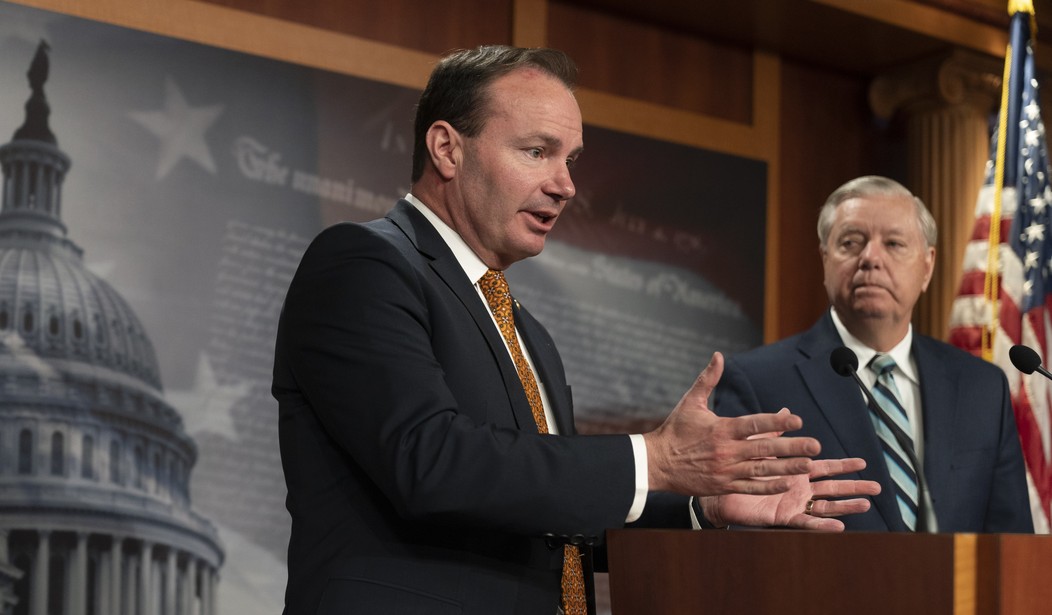
The Bipartisan American Affordability and Jobs Act comes from Republicans Shelley Moore Capito and Mike Lee and Democrats Martin Heinrich and Sheldon Whitehouse. Their partnership puts a practical question before both parties: Can lawmakers accept an agreement that helps America build even when their opponents would share the credit?
The proposal goes beyond one favored energy source. Its provisions address environmental reviews, electric transmission, energy permitting, and historic preservation. A project’s political popularity shouldn’t determine whether its developers can get a timely, lawful decision.
Conservatives should welcome the effort to make federal decisions more predictable. Investors need to know the rules before committing money. Workers need projects to advance far enough to become jobs. Families need electricity that reaches their homes at a price they can manage.
ICYMI: Republicans Lost. Democrats Are Bickering. America Can Still Move Forward.
Delay carries costs even when nobody sends Washington an itemized bill. Money committed to a project remains tied up. Construction plans grow uncertain, promised capacity remains unavailable, and a permitting system should identify genuine problems and reach decisions, rather than make uncertainty a permanent condition.
The four sponsors released a revised version on November 7 after receiving objections and suggestions. They describe changes intended to strengthen tribal consultation and protect households from bearing energy and grid-upgrade costs caused by large data centers.
From the Senate Committee:
“We have spent months working across party lines on both sides of Capitol Hill and with President Trump to deliver permitting reform that makes it easier to build in America. This substitute amendment reflects that work and brings us closer to getting the job done. Our permitting system takes too long, costs too much, and leaves too much uncertainty for the people trying to build what our country needs. We have an opportunity to lower costs for American families, and get America building again. It’s time to finish what we started,”ENR Committee Chairman Lee said.
“This substitute amendment preserves the foundation of the Bipartisan American Affordability and Jobs Act, while making targeted changes based on feedback from our members and stakeholders to further build support. I’m thankful for my colleagues’ efforts to strengthen this legislation, the contributions from members of the House, and the support of countless organizations from across the country. I urge the swift passage of BAAJA to make life more affordable for American families,” EPW Committee Chairman Capito said.
Ratepayer protection belongs near the center of the debate. If a major company needs additional infrastructure for an enormous new load, lawmakers should insist on clear rules for who pays. An affordability bill would accomplish little for a household if it ended up subsidizing someone else’s expansion.
Republicans should scrutinize those protections as closely as the provisions that speed approvals. Supporting private investment doesn’t require accepting every cost a corporation would prefer to place on the public.
Democrats face their own test. Some want to postpone action until their party takes control of Congress in January. Tribal organizations and environmental groups also maintain substantive objections involving sovereignty, cultural resources, public lands, and legal protections.
Lawmakers should address specific defects with specific changes. Protecting sacred places and giving communities meaningful input are legitimate responsibilities. So is explaining how a proposed safeguard improves a decision rather than simply making a final decision harder to reach.
Republicans must apply the same standard when the proposed project involves energy they dislike. A workable permitting system can’t depend on which administration favors the developer’s technology. Predictable rules lose their value when political preferences determine which applications move.
Nobody can honestly promise that passing this package would immediately lower everyone’s electric bill. Financing, construction, fuel costs, utility decisions, and state regulation would still matter. Congress can, however, remove obstacles that prevent supply and infrastructure from catching up with demand.
Both parties spent the campaign discussing the cost of living. Americans now have reason to demand measurable work: clearer rules, responsible cost allocation, and timely decisions that allow sound projects to proceed.
The sponsors have already demonstrated that disagreement needn’t end the conversation. Their colleagues should bring the same discipline to the remaining negotiations. Every proposed change should answer a basic question: Does it help the country make better decisions?
The election is over; electric bills keep arriving. Washington should finish the negotiations, fix the remaining problems, and let America build.
Washington needs scrutiny long after the campaign signs come down. Join PJ Media VIP for independent commentary on the decisions affecting your family and get 60% off with promo code FIGHT.



Join the Conversation
VIP members get the ability to comment on articles.