





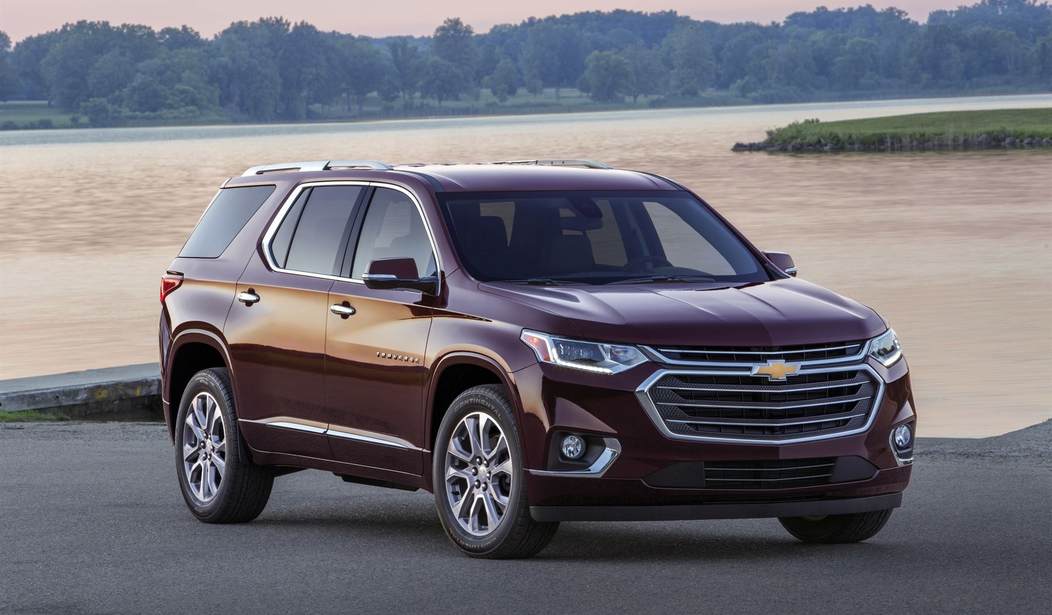
Georgia paid nearly $1 million for a Chevrolet Traverse. Only $38,705.25 bought the vehicle. The rest went to equipment officials won’t identify publicly, even as state lawmakers question whether a child-welfare agency should have technology normally associated with criminal investigations.
Records obtained through Georgia’s open-records law show that Georgia purchased a 2026 Traverse in April from Hardy Chevrolet GMC. Its listed “TSE cellular communications package” cost $890,478.80, with another $25,394 for installation.
The grand total reached $954,578.05, making the Chevy’s price tag the least remarkable item on its paperwork.
From Big Country News Connection:
The Center Square reported last month how the department spent $639,000 on four other police-grade technologies that surveil web activity, extract the contents of cell phones and track cell phone locations. The prospect of the department spending nearly $1 million more on yet another surveillance tool—one that’s mobile and far more invasive—has lawmakers raising Fourth Amendment concerns, the constitutional protection against unreasonable search and seizure.
“They are not a law enforcement agency, and my understanding is that that type of equipment is only supposed to go to law enforcement agencies,” state Rep. Beth Camp, R-Concord, told The Center Square after the news wire informed her of the spending. “That is surveillance. That is spy surveillance.”
The paperwork raises a specific suspicion. Georgia Bureau of Investigation records show an earlier vehicle purchase involving a communications package priced at exactly $890,478.80. The GBI possesses cell-site simulators, devices that impersonate cellular towers to help locate phones. Matching prices and descriptions are strong clues, but they don’t establish exactly what the other agency purchased.
Chris Apsey, chief of staff for the Georgia Department of Human Services, said equipment was installed for its Special Victims Unit. Asked whether the agency possessed a cell-site simulator, he declined to confirm or deny it. Operational secrecy may protect sensitive investigations, but lawmakers still deserve an explanation of the expense and the authority behind it.
The Special Victims Unit has a serious mission. Commissioner Candice Broce created the team to work with police to locate missing foster children at risk of trafficking. Her department says the unit recovered, or helped recover, nearly 200 missing children over two years. If specialized equipment helps bring endangered teenagers home alive, its usefulness deserves fair consideration.
But a successful mission doesn’t answer every question about how it works. Republican state Rep. Beth Camp, who chairs the House Judiciary Juvenile Committee, has questioned why a social-services agency has police-grade surveillance tools.
Democratic Rep. Mary Margaret Oliver has also raised concerns about search warrants, oversight, and whether expensive technology should be with trained law enforcement instead.
A legal opinion prepared for Oliver by the legislature’s counsel found no express statutory authorization for the Division of Family and Children Services to exercise police powers. The opinion also recognized that other legal provisions might support particular activities. Questions remain, particularly if the unit operates with officers who already have investigative authority.
Cell-site simulators can help investigators find a phone by tricking nearby devices into connecting to equipment that masquerades as a tower. Nearby phones belonging to uninvolved people may be detected too.
Federal Justice Department policy generally requires a probable-cause warrant, prohibits collecting communication contents, and mandates deletion safeguards. Those federal rules don’t automatically govern Georgia’s child-welfare employees.
The funding raises its own questions. Legislative submissions put the unit’s fiscal 2026 costs at $2.87 million, including $954,578 in vehicle purchases. The agency says federal Temporary Assistance for Needy Families funds support the unit to some extent and calls the surveillance spending permissible. The public record doesn’t establish exactly which funding account paid for this vehicle.
Georgia also confronted an $81 million child-welfare budget shortfall after suspending or canceling contracted services for families. Lawmakers filled the gap, but every major purchase still competes with other needs. Recovering vulnerable children deserves serious funding. Officials still need to document why this purchase was necessary, authorized, and properly safeguarded.
Agency leaders can protect operational secrets without stonewalling public accountability. They can identify the approving authority, explain warrant procedures, disclose how unrelated phone data is handled, and provide lawmakers confidential access to the equipment inventory. None of those answers requires revealing the location of a missing child or compromising an active rescue.
Georgia’s government has an obligation to find children who disappear from its care. It also has an obligation to respect the constitutional rights of the people living around them. A $954,578 Chevy is a reasonable place for lawmakers to insist that the state demonstrate it can honor both.
Nearly $1 million for a Chevy, and taxpayers still have questions. Help PJ Media demand answers. Join VIP today, save 60%, and use promo code FIGHT!
Join the Conversation
VIP members get the ability to comment on articles.