
Henry “Red” Erwin was on fire, blind, and holding the thing that might kill every man aboard his airplane. He could’ve dropped it and tried to save himself. Instead, the 23-year-old airman started crawling toward the cockpit, carrying a burning phosphorus bomb against his body.
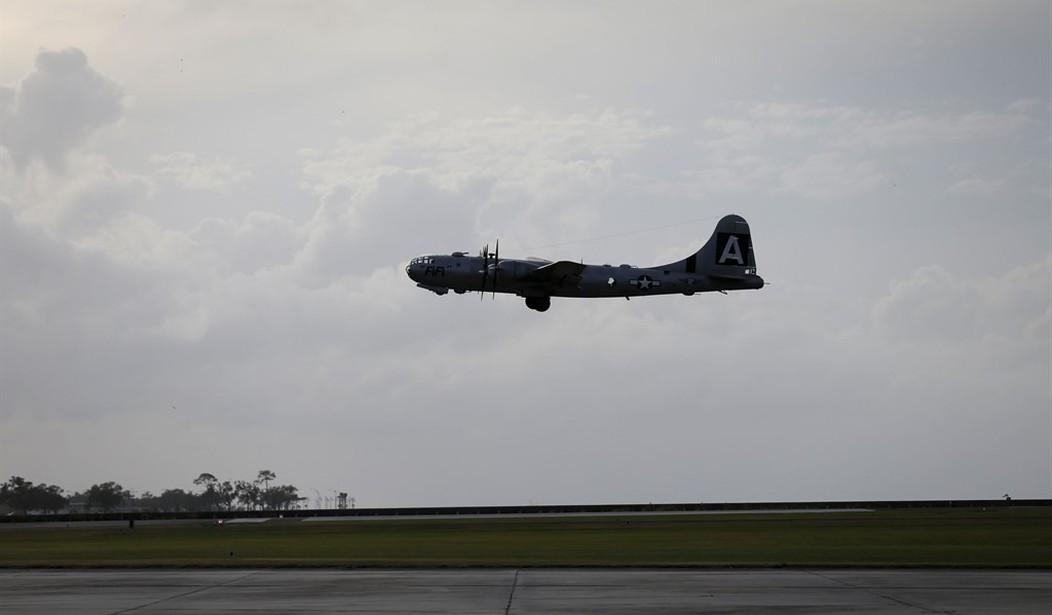
On April 12, 1945, Red was the radio operator aboard City of Los Angeles, a B-29 flying from Guam toward a chemical plant in Koriyama, Japan. He also launched smoke canisters to help the bombers form up. One 20-pound canister malfunctioned, exploded in its chute, and shot back into the plane, striking his face.
The phosphorus burned away part of his nose and ear and instantly blinded him. Smoke swallowed the forward compartment. With the pilots unable to see, the bomber began losing altitude, and the burning canister threatened everyone aboard. Erwin picked it up and felt his way forward, squeezing around a gun turret until the navigator’s table blocked him.
To free the table’s latch, he pressed the burning canister between his arm and ribs. The phosphorus ate into his flesh. He raised the table, pushed through the narrow passage, found the copilot’s window, and threw the bomb into the sky. He collapsed between the pilots, still on fire.
When the smoke cleared, the aircraft was only 300 feet above the water.
From Air and Space Forces:
The entire crew was in mortal danger. The phosphorous was burning with intensity and eating its way through the metal of the bulkhead. With smoke filling the airplane, the pilots could not see. Except for the incredible courage of Red Erwin, the only question would have been whether the B-29 would crash into the ocean before the fire reached the munitions in the bomb bay.
Erwin was alone. The navigator, whose station was closest to his, had gone aft to the celestial navigation dome to take a star shot. Even worse, he had left his folding table down and latched. The smoking bomb lay at Erwin’s feet.
“I reached down, I grabbed it with my right hand, I began to crawl,” Erwin said. “I remember opening the navigator’s table, crawled by the engineer—the flight engineer was on the right—went up between the pilot and the copilot.”
His path forward was blocked by the navigator’s table. “Erwin couldn’t release the table’s latch with one hand, so he grabbed the white-hot bomb between his bare right arm and his rib cage,” an Air Force report said. “In the few seconds it took to raise the table, the phosphorous burned through his flesh to the bone.”
His crewmates extinguished the flames and headed for Iwo Jima. Despite the terrible injuries, Red remained conscious and wanted to know whether everyone else was safe. At the hospital, surgeons struggled to remove phosphorus lodged in his eyes. The chemical could reignite whenever air reached it.
Doctors expected him to die. His commanders hurried a Medal of Honor recommendation through Washington so Red could receive it while he was still alive. They took a medal from a display case in Hawaii and flew it to Guam. On April 19, just a week after the mission, Maj. Gen. Willis Hale presented it to the bandaged young airman.
Then came a request unrelated to rank or decorations. Gen. Curtis LeMay asked if he could do anything. Red wanted to see his brother, Howard, a Marine stationed on Saipan. The brothers had been apart for three years. Marine pilot and actor Tyrone Power flew Howard to Guam, where he stayed for 24 hours.
Red later remembered, “I couldn’t see him, but I knew he was there.”
From Air and Space Forces:
On May 7, LeMay asked Erwin if there was anything more he could do for him. Erwin asked for his brother, Howard, who was on Saipan with the 7th Marine division. He had not seen him for three years. Howard Erwin was flown to Guam by movie star Tyrone Power, who was a Marine Corps pilot. Power’s usual duty was flying supplies into Iwo Jima and wounded troops out.
“And so my brother was there the next morning,” Erwin said. “He stayed with me for 24 hours. I couldn’t see him but I knew he was there and that was a great comfort.”
His condition was grave. “I was losing weight all the time,” he said. “In fact, I got down to 87 pounds, skin and bones, because I couldn’t open my mouth to eat. I didn’t give up. … They kept me soaked in saline solution so what little flesh I had wouldn’t come off.”
Survival took far more than a week. Red endured roughly 30 months in hospitals and more than 40 operations. His weight fell to 87 pounds. Doctors eventually restored some sight, but the burns left permanent damage to his face and right arm. He returned home to Alabama in 1947, determined to live rather than spend his remaining years defined by that day.
He and his wife, Betty, raised a son and three daughters. His right arm remained bent and badly limited, yet he helped run Little League baseball, hitting fly balls with his good arm and umpiring games. To his children, the decorated airman was also the dad who showed up at the ballfield.
Beginning in 1948, Red spent 37 years counseling veterans about their benefits and helping burn patients. He knew how difficult the journey home could be because he had lived it, through the surgeries, setbacks, and work of building a life again.
He died in 2002 at age 80.
The medal honored what Red did across 13 feet of a burning airplane. The life that followed honored what his friends survived to have: another morning, another chance to go home, and people worth getting up for.
His second miracle lasted nearly 57 years.
From Henry “Red” Erwin’s Medal of Honor citation:
He was the radio operator of a B-29 airplane leading a group formation to attack Koriyama, Japan. He was charged with the additional duty of dropping phosphorescent smoke bombs to aid in assembling the group when the launching point was reached.
Upon entering the assembly area, aircraft fire and enemy fighter opposition were encountered. Among the phosphorescent bombs launched by S/Sgt. Erwin, 1 proved faulty, exploding in the launching chute, and shot back into the interior of the aircraft, striking him in the face. The burning phosphorescence obliterated his nose and completely blinded him.
Smoke filled the plane, obscuring the vision of the pilot. S/Sgt. Erwin realized that the aircraft and crew would be lost if the burning bomb remained in the plane. Without regard for his own safety, he picked it up and, feeling his way, instinctively crawled around the gun turret and headed for the copilot's window. He found the navigator's table obstructing his passage. Grasping the burning bomb between his forearm and body, he unleashed the spring lock and raised the table.
Struggling through the narrow passage, he stumbled forward into the smoke-filled pilot's compartment. Groping with his burning hands, he located the window and threw the bomb out. Completely aflame, he fell back upon the floor. The smoke cleared; the pilot, at 300 feet, pulled the plane out of its dive.
S/Sgt. Erwin's gallantry and heroism above and beyond the call of duty saved the lives of his comrades.