





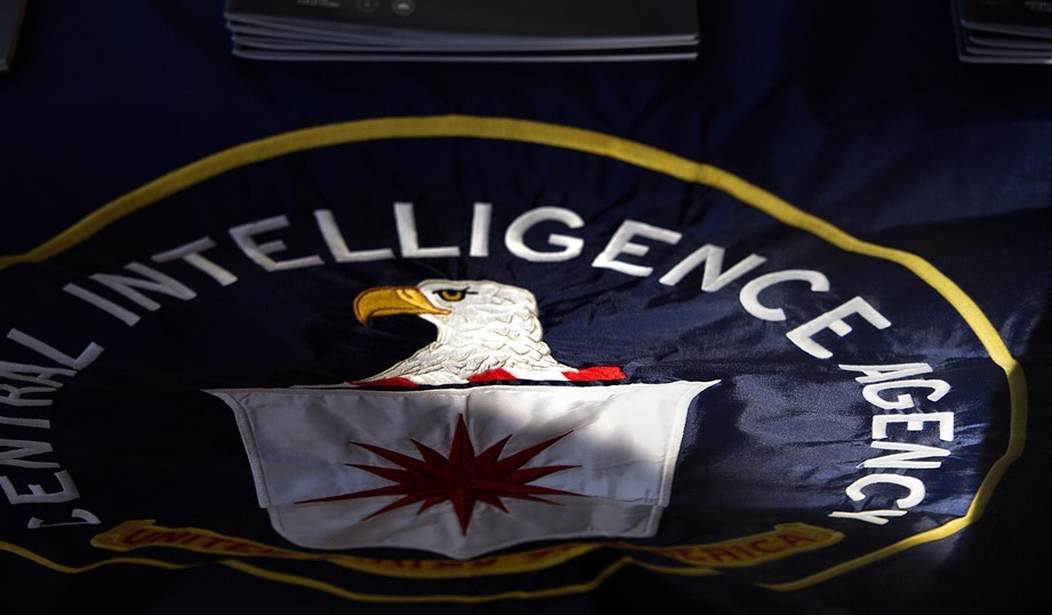
Everybody will remember the gold bars. Federal agents found 298 of them in the Virginia home of former senior CIA official David Rush, along with about $2.1 million in cash, €104,795, luxury watches, and other property. Rush pleaded guilty Tuesday to a fraud scheme that cost the federal government roughly $193.6 million, leaving taxpayers with a much bigger question than what happened to the gold.
From the Associated Press:
In previous court filings, prosecutors said Rush stashed roughly $46 million worth of gold bars from the federal government at his Virginia home. They also accused him of fraudulently claiming tens of thousands of dollars in compensation for military leave after he was honorably discharged from the U.S. Navy in 2015.
“Federal employees are entrusted with serving the American people, not themselves,” Attorney General Todd Blanche said in a statement.
CIA Director John Ratcliffe said the agency immediately referred the matter to the FBI after an internal investigation turned up evidence of Rush’s crimes.
“David Rush abused his position and betrayed the public trust and should be held fully accountable for his actions,” Ratcliffe said in a statement.
Rush held a Top Secret/Sensitive Compartmented Information clearance and served in a senior executive-level position. He reached that level, in part, by lying about his education and military experience. Once there, he created fictitious government authorities, including a fabricated Special Access Program, and used those false authorities to obtain federal money for his own benefit.
The scheme reached staggering numbers. Rush directed about $145 million in wire transfers and used government money to acquire luxury real estate, watches, and at least one vehicle. He also obtained 298 gold bars, which cost taxpayers roughly $46 million. Investigators later recovered the bars from his home, along with the cash and luxury watches.
Recommended: IRS Tried to Defend the Spend, but Its Own Watchdog Found a $4.5 Million Problem
Rush has agreed to forfeit the gold, the recovered currency, fraudulently acquired properties, 30 watches, many of them Rolexes, and two 2026 BMW Alpina vehicles, one valued at about $172,000. An asset pile of that size raises serious questions about how financial controls failed to flag spending on such an extraordinary scale.
Money wasn’t the only damage. Rush also admitted revealing the existence and descriptive information of a clandestine U.S. human source to a foreign government official. Prosecutors said the disclosure could’ve endangered the source and American officers working with the source while damaging the government’s ability to recruit future sources who depend on promises of secrecy.
From the Associated Press:
Rush’s fraudulent conduct cost the federal government approximately $194 million in total losses, according to the Justice Department. The losses included over $1.8 million in privately chartered flights that Rush authorized for personal use at the government’s expense.
Under questioning from investigators, Rush admitted that he provided a foreign government official with information about the identity of a secret source for the U.S. government, a new court filing says. The filing doesn’t specify which country the foreign official represented.
The CIA eventually caught the problem. CIA Director John Ratcliffe said an internal investigation identified potential crimes, and the agency immediately referred the matter to the FBI. Credit belongs there, but taxpayers still deserve to know how Rush gained enough trust and authority to invent classified programs, move enormous sums of money, and accumulate tens of millions of dollars in gold before the safeguards stopped him.
The vetting failure is hard to ignore. Rush’s false claims about his education and military background helped him reach a senior position where he could create fictitious authorities and obtain government money. A Top Secret clearance should bring tighter controls around extraordinary spending, especially when the spending involves gold bars, foreign currency, luxury property, and nine-figure transactions.
The secrecy surrounding Rush’s work also deserves examination. A claim involving a Special Access Program should’ve required independent verification from officials authorized to confirm that the program existed and that Rush could spend money under it. If normal financial controls were relaxed because of classified activity, investigators need to say so plainly. Classification protects legitimate operations, but it can’t excuse basic verification of who can authorize nine-figure expenditures.
The Justice Department’s investigation remains open, and the Director of National Intelligence has asked the Inspector General for the Intelligence Community to investigate. The review needs to identify who approved the transfers, who verified Rush’s supposed authorities, what records existed, which controls failed, and whether the same weaknesses remain available for somebody else to exploit.
Rush faces up to 20 years in prison when he’s sentenced January 28, 2027. Prison and forfeiture can punish the man who admitted the fraud, but they won’t explain why the system trusted him for so long. Taxpayers are still owed a full accounting of how a fake secret program became a very real $194 million bill.
Washington lost track of nearly $194 million before finding the gold bars. PJ Media keeps asking the questions government agencies would rather answer quietly. Join PJ Media VIP today and get 60% off with promo code FIGHT.


Join the Conversation
VIP members get the ability to comment on articles.