


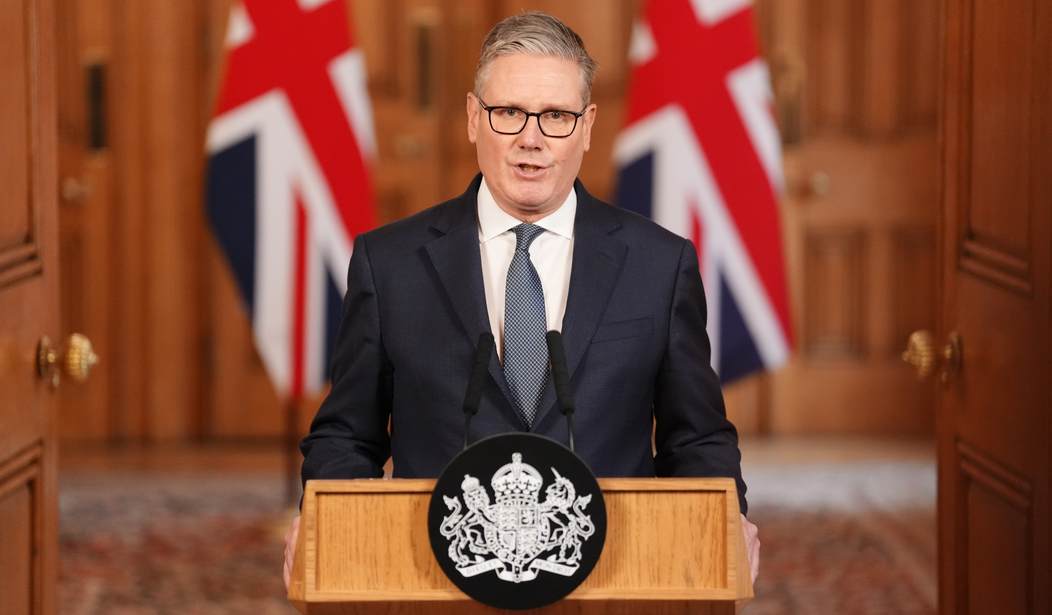
Keir Starmer lost two defense officials in one day, and both men left over the same basic charge: Britain's defense plans don't match the danger in front of it. John Healey, the UK defense secretary, resigned today. Al Carns, the minister for the armed forces, followed him out the door hours later.
BREAKING: UK’s Defence Secretary John Healey has stepped down, criticising Prime Minister Keir Starmer and the Treasury for failing to allocate sufficient funding to meet growing international security threats.
— World Source News (@Worldsource24) June 11, 2026
In his resignation letter, Healey warned that the government’s… pic.twitter.com/58yRdi1SbD
For a prime minister already limping through 2026, the timing could hardly be worse.
Healey told Starmer that the government's financial settlement for defense fell well short of what's required, writing that Starmer and Chancellor of the Exchequer Rachel Reeves had not committed enough money to keep Britain safe while threats from Russia, Iran, and other hostile powers grew sharper.
The Guardian reviews portions of Healey's letter and applies their interpretation of the message behind the words.
"You have been unable, and the Treasury has been unwilling, to commit the resources that the nation needs to defend the country at this time of rising threats."
A mere 250 words in, and we get to the crux. Starmer, Healey notes, recognised both the scale of the threat and the need for more funding, based around the defence investment plan (Dip), which had been due this week but is now delayed.
Healey then spells out what many in Westminster assumed – that the delay was owing to wrangling with the Treasury, and that Rachel Reeves’s department was blocking the sorts of sums Healey wanted.
Notably more wounding is the notion that Starmer was “unable” to stop this. Healey, it should be remembered, was among four cabinet ministers who spoke to the prime minister shortly after May’s local elections, asking him to consider his future given the heavy Labour losses. Here, Healey does not sound convinced that Starmer has since got a grip on things.
Fox News reports that the resignations reached a "seismic" crisis for Starmer.
Healey's departure stemmed from a dispute over the delayed Defense Investment Plan (DIP) — the government's long-promised roadmap for military investment and readiness — and as NATO allies face renewed pressure from Trump to boost defense spending.
"John Healey’s resignation is a seismic moment for the government and the Ministry of Defense," Royal United Services Institute (RUSI) Senior Associate Fellow Ed Arnold told Fox News Digital.
"For the government, it creates a sequence of political headaches in terms of a replacement, and trying to get the Defense Investment Plan published."
Carns, a decorated former Royal Marines officer who served multiple tours in Afghanistan, said he couldn't defend the spending level in good conscience from the government's front bench.
Starmer quickly named Dan Jarvis, a former British Army officer and Labour MP, as secretary of state for defense. Jarvis brings military experience, which helps.
Still, a hurried appointment can't erase the sight of two senior defense figures walking away at the same moment Britain needs a steady voice.
Governments survive resignations, but they have a more difficult time surviving resignations that confirm what critics already suspected.
Starmer won a landslide in 2024 and looked, for a brief season, like a man who had pulled Labour out of exile and into command. Two years later, the room feels colder.
Labour took heavy losses in the May 2026 local elections, including defeats in areas the party once treated like family ground. Starmer accepted responsibility and vowed to keep going, but the result fed open pressure inside Labour and gave Nigel Farage's Reform UK a national opening. From Reuters:
The main beneficiary was the populist Reform UK party of Brexit campaigner Nigel Farage, which gained more than 1,000 council seats in England, and will likely form the main opposition in Scotland and Wales to the pro-independence Scottish National Party and Plaid Cymru.
Early results underscored the fracturing of Britain's traditional two-party system, with the once-dominant Labour and Conservative parties losing votes not only to Reform, but to the left-wing Green Party at the other end of the political spectrum, and to nationalists in Scotland and Wales.
The defense resignations deepen a problem Starmer had already made for himself. Earlier this year, he restricted the United States from using British bases for offensive strikes against Iran, allowing only limited defensive missions against Iranian missile targets.
President Donald Trump was dealing with a dangerous Middle East moment, and Starmer chose a narrow lane. He may have thought he was showing caution, but he also reminded Washington that Britain's help now comes wrapped in hesitation.
Now comes NATO. The alliance meets in Ankara, Turkey, on July 7 and 8, with Secretary General Mark Rutte chairing the summit. President Trump is expected to press allies hard on defense spending, and Britain will arrive with fresh churn at the top of its defense team.
Starmer's government has promised to move toward higher spending, but Healey's resignation letter exposed the gap between the promise and the plan.
The numbers are part of the trouble: Starmer pledged a major defense buildup, but the latest plan would lift spending to 2.68% of GDP by 2030. Healey wanted a firmer commitment to 3% by then and a clearer path toward 3.5% by 2035.
The government says the danger is urgent, but its funding approach suggests there is still time to act.
Starmer keeps narrowing his road; he limited U.S. access during the Iran crisis, took a beating in local elections, delayed a defense investment plan, and then lost the very people tasked with selling that plan.
Britain still has real strength; its military tradition runs deep, its intelligence ties with America remain vital, and its role in NATO is too important to dismiss.
Yet leadership is partly the art of arriving at the hard moment with authority intact. Starmer heads to Ankara without that advantage.
He won big in 2024, but power isn't the same as command. Now, his own decisions are making him smaller before the world's biggest defense table.
Help us keep covering the stories the political class would rather polish up and move past. PJ Media VIP gives you deeper analysis, sharper columns, and a community that still values truth over approved narratives. Use promo code FIGHT for 60% off today.


Join the conversation as a VIP Member