





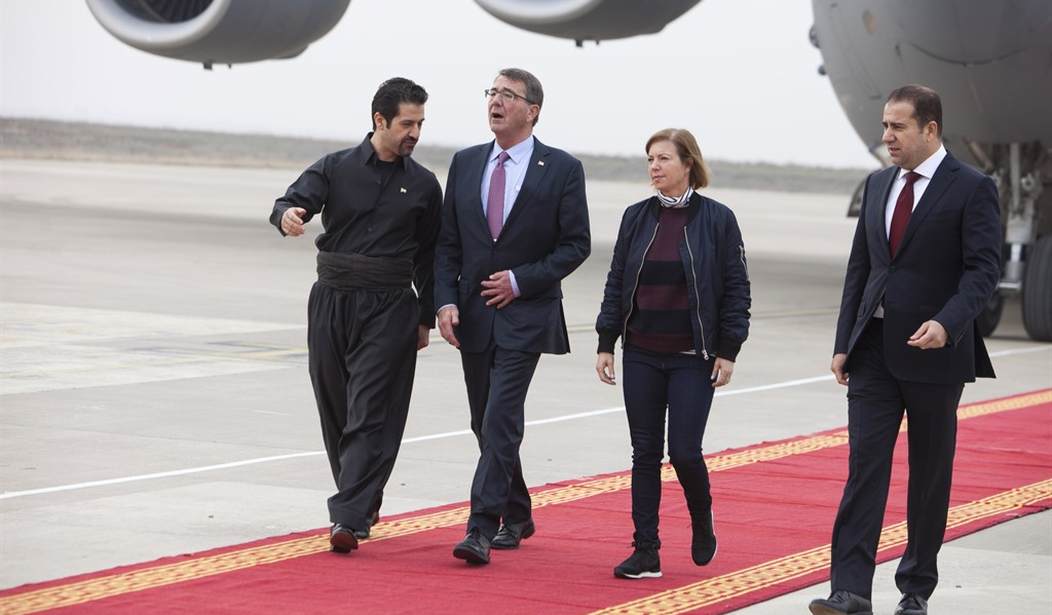
Qubad Talabani, deputy prime minister of the Kurdish Regional Government in Iraq, just said what many American news readers and Democrats still can't admit. President Donald Trump may be the leader with enough nerve, leverage, and dealmaking instinct to end the Iran war and turn a dangerous regional crisis into an economic opening.
In an interview with Breitbart News, Talabani called Trump the “master of the deal” and said he's rooting for him to secure an agreement that ends Iran's nuclear weapons threat and benefits the United States, Iran, and the wider world.
“Well, first we need peace in the region and in Kurdistan,” Talabani told Breitbart News. “We’re rooting for a deal. We’re supporting a deal, and we’ve made it clear to all sides we’re willing to help in any way that we can, whether it’s through back channels or whether it’s to utilize Kurdistan’s strategic location to support any deconfliction—we need this deconfliction.
The impact of this war on Iraq, and on Kurdistan, was significant, primarily economically, as it has impacted the rest of the world. So, we welcome the ceasefire. We welcome the extension of the ceasefire. As they say, it takes more bravery to end the war than it does to start it. I think this is where we are at now, and we’re hoping that President Trump will do the right thing and do what it takes to get a deal that brings peace to the region, brings peace between the United States and Iran, and that will have I think enormous ramifications positively for the rest of the world.”
I think it's funny how a Kurdish leader in Iraq sees Trump's usefulness more clearly than half the political class in Washington. Talabani lives in a region where weak American leadership doesn't produce panel discussions or cable-news sneers; it produces missiles, militias, refugees, dead civilians, broken trade routes, and another generation raised in Tehran's shadow.
Iran's response to a U.S. proposal arrived through Pakistan on May 10, with talks focused on ending hostilities and reopening safe passage through the Strait of Hormuz. President Trump has kept the pressure on Tehran, rejected terms he called unacceptable, and made clear that Iran can't use diplomacy as a waiting room while preserving its machinery of threat.
The Strait of Hormuz remains the hinge point. Energy markets, shipping companies, and governments all understand what happens when the world's most important maritime chokepoint becomes a battlefield.
In March, Secretary of State Marco Rubio spoke with Kurdistan Regional Government Prime Minister Masrour Barzani and thanked the KRG for helping oil from Iraq, including the Kurdistan Region, reach global markets during the Iran war.
Talabani's confidence comes from hard regional experience, where the Kurds have watched Iran's influence stretch across Iraq, Syria, Lebanon, Yemen, and Gaza through armed proxies and political pressure.
Trump's appeal, for leaders like Talabani, comes from a simple fact: he treats negotiation as a contest of leverage, not a polite exercise in wishful thinking.
President Trump has also spoken directly with Kurdish leaders in Iraq, including Masoud Barzani, former president of the Kurdistan Region, and Bafel Talabani, president of the Patriotic Union of Kurdistan. White House Press Secretary Karoline Leavitt said Trump had been in contact with many regional allies and partners.
American Democrats and many news readers still process Trump through tone, personality, and old grudges instead of results. If Trump growls, they call him reckless; if he negotiates, they call him lucky; and if a foreign leader praises him, they act as if somebody misplaced the script.
Yet Talabani's comments carried the weight of lived reality.
Nobody should pretend the Iran problem can be solved with one handshake and a photo op. Iran's rulers have built a long career out of delay, deception, and proxy violence. Any agreement must be enforceable, measurable, and backed by real consequences.
If Trump ends the war, reopens the strait, contains Iran's nuclear ambitions, and gives the region room to breathe, the result won't need approval from Washington's green rooms.
For more straight talk on foreign policy, media blindness, and the leaders who actually move events, join PJ Media VIP today and use promo code FIGHT to get 60% off your subscription.
Join the Conversation
VIP members get the ability to comment on articles.