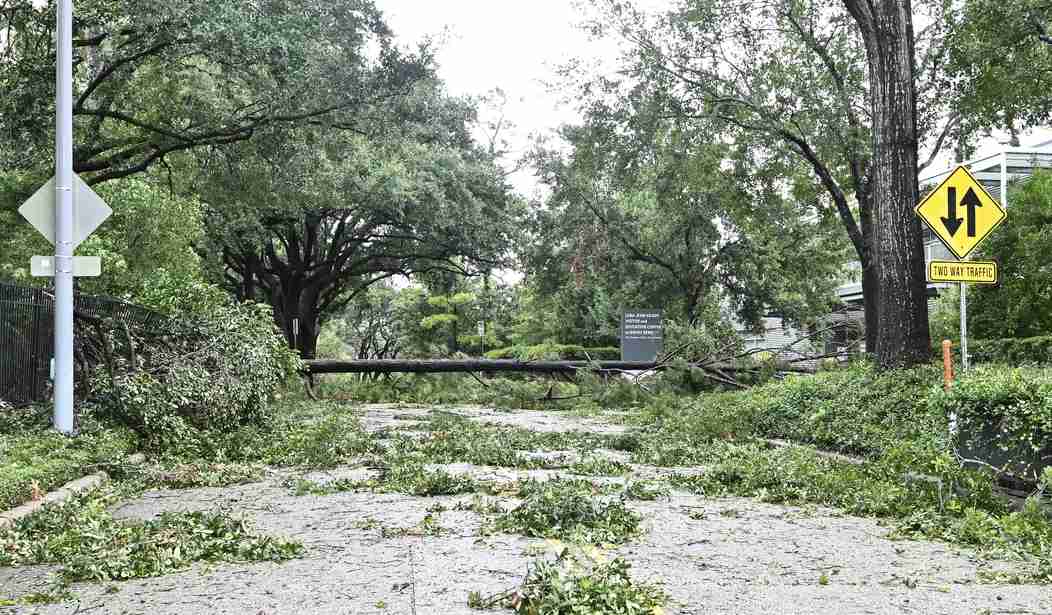
In modern meteorology, weather models show an elevated risk of floods or storms before they occur, as scientists detect patterns days or even weeks before any impacts, providing communities and first responders a heads-up.
Despite our growth in technology, disasters still occur with devastating speed and scale, even when those signals appear early enough to save lives. The problem isn't a lack of data: It's how our systems are built to interpret risk only after certainty is clear.
That's the premise behind Jeff Da Costa's work, which he shared on Science X.
How Forecasts Work
When models for weather or hazards run, they create dozens of simulations of what might happen in the future. Those simulations don't give absolute answers; they just give probabilities. If many outcomes point toward danger, forecasters know the risk is rising.
Weather forecasts may look definitive on your phone, but they are probabilistic by nature. They are created by running a series of computer simulations of the future weather. The level to which the outcomes of different simulations agree with each other provides the likelihood of hazardous conditions, not guaranteed outcomes. These allow forecasters to identify elevated risk well before impacts occur, even if the precise location of an event and its size remain uncertain.
Crucially, uncertainty is usually greatest further ahead, when preventative action would be most effective. Acting early, therefore, almost always means acting without certainty. This is not a weakness of science, but an inherent feature of anticipating complex systems under changing conditions. The real challenge lies in how institutions are organized to interpret, trust, and act on those probabilities.
According to Da Costa, emergency plans around the world often rely on triggers, but probability isn't the same as certainty. When official thresholds or alert levels are reached, action is authorized, even though a strong forecast may have existed days earlier; protocols wait for confirmation before triggering alarms.
Certainty vs Probability
In theory, those procedures make sense; thresholds bring clarity, reduce false alarms, and help coordinate who does what.
But waiting for a defined indicator delays action until the danger is already unfolding.
Multiple European agencies identified forecast risks ahead of the 2021 floods, but the bureaucratic process to act was initiated too late to help some communities prepare or evacuate.
The problem was that the systems did everything they were designed to do, yet the warnings arrived only after certainty was established.
People and Perception
There's a challenge in how people and institutions react to danger, where humans tend to cling to what's familiar until a threat becomes immediate and undeniable. That bias slows responses at every level, from local authorities to national authorities, even when models show a high probability of danger.
When there's no certainty to draw on, it's easier for leaders and communities to hope for the best rather than act on risk. Normalcy bias makes it feel safer to wait than to prepare.
Act Early, Save More
Hindsight provides the perfect teacher, showing us what worked and what didn't. Some regions are putting that learning into practice through what experts call anticipatory action: preparing or evacuating before risk becomes certain.
The effectiveness of early warning systems over time depends on their ability to learn from extreme events. This requires open, independent analysis of what worked, what did not work, and why. In several neighboring countries affected in 2021, such as Germany and Belgium, formal inquiries and external reviews were carried out. In Luxembourg, they were not.
When expert critique is discouraged or avoided, learning slows. Questions about system performance remain unresolved, and the same structural vulnerabilities are likely to persist. This creates a systemic risk in its own right: societies become less able to adapt warning systems, interpret uncertainty, and act earlier on emerging threats.
This new approach has already helped communities in dozens of countries reduce harm from predictable hazards by acting on high-quality forecasts instead of waiting for clear confirmation.
A Better System Takes Shape
Early warning systems are still evolving, while they remain a powerful tool for reducing risk when backed by clear decision pathways that act before certainty arrives.
Many nations and organizations are working to make forecasts more actionable, building trust in early action taken by authorities and the public. Helping societies treat uncertainty not as a reason to delay, investements in education, communication, and planning help generate cues for preparation.
The Promise Ahead
The "early warning for all" goal has grown into a global priority. Systems that learn from past events, adapt protocols, and encourage proactive decision-making makes risk visible soone and responses faster.
Da Costa writes that one aspect can't be stopped.
Uncertainty cannot be eliminated. The challenge is to decide how much uncertainty is acceptable when lives and livelihoods are at stake. Systems designed to wait for certainty—for procedural, organizational, financial or reputational reasons—are more likely to deliver warnings that arrive too late to feel like warnings at all.
If resilience to future climate risks is to be sustainable, warning systems must be designed to learn, adapt and act earlier on credible risk.
Modern society will always be tested by disasters, but by designing systems that value early insight and trusting our best tools sooner, forecasters can turn warnings into action, reducing harm well before danger arrives.