
A farmer named Cincinnatus was the focus of a story told by the Romans, who pulled him in from his fields when enemies closed in and handed him absolute power.
How did things work out? Funny you should ask.
He saved the republic, defeated the threat, and then did something rare even then: He returned the authority and resumed plowing. There wasn't a victory tour or permanent throne; Cincinnatus simply did his duty, finished, and life continued. Rome remembered him not for how loudly he ruled, but for how quickly he left.
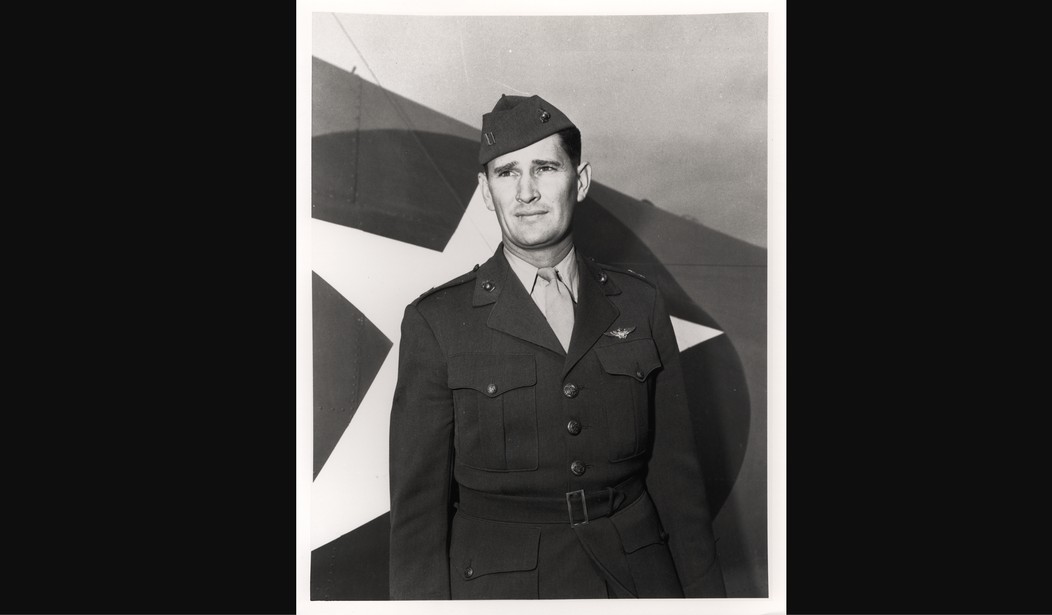
A Marine named Joe Foss lived as the American version of that story.
Growing up in South Dakota during hard years taught Foss discipline at an early age. Work came before comfort; responsibility arrived without negotiation. When war called, Foss didn't posture or delay; he joined the Marine Corps and earned his wings as a fighter pilot during the Pacific campaign, a campaign that demanded more courage than glamour.
Flying the Grumman F4F Wildcat over Guadalcanal, Foss faced conditions that modern pilots would barely recognize. Jungle runways were barely airstrips, fuel remained scarce, and mechanical failure waited in the wings.
Japanese Zeros held speed and maneuvering advantages early in the fight, but Foss learned to fight them effectively by studying tactics, trusting formation flying, and simply refusing to panic. There was no time for bravado; discipline mattered more.
Foss shot down 24 enemy aircraft in just over a month of combat, which tied Eddie Rickenbacker's World War I record at the time.
Numbers tell only part of the story. Each engagement protected his Marine brothers on the ground, where victory bought another sunrise for men pinned to muddy foxholes. Only one thing brought him down: disease-carrying mosquitoes narrowly killed him, leaving him in combat only because his body broke down, failing him.
President Franklin Roosevelt awarded Joe Foss the Medal of Honor for extraordinary courage and leadership when he faced two squadrons of Betty Bombers alone, officially shooting down five planes in four minutes.
Like many of his generation, war never became Foss's permanent identity, where he understood service as a reason, not a brand. He returned home, built a life, and answered the next call without demanding attention. Foss ran and served two terms as the governor of South Dakota, carrying wartime seriousness into civilian leadership.
After World War II, Foss did not retreat from service, helping to organize and strengthen the South Dakota Air National Guard. Foss was convinced that air defense remained essential even in peacetime.
When the Korean War broke out, Foss returned to active duty, serving as a lite-colonel in the Air Force and overseeing training and readiness at a time when American air power again faced global pressure.
For Foss, service remained a habit, not a closed chapter.
When entering public office, Foss carried that same discipline, while winning election to the South Dakota legislature before becoming governor from 1955 to 1959. As governor, Foss emphasized fiscal restraint, infrastructure, and education, governing with a wartime sense of accountability rather than ideological showmanship. Colleagues talked about his calm demeanor and refusal to dramatize authority. Leadership meant responsibility, not the spotlight.
Sports and media were seen as extensions of public trust rather than as celebrities. Foss became the first commissioner of the American Football League — a direct competitor to the National Football League — serving from 1959 to 1966. He stabilized the league, negotiated early television exposure, and enforced competitive standards, allowing the AFL to survive long enough to force a merger with the NFL. Without Foss's steady hand, the modern shape of professional football likely looks very different.
Oh, and he also played a role in creating the Super Bowl.
Later, Ross hosted The American Sportsman, a widely popular television program that blended outdoor recreation, conservation, and quiet patriotism, speaking plainly, avoiding ego, and treating viewers like neighbors rather than an audience.
Even on camera, Foss never spoke of his heroism; he simply carried himself as he always had, as someone entrusted with a role, leaving it better than he found it.
Joe Foss never ran from fame, but never sought it out, either.
It didn't matter because recognition followed him as if he were wearing a $100 bill around his neck during a democratic rally. He treated his fame carefully, like borrowed equipment that needed to be returned in good condition.
Years later, something happened to him that blew my mind.
In 2002, wearing his Medal of Honor, Foss was at Phoenix Sky Harbor Airport. Because of his pacemaker, he was patted down instead of walking through the metal detector.
Keep in mind, 9/11 was still very fresh in the minds of everybody, especially TSA personnel who were extremely high-strung. TSA agents discovered his medal and found it to be suspicious/ It could be a ninja throwing star, a deadly weapon!
Maybe in the movies and schmaybe not with an 86-year-old man.
Chaos did not ensue, but Foss was delayed for 45 minutes.
There is a chance the story is apocryphal, but it fits his brand. Foss never complained and demanded deference, only living by a quiet rule that older generations understood: Step forward when needed; step back when finished.
Authority never belonged to Foss; it belonged to the moment. History shows that societies survive only when they remember who defended them and understand why the defense mattered. Foss came from a generation that never demanded constant justification for service or sacrifice.
Courage led the way, comfort took a back seat, and reflection arrived only after the work was done.
Because Rome mattered more than power, Cincinnatus returned to his plow. Joe Foss returned to ordinary life for the same reason. History remembers both men not because they held authority.
But, because they knew when to give it up.