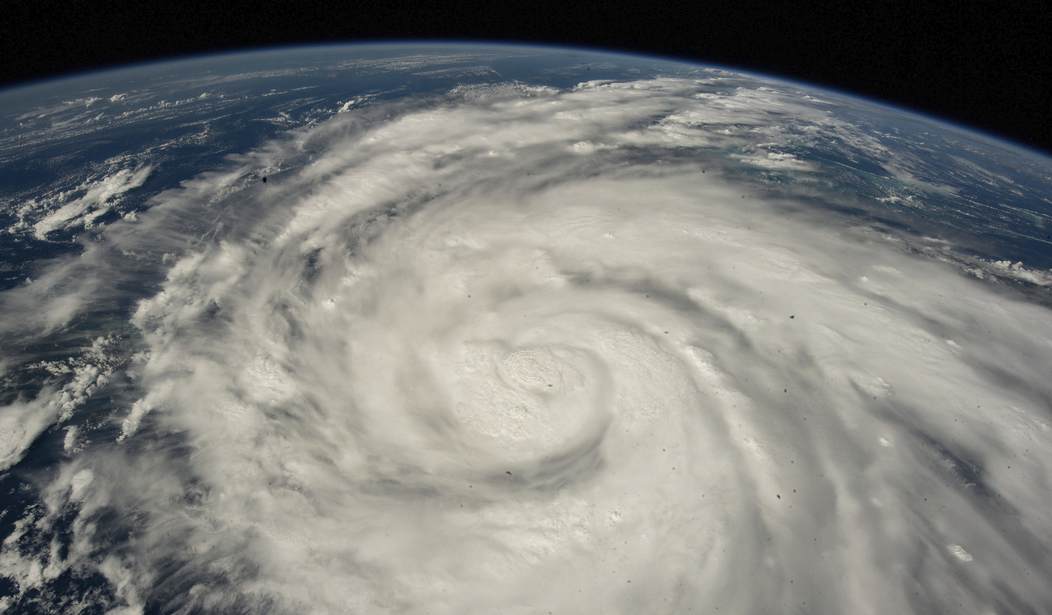

I don't know why, but this one struck me.
I would love to have been on this flight.
A pilot just flew through one of the strongest aurora storms in years — and saw the sky explode in color.
— Massimo (@Rainmaker1973) March 23, 2026
From the cockpit of a Boeing 787, pilot Matt Melnyk had a view like no one else. Flying at 37,000 feet over Manitoba, he watched as the auroras filled the entire sky. pic.twitter.com/34f1G8Sd7w
What a view. Someone should report this to the FTC or National Geographic or something. North Pole, Alaska, is 1,700 miles from the actual North Pole.
Absolutely INSANE twilight aurora just now from my driveway in North Pole, Alaska. Incredible motion and color, one of the best of the season. Watch until the end, wow! pic.twitter.com/Dwjb1tLh0m
— Vincent Ledvina (@Vincent_Ledvina) March 23, 2026
I've neither read Project Hail Mary nor seen the movie, although I've heard good things about it. But this looks pretty terrific.
Project Hail Mary opened last week. Great film. But nobody is talking about the credits. They should be.
— Gandalv (@Microinteracti1) March 23, 2026
A guy with a telescope spent hundreds of hours collecting light from objects so distant that the photons hitting his sensor left their source before Rome was founded. His… pic.twitter.com/v2TAXmywPn
I'm probably being too picky, but every time I hear about "Saturn now has NNN moons," I ask myself, "but isn't all that crushed ice also all moons?"
Astronomers have discovered eleven new moons of Saturn.
— Black Hole (@konstructivizm) March 18, 2026
Most of them are small rocky bodies up to 5 kilometers in diameter. They move in retrograde orbits, meaning they rotate in the opposite direction to Saturn's rotation around its axis.
Until recently, Jupiter was considered… pic.twitter.com/nfcHzkMBPG
Still, it's cool. So to speak.
Saturn 🪐 🛰️ pic.twitter.com/dSswiuKHvP
— Fumix (@Fmix2369) March 18, 2026
This one is fun. It's not actually all that unusual for sounding rockets to cause lightning. It's less usual to have helical threads of light. An explanation is in the comments following the tweet.
For Saint Patrick’s Day, one of my favorite rocket launch photos… Black Rock Desert, NV
— Steve Jurvetson (@FutureJurvetson) March 17, 2026
The green glow comes from barium chloride mixed into the AP propellant. I planned the camera location in advance to bisect the moonrise, and then my rocket did something very unusual. pic.twitter.com/te3bI9iUk0
Cue Doctor McCoy.
We just saw the exact moment a star exploded for the first time ever.
— Massimo (@Rainmaker1973) March 19, 2026
Astronomers have achieved a rare feat: imaging the exact moment a massive star detonated—and the explosion was anything but spherical.
SN 2024ggi, a supernova located 22 million light-years away in the spiral… pic.twitter.com/enC6BTawrJ
Nights on Mars can be spectacular.
⚡ NASA just released insane new image of Mars.
— Black Hole (@konstructivizm) March 23, 2026
Yes those are real clouds.
on Mars.
250 million miles away from us.
Not just any clouds, these are extremely rare Iridescent clouds seen for the first time ever on an alien planet. pic.twitter.com/bhMjveioug
This has a not-very-helpful Community Note on it, but I don't care.
Here's an alternate soundtrack and a bit of space history all at once.
Apollo HD - Breathtaking Film Footage from the Apollo Missions in HD
— Mike Constantine (@Moonpans) March 17, 2026
This short film is a compilation of stunning Apollo film footage upscaled using modern techniques set to a beautiful music score. The film is a compilation of several missions from the unmanned Apollo 4 test… pic.twitter.com/R0w1WR08iC
And a couple of interesting stories. First, a misleading headline about a "Wall of Fire." They actually explain the reality — it's "hot" in the sense that the plasma is very active, but it's also just a few atoms per cubic meter. Not noticeable heat.
Voyager hit a 90,000°F wall at the solar system’s edge.
— Massimo (@Rainmaker1973) March 19, 2026
NASA’s Voyager 1 spacecraft crossed one of the most dramatic frontiers in the cosmos: the heliopause, the tenuous boundary where the Sun’s influence finally gives way to interstellar space. What the probe discovered there… pic.twitter.com/6g41iOpEF6
Second, an interesting story about CERN transporting a whole 92 antiprotons on a truck about 4 kilometers.
In a world-first achievement, CERN scientists have successfully transported antimatter by road.
— Massimo (@Rainmaker1973) March 25, 2026
On March 24, 2026, researchers from the BASE experiment at CERN moved a cloud of 92 antiprotons in a specialized portable cryogenic Penning trap — loaded onto a truck and driven… pic.twitter.com/f81mYxrRE0
Followed by nervous posts about OMG anti-matter. It turns out that cosmic rays produce about 10,000,000,000,000,000,000 — 1 x 10¹⁹ — antiprotons every day. Another 92 aren't going to make any difference.
And that's it for this week. On the home front, I've promoted my orange Costa Rican cat to CCO: Chief Chaos Officer. He's been "helping" today.
Come back next week, and comment this week. And send more spray bottles.