Erika Kirk has highlighted a serious problem in America today — that of confusing knowledge and certifications with wisdom. It is one which has been destroying our education system, our government, and our critical thinking skills for years.
My husband always said it best.
— Erika Kirk (@MrsErikaKirk) August 12, 2026
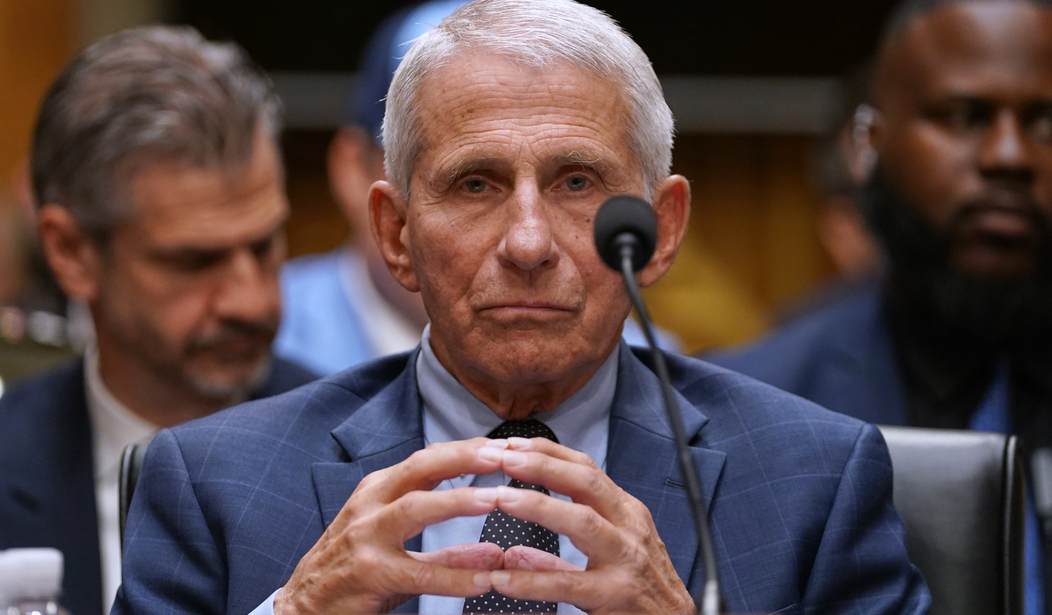
COVID taught us that knowledge and wisdom are not the same thing. Our institutions are filled with people like Fauci who have credentials, degrees, and knowledge, but lack wisdom.
And knowledge without wisdom, especially when combined with power,… pic.twitter.com/DFxp3Y22P3
I was recently talking with a relative who identifies as Christian and votes Republican, but who made the argument that it is perfectly fine to encourage teens to read by handing them sexually graphic material, because reading anything is inherently laudable. The argument is preposterous. Communist countries often have high literacy rates purely so that the government can pump constant propaganda to the people. And encouraging children to be sexually licentious from a young age will always lead to heartbreak.
If you praise kids for reading and listening to nothing but trash, they will grow up wanting to consume and talk about nothing but trash. No great artist or poet or inventor learned how to hone his skills by indulging in stupid and gratuitous nonsense. If you read Diary of a Wimpy Kid or Fifty Shades of Grey and listen to Lady Gaga, you’re probably not going to create the West’s next great masterpiece. And as artificial intelligence (which cannot think) proves so often, being fed all the wrong “facts” can lead to wildly wrong conclusions, even if there was a vast amount of data involved in producing the wrong conclusion. All of which is to say that neither knowledge nor alleged expertise necessarily equates to wisdom and truth.
But it is unfortunately true that in modern America, our system is built around a blind worship of alleged expertise, and particularly of experts who don’t dare to be original. It is, in fact, a sign that we are going further and further away from our Founding principles, because the first Americans valued originality and hated aristocratic elitism. When fighting a revolution, building a life on the frontier, or establishing a new nation, most early Americans were too close to reality to care for much except the real-world skills and practically applicable ideas of their fellows.
But nowadays, technology, propaganda, academia, and welfare have insulated so many Americans from reality that we can afford to admire people whose ideas never succeed and whose predictions never come true. As Thomas Sowell pointed out in Intellectuals and Society, many of the medical, scientific, and academic experts who receive the most acclaim (think Anthony Fauci) have never been right nor contributed anything valuable to society in their entire careers. Nor can we say that increased requirements for certificates and college degrees in many industries have actually made people more capable workers and better thinkers.
Ultimately, as Erika and Charlie Kirk both noted, a huge part of the problem is that Americans are less and less religious and less and less likely to base their opinions on Judeo-Christian religion. If there is no objective standard of reality, no ultimate arbiter, and no eternal justice, who is to decide what is right and wrong or what is true and false? Who is to say what is knowledge and what is wisdom?
Without the Jewish and Christian God, and without true wisdom, no amount of data and technology and credentials will ever make our country a better place.