





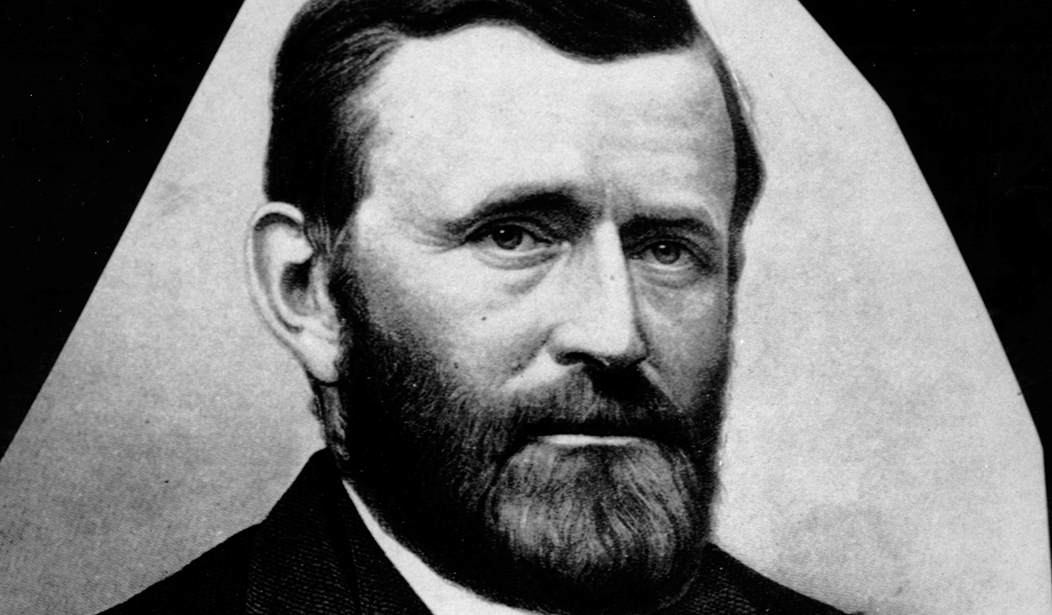
In 1869, Ulysses S. Grant, victorious hero of the Civil War, delivered his first inaugural address. He faced the gargantuan task of healing a divided nation, guaranteeing civil rights to new groups of citizens, thwarting mass Democrat violence, and upholding a Constitution under assault. Since we share many of the same issues or connected problems with the ones he had to handle, I want to mark his birthday anniversary (April 27) by drawing some lessons from that 1869 address.
As we saw with crazed anti-Trumper Cole Allen trying to murder Trump administration officials on Saturday at the White House correspondents' dinner, we are facing a political civil war and a rash of leftist violence. Grant had those problems, too, and he had an answer to them.
"The country having just emerged from a great rebellion, many questions will come before it for settlement in the next four years which preceding Administrations have never had to deal with. In meeting these, it is desirable that they should be approached calmly, without prejudice, hate, or sectional pride, remembering that the greatest good to the greatest number is the object to be attained," Grant said. "This requires security of person, property, and free religious and political opinion in every part of our common country, without regard to local prejudice."
One of Grant's main focuses in the article has been almost entirely forgotten in our day, not only by Democrats, but also by Republicans. Grant highlighted the dangers of a large national debt and the importance of paying it back while also enforcing a gold standard as much as possible. He was a visionary in this regard, condemning all those who would ignore "one farthing of our public debt" as unworthy of public trust and putting forth various plans for spurring a post-war rebuild while yet strengthening the nation's financial credit.
Another injunction of Grant's as applicable today as it was then is his call to young men to shoulder the responsibility not only for America's present but her future:
The young men of the country—those who from their age must be its rulers twenty-five years hence—have a peculiar interest in maintaining the national honor. A moment's reflection as to what will be our commanding influence among the nations of the earth in their day, if they are only true to themselves, should inspire them with national pride. All divisions—geographical, political, and religious—can join in this common sentiment.
For Our VIPs: A Bennett Place Anniversary Reflection and the D.C. Dinner Shooting
Not less straightforward and admirable is Grant's rule for foreign policy, where he promised, "I would deal with nations as equitable law requires individuals to deal with each other, and I would protect the law-abiding citizen, whether of native or foreign birth, wherever his rights are jeopardized or the flag of our country floats. I would respect the rights of all nations, demanding equal respect for our own. If others depart from this rule in their dealings with us, we may be compelled to follow their precedent."
His ultimate success in this goal is evident in his tremendous popularity in European and Asian nations following his term in office. You can read more here.
The seeds of Grant's legacy as the greatest civil rights president in our history were obvious in the address, as he urged his fellow countrymen to fulfill the Founders' dream of equal rights for all men and complete the work of Lincoln and the Civil War's emancipation. Below are two paragraphs that particularly highlight Grant's goals:
The proper treatment of the original occupants of this land, the Indians, one deserving of careful study. I will favor any course toward them which tends to their civilization, Christianization, and ultimate citizenship.
The question of suffrage is one which is likely to agitate the public so long as a portion of the citizens of the nation are excluded from its privileges in any State. It seems to me very desirable that this question should be settled now, and I entertain the hope and express the desire that it may be by the ratification of the fifteenth article of amendment to the Constitution.
President Grant was an unusual politician for his time in aiming to help the native tribes rather than displace, dispossess, and aggressively contain them. Grant was also a dedicated advocate for black Americans' civil rights at a time when the Civil War was barely over, and when the Democrats' Jim Crow laws and domestic terror groups like the KKK were gaining in number and strength. He had to deal with altogether too much racist domestic terrorism during his presidency, but he knew what was just and stuck with it.
Nowadays, Democrats might have altered which racial and ethnic groups they smear, but they are still as racist and almost as terroristic as they were in the late 19th century. Like Grant, modern Republicans are facing an ever-increasing tide of Democrat violence and political race-baiting, not to mention habitual Democrat attacks on constitutional rights. And like Grant, we must not pander to the terrorists and race-baiters; we must show courage and speak the truth regardless of their lies and intimidation.
Finally, down through the centuries rings Grant's call for a "determined effort on the part of every citizen to do his share toward cementing a happy union; and I ask the prayers of the nation to Almighty God in behalf of this consummation." Amen.
Editor's Note: Do you enjoy PJ Media's conservative reporting on the woke left and shootings? Support our work so that we can continue to bring you the truth.
Join PJ Media VIP and use promo code FIGHT to receive 60% off your membership.


Join the Conversation
VIP members get the ability to comment on articles.