Areopagitica is a small essay by John Milton, creator of Paradise Lost, and it was first distributed as a pamphlet in 1644. This publication contains helpful concepts relating to free speech. Milton released the pamphlet because a law requiring government licensing, similar to the old 18th-century British colonial law of prior restraint, “suppress[ed] all this flowery crop of knowledge." This unfair demand of a license from the government to publish literature oppressed writers (whether or not they wrote fiction) and researchers, including those who distributed papers and pamphlets championing free speech.
Milton warned the public about the “unapproved speech” problem, partly to fight for fellow poets, and partly for a chance to continue sharing his voice without a censorious government intending to squash it.
Areopagitica and the Reformation
Milton intended to convince Parliament to allow all writers to have liberty, and his fight for free speech is built on individual responsibility when consuming literature to avoid the need for future licensing laws. Milton additionally advocated for no state religion, rendering his individual responsibility premise also useful for the concept of separation of church and state, as Charles I tried to raise the Church of England up as a state religion and even Parliament was attempting to institute Presbyterianism as its state religion to get rid of the Church of England.
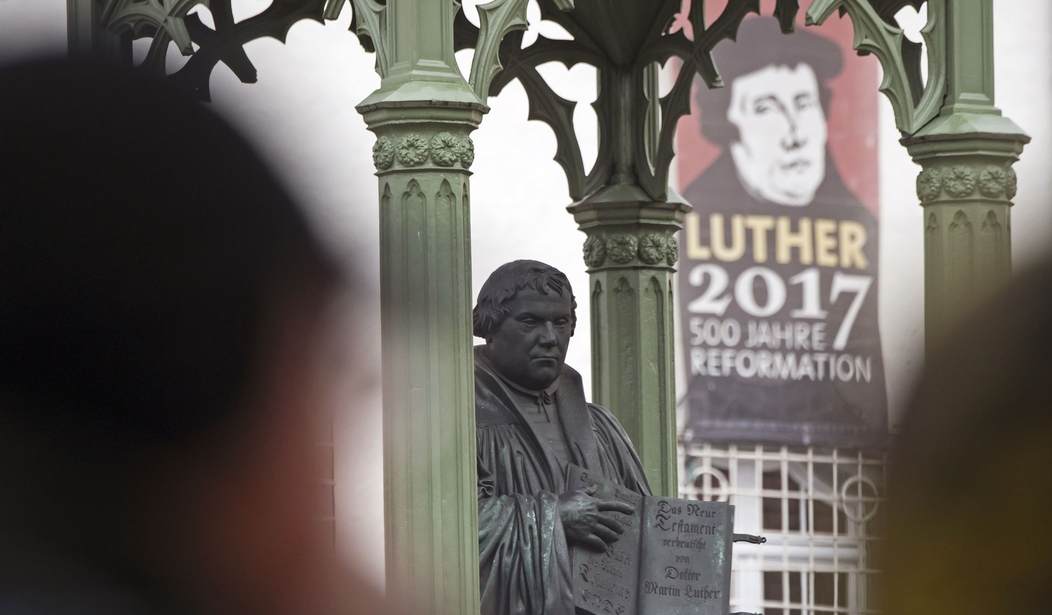
John Wycliffe translated Bibles into vernacular English for the common people to read, Johann Hus tried to persuade the Catholic Church that they needed to change, and both of those instances were the believers’ voluntary, individual concerns. These great heroes, noble martyrs, would never have been penalized for their innovations if separation of church and state had existed. Milton wrote about the Catholic Church in comparison to Presbyterianism, because the Catholic Church had been used as a state religion before the Parliament attempted to mirror it with Presbyterianism.
Milton compared his situation to them, mentioning them multiple times, because, akin to these Reformers, he was trying to create a world where no licensing or government depending on a state religion was required, and where literary and religious concerns were only individual readers’ concerns. The Reformation raised such questions about separation of church and state.
To amplify his argument, he references magic books being burned by the new Ephesian believers: “tis reply’d the books were magick, the Syriack so renders them. It was a privat act, a voluntary act, and leaves us to avoluntary imitation; the men in remorse burnt those books which were their own; the Magistrat by this example is not appointed."
“These men practiz’d the books, another might perhaps have read them in some sort usefully," to find out what the Ephesians believed or how dangerous the magic would have possibly been to wield. All knowledge is indeed more possible through a separation of church and state, including academic knowledge required for believers and the church to “engage the culture” or to warn against reading certain literature.
Milton also wanted Christians to be allowed to leave certain types of literary works up to their consciences; as one writer said, “he casts liberty of conscience as God-given rather than granted by the state." Separation of church and state provides a greater possibility for freedom of conscience, for individuals to make their own choices instead of the government crafting uneducated guesses about people and their beliefs.
If the church made changes, Parliament must make changes also
The established church began to follow truth more closely after the Reformation affected them, since it dealt with Protestants’ suggestions by reforming from within. After Martin Luther and other Reformers' efforts, to name one change made, the Catholic Church did away with Indulgences. Martin Luther raised awareness of Indulgences being an unsound idea and Wycliffe shared with people what the Bible actually said. Hus also attempted to be such a source of knowledge for the established Catholic clergy, but he was unfortunately burned at the stake. However, the three Reformers still shared the information, and the Church removed Indulgences because of them.
Milton knew that education helps one discover truth. A strong question is, “If the Catholic Church changed its perspective when people became more educated and, as a consequence, debated the importance of canon laws, why can’t Parliament see their mistake when Parliament hears how beneficial knowledge, used to find truth, is to human development?”