
Climate change has strong effects on the planet, according to the National Oceanic and Atmospheric Administration: melting glaciers, rising sea levels, floods, and hurricanes.
Climate change can affect people differently depending on where they live, as not every ecosystem is affected the same way; however, common effects on people and animals are heatstroke and heat exhaustion. If people have more resources to solve climate-related problems quickly and effectively, says the NOAA, they are generally not harmed as badly as someone living in an underprivileged community.
For everyone to combat the supposed effects of climate change, however, the NOAA recommends that people limit greenhouse gas emissions as soon as they could. They argue that it would create jobs because the act of reducing gas emissions to zero within a short time frame would require new infrastructure. Supposedly, the reduced emissions would also save lives, and ecosystems would be preserved from pollution and rising temperatures. Healthcare-related expenses would subsequently be reduced largely.
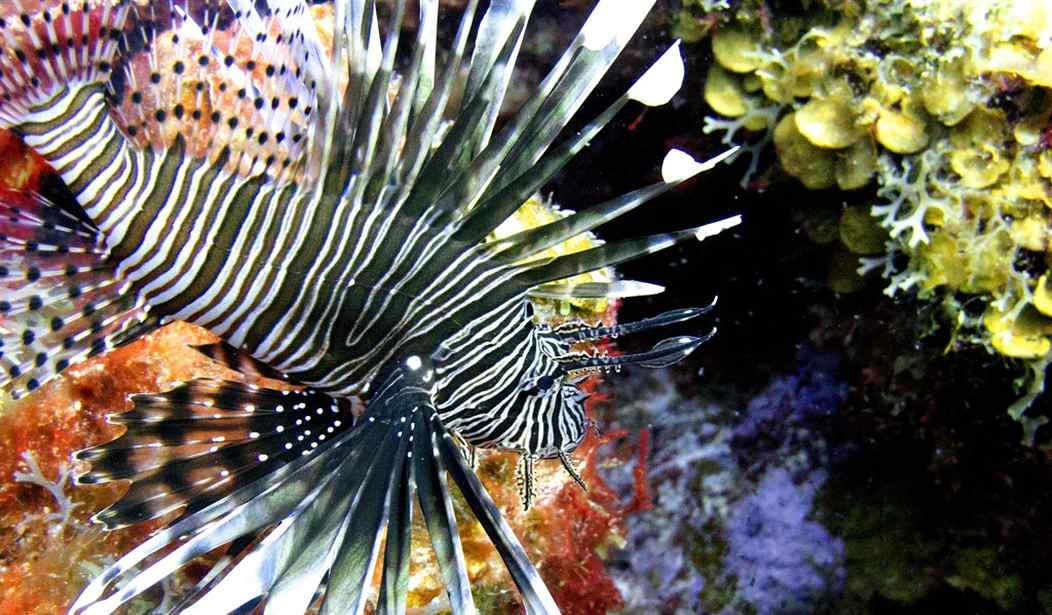
How would climate change affect any region of the Earth? The NOAA uses the ocean as an example. Warmer temperatures might cause species that prefer colder temperatures to move on to a new area, limiting biodiversity in the reef. Species that already prefer warmer temperatures would remain and flourish; however, this allows more invasive species (like lionfish) to ruin the food chain and predator/prey relationships by devouring native species; lionfish (native to the Indo-Pacific) are fond of warm-water habitats and invade the Atlantic Ocean.
In contrast, if temperatures get too hot for warm-water-loving species, they will leave and again reduce the biodiversity of that ecosystem. This affects people living near the ocean negatively because they might be eating disappearing species as part of their diet and have no way to replenish their supplies, whether the fish are dying as a result of temperature or diet change, or are gobbled up by invasive species. Poisonous non-native species, like the lionfish, might be responsible for deaths or injuries to people as well, since lionfish are able to sting swimmers with their spikes.
They are clearly using a half-truth to make the argument. The lionfish example is based on reality; there are some parts of the country with higher temperatures on a few occasions, providing more reason for the lionfish to move there.
However, the mainstream version of the "climate change" story contains more frivolous falsehoods and willfully ignored side effects of technologies and treaties introduced to "reduce" climate change.
The World Will End in a Year We Picked Out! Stop Your Greenhouse Gases to Prevent Climate Change!!!! NOOOOOOOOOOO!!!!!!
It's 2026, and the world hasn't ended yet. The world has never ended on any singular year when Greta Thunberg and similar people supposed that it would due to dangerously high greenhouse gas emissions.
The Paris Agreement
The Paris Agreement was a charter through which countries tried to reduce carbon emissions to combat climate change. It was signed in 2016 by President Barack Obama and the top leadership from 197 other countries. In 2017, Obama’s successor, Donald Trump, withdrew the United States from the Paris Agreement because he thought it was full of “un-American” restrictions.
Under the Paris Agreement, countries would have to set limits on how much carbon and other greenhouse gases they emit. The gases are believed to increase Earth’s temperature too quickly, so the limits are supposed to reduce this. Health-related expenses would theoretically be reduced.
However, the costs outnumber the perceived benefits. Cows and other farm animals are believed to produce too much methane, so one way for countries to reduce their greenhouse gas emissions is to reduce the number of cows on a farm or ranch. Unfortunately, this would also reduce food supplies for all consumers of meat and cause ranchers and farmers to lose their livelihoods. The United States needed to withdraw from the Paris Agreement to protect American families, and Trump did the right thing.
Wind Turbine Plants Secretly Harm Wildlife for Long Periods of Time
There are many research-based organizations showing that some turbine plants not only affected endangered species, but got away with it for many years straight.
For one sad example, the American Bird Conservancy admits a sad truth when it says endangered whooping cranes are forced to evade their migration stopover sites because wind farms are in the way. The Conservancy called a wind farm in Ninnescah County, Kan., one of the “ten worst sited wind energy plants” in 2016.
In 2021, they warned that wind turbines were still detrimental to whooping cranes' migration: “Researchers found that this endangered bird avoids turbines to a distance of 3.1 miles (5 kilometers), eliminating otherwise usable stopover sites if turbines are placed too close to them." For reference, these stopovers may be ponds or lakes where the cranes can re-energize and then continue on their winter migration to the south. The cranes lose access to the stopovers because wind turbines were built there.
This dire situation was essentially unchanged between 2016 and 2021 — five years in a row — with minimal intervention from the Migratory Bird Treaty or state governments, so the American Bird Conservancy tried again to defend the cranes. The situation lasted five years too long, as the turbines harmed an endangered species. Ironically, turbines are advertised as green energy, and people implement them because of the climate change argument, rendering this an egregious number of years for turbines to harm endangered wildlife.
Wind turbine manufacturers ignore that the United States and Canada, powered by the efforts of conservation centers and bird rescuers, have worked hard to restore whooping crane populations by caring for orphaned chicks and reintroducing them to the wild since the 1960s. They also overlook the reality that most of today's whooping cranes are descended from one such rehabbed chick. This ambassador chick was named Canus because he represented a cooperative effort between the U.S. and Canada.
Here is another shocking example. In 2022, a Montana wind turbine company called ESI Energy killed 150 eagles, mainly golden eagles, and had an $8 million fine. Todd Kim from the Department of Justice’s Environment Division said that ESI killed these eagles on their watch “for decades without seeking the necessary permit." Those "decades" are another shockingly long period of time to intentionally ignore wildlife deaths.
ESI Energy is owned by a Florida wind turbine conglomerate called NextEra Energy. The companies' uncaring animal treatment was the complete opposite of "green energy" and nowhere near future-forward, grim irony considering their names. The lawsuit finally happened after 150 eagles died, despite the company committing blatant felonies.
The turbine company was forced by the lawsuit settlement into a five-year plan to reduce eagle deaths, but that was too late for the 150 shredded eagles because the Migratory Bird Treaty was not enforced strictly enough until then. Focusing on their bottom line, wind turbine companies seem not to care about conservation, and the history of saving endangered species is lost on them. Unfortunately, the mainstream media regales the audience with species losing habitats to climate change while omitting this embarrassing fact. They say the ice floes are melting for the polar bears, but they have let harm come to endangered bird species.
Let's Go on a Field Trip and Get Treated Like Immature Children!
Although they do not believe these instances are true, University of Sydney academics Chapman and Chrichton include several examples of people who say wind turbines cost them sleep or cause illness. These authors finish their book with a lengthy "appendix of symptoms attributed to wind turbine exposure” in both humans and animals, including “dogs, epilepsy in” and “horses, behavioral problems in."
Strangely, Chapman and Chrichton also stated that humans who say that they are ill from wind turbines simply have anxiety "expressing itself somatically."
Seemingly, they imply that animals who might possibly be sick from wind turbines are affected by an unrelated illness or are potentially copying anxiety from their owners. Chapman and Chrichton had an example where anxious sheep owners were worried about their sheep being stressed and ill from turbines, but non-anxious owners had calmer sheep. They also state there are windfarms where “livestock contentedly graze." Using these illustrations, they argue that "wind turbine syndrome" is a "contagious disease" that is mainly caused by psychological problems, such as not understanding how a wind turbine works or jealousy about another household being picked to lease the land a turbine is on.
Chapman and Chrichton seemingly use ad hominem fallacies cloaked in “scientific” language to persuade readers (potential objectors) that real wind turbine problems are just imaginary.
Some of the “strategies to reduce anxiety and complaints” also feel stultifying for an adult audience. For example, they recommend a “windfarm noise simulator” or “opportunities… to visit operating windfarms to explain wind turbine noise." These solutions sound like childish field trips.
Learn what the mainstream media leaves out about climate change and wind turbines. Join the PJ Media VIP membership today and use promo code FIGHT to have a 60% off sale!