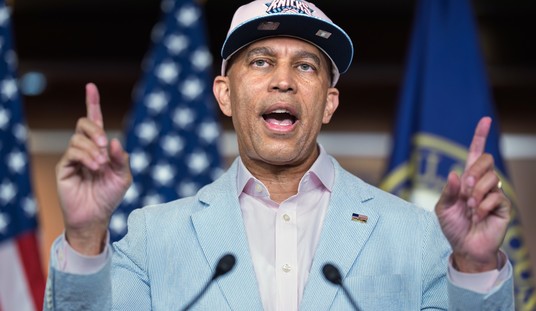
Rep. Paul Ryan (R-Wis.) showed this morning at CPAC that he’s fully transitioned from vice presidential candidate back to House Budget Committee chairman.
In fact, he didn’t even mention the unsuccessful 2012 race — or even give his opinion on the future direction of the GOP — as he promoted his latest incarnation of the “Path to Prosperity” budget plan.
“It is nice to be in a room full of conservatives for a change,” Ryan quipped, calling it a monumental week because “we got white smoke from the Vatican and we got a budget from the Senate… when you read it, you find the Vatican is not the only one blowing smoke this week.”
He called the Democrats’ budget so bad that “if we did nothing, the government would save money.”
“I am proud of our budget because it’s changed the conversation,” Ryan said. “…Our debt is a threat to this country. A debt crisis would be more than an economic event, it would be a moral failure.”
The chairman lauded a balanced budget as “a reasonable goal because it returns government back to its reasonable limits and focus.”
“Work is good. Work is dignified. … Before all else, government must work … chaos is fertile soil for liberalism.”
Wrapping up his address without any hint whatsoever of future political ambitions, Ryan urged the crowd to “go get ‘em — all right, everybody?”


<a href="http://I.The/" rel="nofollow" target="_blank">I.The</a> House budget, presented by Chairman Paul Ryan (R–WI),delivers a balanced budget in 10 years by slowing the annual growth in federal spending from a projected 5 percent to 3.4 percent. The budget focuses on:1) reducing spending by addressing the government’s health care cost problem; 2)reforms to Medicare and Medicaid and, importantly;3) repeal of Obamacare.
According to Heritage economic policy director Alison Fraser, Ryan budget’s main weaknesses are:a) a lack of Social Security reforms—the biggest federal spending program;b) and maintaining Obama’s tax hikes.
<a href="http://II.The/" rel="nofollow"... (show more)
<a href="http://I.The/" rel="nofollow" target="_blank">I.The</a> House budget, presented by Chairman Paul Ryan (R–WI),delivers a balanced budget in 10 years by slowing the annual growth in federal spending from a projected 5 percent to 3.4 percent. The budget focuses on:1) reducing spending by addressing the government’s health care cost problem; 2)reforms to Medicare and Medicaid and, importantly;3) repeal of Obamacare.
According to Heritage economic policy director Alison Fraser, Ryan budget’s main weaknesses are:a) a lack of Social Security reforms—the biggest federal spending program;b) and maintaining Obama’s tax hikes.
<a href="http://II.The/" rel="nofollow" target="_blank">II.The</a> Senate budget, under the helm of Senate Budget Chairwoman Patty Murray (D–WA), makes no attempt at balancing the budget—ever. Instead, the Senate budget would ramp up spending immediately and raise taxes yet higher while continuing chronic deficits, rising higher in later years. The Senate budget would leave the nation even worse off (beyond the 10-year budget window) by failing to curb growth in entitlement spending.
FACT:Medicare is the fastest-growing entitlement program and
Obamacare’s newest entitlements (the Medicaid expansion and health care subsidies)dramatically worsen federal health care spending, increasing it by now $1.85 trillion over a decade. The Senate budget doesn't address this nor attempts to correct it. Pray. <a href="http://Amen.Both/" rel="nofollow" target="_blank">Amen.Both</a> House and Senate budgets have weaknesses. The House budget would shrink deficits quickly, eliminating deficits completely by balancing the budget in 10 years. Despite shortcomings, the House budget undertakes important entitlement reforms in both Medicare and Medicaid while rolling back other spending too. The Senate's budget would: 1)spend more;2) tax more and;3) would not balance the budget. God Bless Our Children and Americans. (show less)