Get PJ Media on your Apple

Faster, Please!

Iran ‘Elections’: Lots of Circus, Not So Much Bread

May 16th, 2013 - 7:31 pm

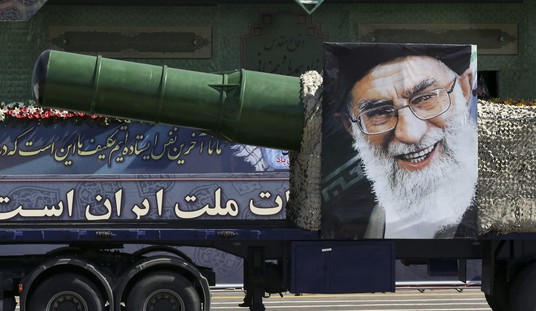
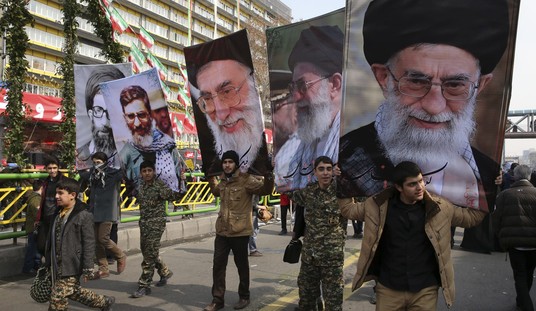
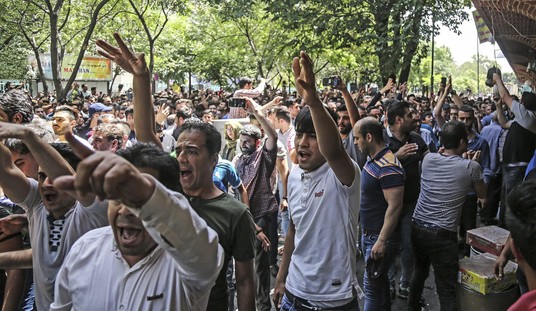
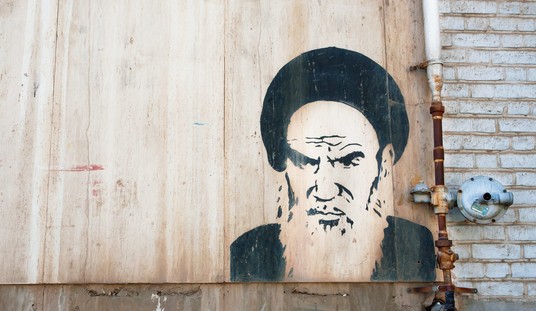
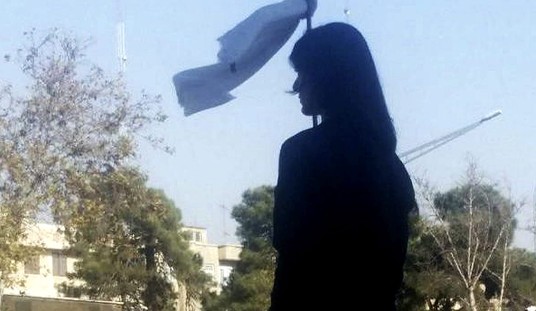
I’m always entertained by the oceans of ink that get poured out over Iranian “elections.”  As if there were such things.  Iran doesn’t have elections, it stages circuses.  It’s a variation on a famous Cold War theme about the ways a tyranny attempts to trick the people, and how the people, who aren’t fooled at all, respond with tricks of their own.  Workers in the Socialist bloc used to say, “They pretend to pay, and we pretend to work.”  In Iran, the regime pretends to hold elections, and the people try to find the best way to demonstrate their contempt for the regime.  Sometimes they do it by staying away from the “voting booths.”  Sometimes, as in the last presidential elections (you remember 2009, right?), they turn out in big numbers to elect someone who is clearly the antithesis of the theocratic dictator and somehow got on the ballot.  But everybody knows that the actual vote tally is a joke;  like the official numbers for the Chinese economy, the “vote count” is invented in the supreme leader’s chambers.

The mid-June circus will play out in three rings.  First, the selection of the candidates, then voting day, and finally the announcement of the winner.  In each ring, you may be tempted to watch the acrobats (candidates), but the real action is in the dark rooms of the leader.

Selection of the candidates:  Hundreds of people have proposed to run for president, including a few women (talk about spitting into the wind!).  These names go through three filters.  First, they are vetted by the intelligence services, both the Intel Ministry and the Revolutionary Guards’ intel and counterintel gangs.  Then the surviving names pass on to the Guardian Council, which narrows the list to the required number (usually quite small, 4-6).  And then Supreme Leader Ali Khamenei gets to put his chop on the list.

This is the “real election.”  And the candidates are currently vying for the favors of the leader.  Take Mayor Qalibaf of Tehran, for example, a very nasty piece of work who did his pilot training in North Korea.  He’s now bragging about his thuggery, how he personally smashed students and other demonstrators in the streets, etc. etc.  Those “credentials” will help him get on the short list, but past favors to the leader and the Guards will count even more.  They know who and what he is, after all.  Still, the real election is really real, there is an intense war of all against all in Iran today, and, to put it mildly, there is a lot at stake.  The president runs the government, and the government dispenses a lot of money and the power associated with the money.  So deals are being made, and since Iran is a society in which nobody trusts anybody who is not an immediate family member (and even then…), it’s not so easy for the powerful and the power brokers to sort it all out.  Already the Guardian Council has extended its deadline for candidate selection by several days.

Pages: 1 2 | 5 Comments»

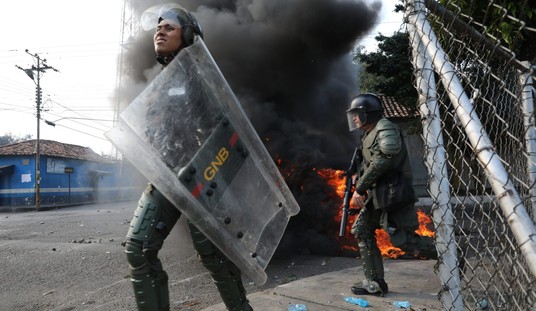
Maybe it’s just Socialist paradises in warm climates.  The latest example is the Bolivarian Republic of Venezuela, the outhouse Chavez built.  They’re running out of toilet paper.  Of course, they blame it on a plot.  It’s the journalists!  No, wait.  It’s the evil capitalists, who refuse to produce and sell at a loss (imagine!).  Probably the same evil people who have created the rice and cooking oil shortages…Or maybe it’s just the silly people, hoarding toilet paper even though there’s really plenty of it (ignore the news reports, close your eyes when you pass by long lines of people trying to buy it).

This is not a unique case;  Socialist regimes have often had troubles with toilet paper.  In perhaps the most colorful case to date, the Sandinista regime in Nicaragua manufactured bright rolls of the stuff, and sold it to friendlies, such as Tunisia.  Unfortunately, it wasn’t color-fast, and so Nicaragua became a literal example of Socialism giving lots of people “the old red ass.”

That pretty much ended the export of revolutionary toilet paper.

The Venezuelan crisis is a bit different, the people there are facing a shortage, not a failed product.  But still, it’s clearly part of a pattern.  Ceausescu’s Romania had the same problem, and recycled American Bibles into toilet paper. Maybe their dear allies, the Iranians will save them...they brag about their exports.  Surprised?  Well you can’t keep clean by using crude oil, can you?


You’re in the government, not in one of the plum jobs, but it’s a pretty important position.  In this case it doesn’t matter if you’re a career official or a political appointee.  What matters is that you’ve just been fingered by somebody, and a journalist or a reporter threw your name into the scandal septic tank.  You haven’t done anything wrong, in fact you pride yourself on doing The Right Thing.  So you’re angry and hurt, but not really worried.  After all, it’s easy to see you haven’t done anything wrong, and there’s not the slightest hint of evidence against you.  So you’re actually relieved when your department’s inspector general asks if she can drop by for a chat.

Wrong!  Don’t be relieved.  Be frightened.  Tell the IG, even if you think she’s a friend, that she’ll be hearing from your lawyer shortly.  DO NOT TALK TO HER OR ANY OTHER INVESTIGATOR BY YOURSELF.  Trust me,  I’ve been there, and I survived.  I had my very own special prosecutor for years in what became known as Iran-Contra, and even though I didn’t do anything wrong (as the prosecutor had to admit, although he weasily said “we can’t find anything wrong”), lots of my colleagues, who likewise didn’t do anything wrong, were ruined.  Some of them incredibly ended up pleading guilty to crimes or misdemeanors they didn’t actually commit, to escape the crushing expenses of standing trial.

So listen carefully.  Don’t listen to anybody who hasn’t been through one of these things.  They have their own rules, and some of them are totally counter-intuitive.

Get a lawyer.  Yes, I know you haven’t done anything wrong, but you need that lawyer to make sure that you don’t make a fatal mistake now.  It is totally wrong to think “I’ve got no reason to worry about answering questions.”  You should be terrified at the very thought of answering questions, because it turns out that “making a false statement” can be a criminal act.  And it’s easy to make a false statement.  Your memory is imperfect, even if you’re young (I was in my forties and had a fabulous memory, and yet when I wrote out a timeline of everything that I had done for my lawyers, there were errors, including one whopper, which they caught).  There are ways to protect yourself against failures of memory, and a decent attorney knows them.  You need help.

If you doubt this, ask Scooter Libby.  He was a lawyer, quite a good one.  He had a friendly chat with a couple of guys from the FBI, and was prosecuted, convicted, disbarred, and shamed.  Note that the “guilty” party, the one who committed the presumed crime the FBI was supposed to be investigating, wasn’t even indicted.  His name is Richard Armitage, he was Colin Powell’s deputy, and he’s a Washingtonian in very good standing today.

The investigators, especially if they are working for prosecutors or for Congress, are looking for scalps.  They may also be interested in the truth, but that’s secondary.  Their rewards depend on scalps, and you’ve got one.  They are intent on getting it, and they’ll use all manner of cunning to carve it off your skull.

You say you can’t afford a lawyer?  Not to worry;  in big Washington scandal investigations (of which three or four may soon be empowered) every major law firm wants to play.  Pro bono (free) legal representation can usually be found.  At a minimum you’ll get a substantial discount.  Once you’ve got one, he’ll tell you not to discuss the case with anyone.  Not with media people, not with colleagues, not with friends. (By the way, you’re about to discover who your friends aren’t.  You don’t really know–yet–the list of names.  But you will, soon enough.  This is one of the side benefits of going through scandalmania, and it will serve you in good stead for years to come.  They won’t be able to trick you any more).  Just listen to the big guys, including the president and various press spokesthings.  They say “sorry there’s a criminal investigation on, I can’t discuss it.”  Memorize those words.

Pages: 1 2 | 18 Comments»

It takes a special skill to read bureaucratic memos. When I was getting ready to work at the State Department way back in the last century, Henry Kissinger gave me good advice:

The only reason to write a memo is if you want it leaked.

The key decisions and the real motives are very rarely written down; most of the time the truth is hidden. Deliberately. Remember the “vanished” 18 minutes of Nixon’s tapes?

And of course, the Brits did it elegantly (h/t Jeff Warren, video embedded above).

The memos have to be read — not as accurate reflections of a policy debate, but as posturing for instant history. It’s what the author(s) want(s) the journalists — working on deadline, and not very eager to dig deeply enough to figure out what was really going on — to write for their readers.

So, Roger L. Simon is right (he is always right) when he flags “the mystery of the missing video.” Somebody must have said to somebody else: “Hey! Let’s blame it on the video.”

I think I know when that happened, even if I don’t know who said it or to whom: it happened between versions two and three of the 12 draft memos. The first two talk about “attacks” that were  “spontaneously inspired” by events in Cairo. However, number three edits out “attacks” … and replaces it with “demonstrations.”

It took about five and one-half hours to get from “attacks” to “demonstrations.”

Pages: 1 2 | 22 Comments»

Herbie

May 10th, 2013 - 3:56 pm

Another great man leaves us, Herb Romerstein.  He was a scholar and a civil servant, a dedicated patriot, a tireless anti-communist, and a mensch and a half.  He labored for years for the House of Representatives (Internal Security staff) and then for the Reagan administration at USIA, where he did exceptional work on Soviet disinformation.  As Paul Kengor noted, Herbie was the institutional memory on Communist subversion in and against the United States, and he knew whereof he spoke, having been a member of the Communist Party.  And he and the late Eric Breindel produced an invaluable analysis of the Venona documents, which famously proved the scope and efficacy of Soviet espionage in this country.

I had the great pleasure of working with Herbie in the mid-1980s when we were editors of a collection of documents captured by U.S. military forces in Grenada.  The Grenada Documents was a joint venture of the Departments of State and Defense, as was the larger project of assembling the enormous pile of captured documents, which was, and is, housed in the National Archives of the United States.

It was dirty work.  Every day an Army officer called me from the island to tell us about the day’s shipment:  where the documents had been found, what they comprised, and which ones he judged most important.  They arrived in wooden boxes, after being fumigated to protect us against unwanted encounters with spiders and scorpions.  But there was no protection against dirt, and there was plenty of Grenadian soil in those documents.  We were filthy by midday, and the equals of Charlie Brown’s pal Pigpen by evening.  You can judge for yourself if it was worth it;  as usual in such matters, the establishment intellectuals and “reporters” weren’t much interested in the harsh treatment of the poor Grenadians by their own leaders, following the lead of Soviet and, above all, Cuban intelligence officers.  I believe that the Grenada documents provide an invaluable view of life within the Soviet Empire, and almost all of them are in (very tasty) English.

It couldn’t have happened without Herbie.  He didn’t mind getting dirty.  And he loved the work, as I did.  One document in particular especially delighted us.  It was a report from the ambassador to Moscow.  The Grenadians had been begging for agricultural aid from the Kremlin, but it never came.  Finally, at a diplomatic reception, the ambassador was approached by his Bulgarian counterpart, who said (these are not his exact words) “you’ve been asking our Soviet comrades for help with agriculture.  But they have found that their methods do not work well in your part of the world.  Thus whatever assistance you receive will fail.  Thus you will receive that assistance from Bulgaria, and not from our Soviet comrades.  That way, we will be blamed for the failure.”

How good is that?  Herbie and I celebrated in our chilly room down in the bowels of the Pentagon.  What a find!  I don’t know of any other piece of paper that so thoroughly documents the cynicism of the Soviets, and the failure of their system.  After all, the Bulgarian ambassador could very well have said that Soviet agricultural methods didn’t work anywhere;  it had nothing to do with Grenada’s perfect climate, as Herbie happily chortled.

So that was Herbie.  He leaves us countless happy memories and the products of a life well spent.  Plus a large family, whose mourning we will share in the days ahead.

The Humiliation of John Kerry

May 9th, 2013 - 7:59 pm

The secretary of state was back in Washington on Thursday, begging the Senate Foreign Relations Committee to take it easy on the poor Iranians.  Enough with the sanctions, he said.  Secretary Kerry has joined decades of his predecessors, buying  into the latest version of the 30-year old illusion that we can make a deal with the Tehran regime if only we deal properly and humbly with them.  He said there was a “window of opportunity” for a couple of months.  It doesn’t much matter if he really believes this legend, or is following instructions from President Obama, who is still pursuing this unholy grail despite five years of swift kicks in his behind.  The one he so loves to lead with.  Either way, it’s an embarrassment.

But then our new secretary of state has great flair for embarrassing us.  In Obama’s community of narcissists, Kerry is a bit different.  He excels at self-humiliation, as he showed in his recent sortie to Moscow, where Czar Putin kept him waiting for many hours before sparing some time to “discuss” Syria and related topics, no doubt including Iran.  As per the British Daily Mail, “Russian President Vladimir Putin kept Kerry waiting three hours before their meeting at the Kremlin on Tuesday and continuously fiddled with his pen as the top American diplomat spoke about the ongoing crisis in Syria.”

I’m told that when Kerry landed in Russia, he was told a) that his hotel rooms weren’t ready, and b) that a military parade made it impossible for the Americans to drive to the Kremlin anyway, so he’d just have to wait.  Add two hours (check-in delay at the hotel) to the Mail version.

Many years ago, I traveled abroad on behalf of Henry Kissinger, by then a simple citizen, and I spoke with some important people.  I was instructed never to wait more than twenty minutes, and on two occasions I informed the important person’s assistant that I had waited fifteen minutes, and would have to leave in five more. Nothing personal, just a condition of my employment.  Both times the important person appeared almost immediately.  And I was not a cabinet member, I was a messenger boy of a famous–but former–high U.S. official.  But the American secretary of state couldn’t bear the thought of returning to Washington without even talking to Putin, and Kerry waited.

Pages: 1 2 | 53 Comments»

Giulio Andreotti Takes his Leave

May 8th, 2013 - 4:29 pm

Most of you don’t know about Giulio Andreotti, who died Monday at 94 or 95, and you’re the poorer for it.  No one in political life today can possibly aspire to a career like his, and I don’t know anyone who can remotely match Andreotti’s wit, wisdom, cunning and humor.  There may be a high position in the Italian government that he never held, but I can’t think of it.  Seven times prime minister, and for decades he was universally believed to be the most powerful man in the country, the puppet master of the whole system, the master of maneuver.

He was famously accused of being in cahoots with the Mafia, and stood trial for 7-8 years before the judges threw out the case.  A friend of mine, a great writer named Lino Jannuzzi, wrote a small masterpiece about it called The Trial of the Century, which pretty much demolished the accusation, but most of the journalists and intellectuals who pretend to be expert in things Italian remain convinced of his guilt.  In a bittersweet way it’s a tribute to Andreotti’s charisma.

Andreotti’s real power base lay in Rome, his home town, and the Vatican.  He was a devout Catholic, and if you wanted to be sure to find him, all you had to do was wait for mass to end at his favorite church.  His career started during Word War II, and he emerged from it as the personal secretary to Alcide de Gasperi, who was PM during the crucial postwar years.  As his generation aged and died off, Andreotti carried on, always with a twinkle in his eye.  Somehow he found time to write books about the history of Rome. They were very good books and nobody ever suggested he had a ghost;  the language was his, the ideas were his, and the wit and wisdom were unmistakably his.

I knew him fairly well.  For someone eager to understand the complexities of Italian political life, you couldn’t find a better guru, and he was often generous with his time.  His advice was invariably spot-on;  he pointed me at the best sources on problems I was trying to solve, whether they were contemporary issues on which I had to report for the New Republic, or historical matters for my books on Italy.  And later on, when I was briefly in the U.S. government, he said something to me that I haven’t forgotten.  “Ledeen,” he said, in his measured tone, “we can live with a dovish America, and we can live with a hawkish America.  No problem.  But we cannot survive an America that is hawkish Monday, Wednesday and Friday, and dovish Tuesday, Thursday and Saturday.”

Remember he was PM seven times, and foreign minister or defense minister even more times.  He knew the details, and he’d seen many American presidents, from FDR to Reagan.

Perhaps his most famous bon mot is a good way to say goodbye:  “Power corrupts,” he remarked, “above all, those who do not have it.”

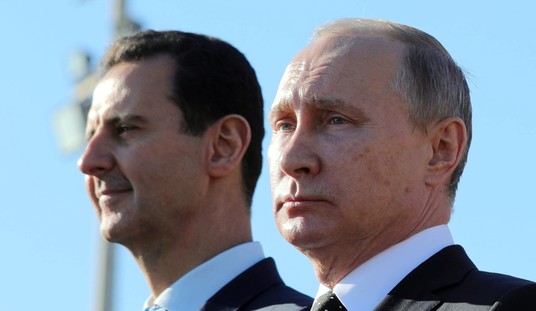
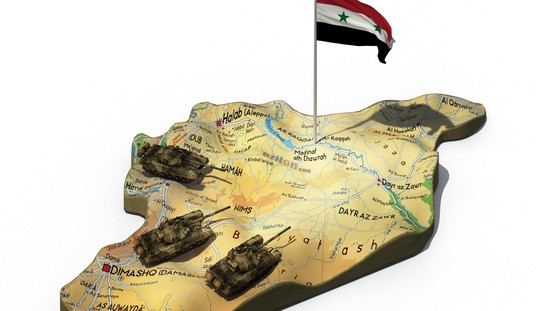
As information about the apparent Israeli strikes on targets inside Syria continues to pour in, it’s easy to lose sight of the central fact: the two reported Israeli attacks are part of an ongoing war, the big war against the West. While the attacks were in Syria, the mission was primarily a major strike against Iran and Russia, two key components of the global alliance arrayed against us. Both are desperately trying to shore up the Assad regime in Damascus.

The fall of Assad would be a devastating blow to Supreme Leader Ali Khamanei’s tyranny in Tehran, would gravely weaken Russia’s strategic position in the Mediterranean and the Middle East, and would threaten the strength (and even the survival) of Hezbollah, the world’s most dangerous terrorist organization and the creation of Iran’s founding tyrant, the Ayatollah Ruhollah Khomeini.

The attacks apparently did great damage to Iranian missiles, and the vaunted Russian antiaircraft system provided to both Syria and Iran was unable to do anything to prevent them. Both have been humiliated.

The primary Israeli targets seem to have been Iranian missiles shipped from Iran to Syria, reportedly pending transfer to Hezbollah. They are capable of carrying chemical warheads, which may explain President Obama’s quick support for Israel.

The attacks came after more than a month of diplomatic activity:

–On Thursday, April 25th, the United States announced that we had evidence that the Syrians had used chemical weapons. That announcement was not merely the result of internal American deliberations; it came after several meetings with allies following claims of chemical attacks from the Syrian opposition in late March.

–There were meetings in Amman, Jordan, on April 1st and 2nd, chaired by the head of Jordanian intelligence, Faisal al Shobaki. The meetings included representatives from the United States, Qatar, and Israel, whose experts provided information from drones and satellites.

–The Saudi foreign minister met with Secretary of State John Kerry on the 16th (the day after the Marathon massacre in Boston). It was a scheduled meeting, but the session was closed (after journalists had been told it would be open). The next day, President Obama met with the foreign minister in an unscheduled session.

–On Monday the 22nd, CIA director John Brennan received the emir of Qatar and his foreign minister at CIA headquarters in Langley, Virginia.

–On Tuesday the 23rd, General Itay Bron of Israeli military intelligence announced that Israel had proof of the use of chemical weapons in Syria.

–On Wednesday the 24th and Thursday the 25th, there were further meetings in Washington to discuss the question, involving officials from France, Qatar, Great Britain, Canada, and the Czech Republic. The Czechs are world leaders in the field of chemical weapons intelligence, and their ambassador in Damascus, Eva Filipi, represents both the United States and Europe in the Syrian capital.

Pages: 1 2 | 46 Comments»

We are guided by myths more often than by reason.  Nothing new there;  man is a myth-making animal.  Myths spring up from our collective unconscious, they cover the globe, and they shape our thoughts and actions.  The great philosophers and the great psychologists, psychiatrists, and psychoanalysts tried hard to “free us” from myths so that we could properly understand our world and ourselves.  Spinoza thought that emotions were the result of unclear ideas (I don’t agree, and neither does Barbara, the very clear object of my strongest emotions, but I digress).

Good news:  the doctor is in, and he’s going to help you.  He’s more modest about his abilities than the great thinkers and healers, so he’s just going to help you understand our world.  As for understanding yourself, well,  maybe Obamacare will pay for it.

The Myth of the Day is:  the “homegrown terrorist.”  Sometimes he or she’s called “self-made,” but it all comes to the same thing.  The idea is that there are normal Americans who, on their own, and certainly without any input from foreign countries or terrorist groups, up and become terrorists.

Such persons exist — from the Unabomber to those who have slaughtered innocents in our schools or movie theaters — but they are not the sorts that I’m talking about, the sorts the myth commonly refers to.  The myth and the phrase are typically applied to actual or would-be killers who are motivated by strong ideological or religious beliefs.  Most of the time, the myth is used to suggest that the bad guys in question don’t have any links to our foreign enemies.  They’re just Americans gone bad.

Ask yourself the obvious question:  how did they go bad?  From JFK’s assassin to the Fort Hood killer, most of them found meaning in life in violent ideologies that turned them against their countrymen and, profoundly, took them away from home.

Foreign ideologies.  Lee Harvey Oswald was a Communist, Nidal Hasan was a radical Muslim.  Both killed Americans in America, after coming to identify with doctrines that were anything but homegrown.  Moreover, in recent years, establishing contact with foreign forces has become a piece of cake.  We do it online, we don’t have to travel overseas to get our indoctrination (although, as if to prove the point, a considerable number of them do).  Even when it “happens here,” the indoctrination more often than not takes place at the feet of foreign teachers and trainers.  Take the radical mosques, for example.  Most of them are funded with Saudi money, their texts come from the Saudi Kingdom, and their imams are trained by radical Saudi Wahhabis.

Pages: 1 2 | 53 Comments»

Rotting Fish and the American Future

April 22nd, 2013 - 12:26 am

Roger L. Simon is right (he’s always right);  leadership is crucial, and when leadership is rotten the whole body politic rots and stinks.  Our biggest problem is rotten leadership.  Until and unless we fix that, we’re gonna have lots of trouble.  Of all sorts.

SIDEBAR:  This is why I have no patience for so many of my friends who constantly say the president has the right to choose his team (whether a new “czar” or a new judge or justice or a secretary of something or other).  If the choice is bad, we should say so and fight it. Good leaders are worth fighting for and bad leaders have to be challenged.

BACK TO SERMON:  Roger understands the way the system works by saying that the FBI’s failure to look carefully and long enough at Tamerlan-the-terrorist has a lot to do with our leaders’ reluctance to call a terrorist a terrorist or to accept the fact that radical Islamist terrorists exist.  The people who do counterterrorism shy away from seeing such terrorists, or potential terrorists, because if they point to such people, several bad things (from the investigators’ and analysts’ standpoint) happen.  First, the policy makers aren’t going to do anything; second, the investigators and analysts aren’t going to get promoted, or rewarded with bonuses; third, they may get sued or sent to the bureaucratic equivalent of Siberia.

So when the president had to gnash his teeth before pronouncing the T-word, it had real consequences. Language matters a lot.  Ask Ludwig Wittgenstein, who would probably chuckle and ask you right back, if there’s an Islamic terrorist in the forest, but we can’t say so, can it possibly fall?

Way back in the days right after 9/11, I wrote that we were going to have a hell of a problem dealing with religious-inspired terrorism.  You can’t really do a decent job of intelligence gathering without taking a hard look at the mosques.  That’s where a lot of radicalization and recruitment takes place, and many mosques all over the world have served as key links in the transmission belt from the terrorists’ home base to the terrorists “in the field.”  But the First Amendment protects religious speech, even when it incites the faithful against others.  So it’s a problem we need to address.  But we can’t begin to address it if we can’t say the words “Islamic terrorist” or “radical Islamist terrorist.”

This a tough problem, and when the president acts as chief censor it makes things even worse.  The rot spreads and stinks.

Pages: 1 2 | 74 Comments»