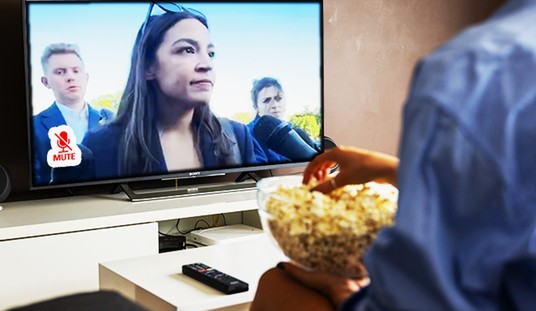
Defensive Medicine Kills
Have you ever had a headache? Have you ever had diarrhea? Have you ever taken aspirin?
If so, you may be entitled to compensation for complications from taking aspirin. Call us now. We don’t get paid until you do, and then we take 40%. Why risk your hard-earned money on work? Come roll the dice. It’s free. It’s America.
Okay, maybe I got a little carried away there, but not by much. Late night TV ads now solicit “clients” who have had “complications” from some sort of medical treatment. Never mind that “complications” does not equal malpractice. Life is a complication. Malpractice is supposed to be just that, not maloccurrence.
This problematic scenario forces physicians to practice defensive medicine. This has nothing to do with what’s the best medicine, only with what trial lawyers have forced us to do. Defensive medicine has become “standard of care.”
The true cost of defensive medicine is hard to pinpoint. Estimates range from between 10% and 25% of every health care dollar spent. Many of us believe it may even be higher.
Defensive medicine not only costs us a hell of a lot of money, it may also kill us! Doctors call for more than 62 million CAT scans annually in the USA. According to a 2007 New England Journal of Medicine article, one-third were probably unnecessary. Again, many physicians feel that may be an underestimate.
Here comes the real kicker. The radiation dose from a single CAT scan is 500 times that of a plain chest X-ray.


The additional cost of tort-forced malpractice insurance? Other such?
A recent survey found that 83% of physicians said that they would strongly consider retiring from the practice of medicine if Obamacare was fully implemented. That’s 83% not 8.3!
Turning it into another job that Americans just don’t want to do, so we’ll import a million doctors educated in India and happy to implement endless bureaucracy for $80k/year salary.
–
Though frankly I’m not as sanguine as you about the rate of medical errors, my observations of “good” doctors and hospitals over the past few years, dealing more with my elderly parents and just a bit with myself, is that the standard of care is so low you can barely tell when it veers into negligence or error, that nobody’s insurance will pay for a really high level of care for more than a day or so, and that in such a system the average doctor in the average facility is pretty much a crapshoot to anyone who walks in. Sure, the patient is worse off without, but it takes pretty much desperation to walk into such a situation. The average Medicare patient is even worse off because of both the realities and actuarial assumptions on top of budgetary constraints, … OK so maybe gross errors are rare, and even doctors are human and must be allowed to make errors, be overburdened and distracted – but then don’t tell me about some low, low error rate.
–
The real problem is good medical care just costs more than 99% can afford. There ain’t no way the government can fix it, and their pretending to only makes things worse. And I don’t have any solution, either. But telling the truth all around surely would be a step forward.
The standard of care is, in fact, not low at all. Your doctors may not have had the best bedside manner, but not only is it NOT a crapshoot ( I guess you’ve never heard of HealthGrades? Or looked up credentials on the internet?) physicians and hospitals are under constant pressure to continue to improve. The goalposts are, in fact, moved every year so that what gets a facility in the top 5% of hospitals today will not be good enough to be in the top 25% in a few years.
Since that report came out in 1991, huge strides have been made in preventing complications in medical care (most of which were and still are due to the complexity of the care, not incompetence). The implementation of standardized evidence-based care pathways for common illnesses such as stroke management and hip replacement have lowered complications and improved outcomes markedly.
I watched the Olympics tonight and couldn’t believe the propaganda put forth on behalf of the NHS, which offers Brits half the cancer survival and nine times the postop complication rates of American healthcare. Clearly, we wouldn’t have those stats if it was only available to the top 1% of Americans. But if it makes you feel better to complain about a system you know nothing about, go right ahead. It’s just another example of the countless reasons why I’m already retired, why my husband will retire five to ten years ahead of time, and why neither of us will encourage our kids to go into medicine. Given the upfront loss of time and money, the opportunity cost, uncertainty and lifelong aggravation new entrants into the field will encounter, it’ll be interesting to see just what kind of care will be delivered in the future.
The standard of care is, in fact, not low at all.
That depends on what you’re comparing it to, doesn’t it? Pay for performance and “standardized evidence-based care pathways” are part of the problem, because they create one-size-fits-all care, and penalize doctors for adjusting their care plan to fit the patient. All must have the same tests and treatments, regardless of family history, risk factors, personal values, and idiosyncratic course of illness.
Managing patients as though they were so much livestock can help prevent egregious errors, especially for bad or overworked doctors who can now follow a checklist. But it results in care that’s far less good than the ideal someone might get who can see a doctor for a more-than-5-minute office visit, or who gets medical care that doesn’t come off someone’s “standardized care path”.
Jaed understands. TRY to find your doctor in a hospital setting. They’re off taking their excellent bedside manner to 200 patients in 1-minute visits, so why should you have priority to interrupt, just because the patient is in distress and the nurse has no orders? Bah.
Could we have actual figures, please? Perhaps with a URL for a confirming source? “500″ is too round a number for credence. As my wife, an accountant, likes to say: Automatically distrust any number easily divisible by 5 or 10. She has a point, too.
Depends on the type of CT, the particular scanner and the protocol used.
Here is a good chart of average values for x-ray procedures compared to the natural background dose:
http://www.radiologyinfo.org/en/safety/index.cfm?pg=sfty_xray
Of course, normal background radiation is dependent on where you live.
Out here in the Rocky Mountain west, at 7100 feet (Laramie), it’s about seven times higher than sea level.
Three Miles Island? We get that every day.
You do realize that 5-10% of all numbers are wholly divisible by 5 and 10 respectively, don’t you?
(chuckle) Yes, and 43.7% of all statistics are meaningless. (Actually, 20% of all integers are divisible by 5; 10% are divisible by 10.)
All the same, when no source citation is presented, [WARNING! Blinding Flash of the Obvious immediately ahead!] a suspiciously round figure elicits suspicion. It might be accurate…but it surely helps its credibility to provide substantiation.
Ask the cost accountants where you work how they react to an expense report that’s easily divisible by 10.
I’ve beem on vacation so missed this post.
Here’s the original citation:
http://www.nejm.org/doi/full/10.1056/
While folks have been whining about defensive medicine, a larger and more destructive force, unleashed with good intentions, has made practicing medicine Hell. It involves the forceful application of electronic documentation and data mining, goals and directives imposed in the name of quality, and government money dangled like a carrot while the government whip of sanction and limited reimbursement is cracked menacingly overhead.
Meaningful Use.
That is one deceptively [quite characteristic of government programs] utopian and quaint phrase used to describe a government inspired application of electronic medical records in outpatient care. While the EMR has made great strides in its applications, it remains a work in progress. To be forcing its application universally in outpatient care is premature. Yet it is already upon us.
Providers (we doctors, nurse practitioners, physician assistants) now find their precious time involved in an encounter that might have previously involved documentation on paper with a few quick strokes of the pen taking less than a minute at minimal cost, or dictation of about the same time but at some cost, with multiple mouseclicks, keystrokes, menus, and three or four password bottlenecks that ultimately allow government employees access to details of each encounter to include what body parts have been examined, much less the diagnoses, treatments, and follow up (yes, they are even keeping track of missed and late appointments).
Big Brother medicine is here.
Just a few throughts on the subject of CT radiation.
Estimation of the number of cancers attributed to radiation are based on a mathematical model based on studies of Hiroshima survivors. The model assumes that there is no safe level of radiation. At these doses the risk is calculated by extrapolating back from the much higher doses the Hiroshima survivors recieved. So any dose in the model carries some increased cancer risk but that is an assumption not directly proven.
The increase in CT dosage and number of CT scans over the past decade or so is to a large extent due to significant improvements in CT hardware and software allowing for improved diagnostic accuracy and new indications such as CT Angiography of the coronary arteries. CT is the most powerful imaging tool in the toolbox and it gives a lot of answers so doctors use it more.
The increased exposure due to CT is well known in the medical community. Current CT scanners are capable of higher resolution images than they actually produce because the tube currents and exposure levels have been turned down to give what is thought to be the lowest level compatible with accurate diagnosis.
If you go to the hospital with chest pain and the CT scan is normal that does not mean it was not neccesary. You have just eliminated several life threatening causes of chest pain from the list.
Defensive medicine and inappropriate ordering are a serious issue. I am not so sure that tort reform will produce much difference in ordering practice or overall cost. There is not much evidence for that. Doctors do not like to miss something even if they would not be sued.
First, kill the lawyers.
Take cold comfort in the knowledge that they’ll be the first against the wall when their beloved revolution comes. Communists and Fascists don’t need lawyers once they are in power.
Great contributions Carla and Tom T! Now, step away from the keyboard before Obama’s security apparatus finds you out…
People just don’t get it.
Sure they might get a couple of thousand for jumping on the class action lawsuit, which is quickly consumed by higher health care insurance premiums and deductibles they now have to pay, that the insurance companies passed on to cover the higher cost of performing medicine, that came from having to pay off bogus class action suits.
Tort reform has been on deck for decades, with near-zero progress. Surely, by now you know why. Can we try moving forward for once?
It has been reported that repeated mammograms which give a LOT of radiation, are causing breast cancer. If you ask the x-ray technician if the mammogram gives a lot of radiation, they will deny it. It does give a lot of radiation!
mercola.com:
Your Greatest Weapon Against Breast Cancer (Not Mammograms) give a lot of radiation!
http://articles.mercola.com/sites/articles/archive/2012/03/03/experts-say-avoid-mammograms.aspx
After basal cell skin cancer surgery, I got an infection that caused an erosion in the skin that would not respond to antibiotics and was getting worse. I had read about world-famous Manuka honey from New Zealand. I purchased the 100% Raw Organic Manuka Honey Active 16+. I was amazed at the miraculous results 24 hours later. Amazon customers give many amazing testimonies of this miraculous honey.
Please tell people who have infections that won’t heal. It can be very scary.
You forgot to mention the ubiquitous machines that, to “examine” for breast cancer, squeeze women’s breasts in such a manner that they pop out otherwise dormant cancerous cells that occur naturally and send them on a rampage.
Feminists yammered forever to have privilidged “women’s health” stuff. The lobbyists for the machine makers responded. The pols took they’re 10% in cash and power. The women got more cancer than ever.
Prostate cancer is 3-4 times more prevalent in men than breast cancer is in women, but women yammer. See what it got you?
“Loser pays” is so obviously the way to go that practically every other country in the world uses it to improve the overall fairness of its legal system. See
http://www.pointoflaw.com/loserpays/overview.php
Interestingly enough, I believe the arguments against “loser pays” could also be used to justify having the government subsidize lawsuits. (Come to think of it, that the government pays to maintain the court system could already be regarded as a form of subsidy, couldn’t it?)
@Linda Rivera…Honey has been used for many years as a dressing for open wounds. As an intern in the ’60s I found it benificial on leg ulcers and decubiti. It’s effectiveness is probably due to naturally occuring anti-microbials and it’s dessicant or drying properties. This Manuka organic Raw Organic Whatever you’re promoting sounds very expensive. Next time try Sue-Bee. It works quite as well and comes in a cute bear shaped squeezy bottle.
To jh749: I’m NOT promoting anything and that is why I DID NOT give the brand name of the honey! Although YOU gave a brand name! The manuka honey is indeed expensive, but when you have an infection that will NOT respond to antibiotics and the infection is getting worse, you must use what works. I had already tried for days using another good honey which was unheated and natural. It did NOT come in a “cute bear shaped squeezy bottle”. It did not work.
The powerful manuka honey was amazing. My only motive in making the comment about this (I did not give the brand name) was a desire to help people who have a skin infection or leg ulcer that won’t heal. And as I wrote, a NON-manuka honey did NOT work.
I think this all has been on design. It tastes well for the patients in the beginning. They will waste the loot that they got through malpractice lawsuit, and the doctors will be forced to buy higher insurances, which automatically reflects in higher prices for the patient. All the while, it has taken the joy out of the profession from the doctor. That’s why we see the flourishing of so many paramedical professions, because nobody wants to get half a million in debt to become doctor, then to have the license withdrawn for aspirin malpractice.
That’s what lawyers are, looters. They are happy that they increased the price of medication in the USA, so they made “necessary” Obamacare. More to loot for them…
Rich people have said for years that the the cost of providing law enforcement for the poor out weighs the benefits to the rich. I guess we know they were right now.