



The Juvenilization of American Christianity?
via When Are We Going to Grow Up? The Juvenilization of American Christianity | Christianity Today.
The house lights go down. Spinning, multicolored lights sweep the auditorium. A rock band launches into a rousing opening song. “Ignore everyone else, this time is just about you and Jesus,” proclaims the lead singer. The music changes to a slow dance tune, and the people sing about falling in love with Jesus. A guitarist sporting skinny jeans and a soul patch closes the worship set with a prayer, beginning, “Hey God …” The spotlight then falls on the speaker, who tells entertaining stories, cracks a few jokes, and assures everyone that “God is not mad at you. He loves you unconditionally.”
After worship, some members of the church sign up for the next mission trip, while others decide to join a small group where they can receive support on their faith journey. If you ask the people here why they go to church or what they value about their faith, they’ll say something like, “Having faith helps me deal with my problems.”
Fifty or sixty years ago, these now-commonplace elements of American church life were regularly found in youth groups but rarely in worship services and adult activities. What happened? Beginning in the 1930s and ’40s, Christian teenagers and youth leaders staged a quiet revolution in American church life that led to what can properly be called the juvenilization of American Christianity. Juvenilization is the process by which the religious beliefs, practices, and developmental characteristics of adolescents become accepted as appropriate for adults. It began with the praiseworthy goal of adapting the faith to appeal to the young, which in fact revitalized American Christianity. But it has sometimes ended with both youth and adults embracing immature versions of the faith. In any case, white evangelicals led the way.







right, most (almost all) of my Believer friends, have an ipod permanently plugged into their ears – walking, working, praying, eating, during worship – gotta have noise, whether it’s Christian music, or music ‘with good words’, there’s no quiet time at all. I’m surprised the pastor’s sermon doesn’t have music in the background….
This article raises, for me, a bad “experience.” During the earlier 1970s, a group of us approaching Confirmation, had to go spend a day at a nearby religious retreat. It was chock-full of Kumbayaa-singing, hippie priests, etc. One in particular always stands out and tainted the experience for me…
…the Reverand Paul Shandley.
None of us were, to the best of my knowledge, molested, but we all – and I mean ALL – knew there was something very, very wrong with that guy and by extension, his entire tie-died mass.
I thank God you were spared! Guitar Masses make me twitch (fwangfwangfwang) “Mary did you knoooooooow, that yer baaaayybeeeee booooooooy” (fwangfwangfwang). We’ve made a lot of moves so we’ve gotten pretty good at finding a decent parish: 1) Kneelers. 2) Does the sign out front say “Catholic Parish” or “Catholic community”? If it says “faith community” just run away. 3) Organ, piano, or guitar? 4) Handholding Nazis during the Our Father? 5) Does the priest change the words so you’re not sure if that was a valid Mass? 6) Does the chalice look like it’s supposed to? (while out-of-town, we went to a Mass where that diocese’s vocations director used a CLEAR lemonade pitcher and potato chip bowl to consecrate the Eucharist. Not inspired to offer my sons as snackmasters…
if you please, did any of the grown-ups notice? I’ve wondered about that. You’ve read a bit about my times working with street kids. There was a Shandley refuge in our town. The street-kids knew that it was not a good place. The street-cops knew it wasn’t safe for some kids- they’d bring them to one particular bar so they could age in place until they were old enough to join the military. This was seen as preferable…they’d strip, but they wouldn’t get molested, and they wouldn’t hook.
The general notion was that the grownups in charge knew, but did not care. Is this true? I’ve asked one pastor, different denomination, and she didn’t know about the bar in the first place, even though she worked with the police. I’m thinking- she worked with white glove higher-ups? Or there’s street, which may or may not translate to official knowledge?
Did grown-ups have their hackles raised? Were people in charge morally blind? Were they so sheltered they couldn’t discern squirreliness, much less evil?
What’s your view?
Jeanette, my church was straight, mainstream Catholic (the very church Shandley was a priest at, in Newton Mass.); the retreat was the nearby Xavierian Brothers, who apparently had some sort of link to my church.
Ari, my recollection was, the rest of the adults were completely oblivious. If anyone actually knew about Shandley and his proclivities, they kept it well hidden.
Anyways, to remain more/less on-topic, even at 15 years of age, the entire hippie mass struck me as not even juvenile. More like some sort of half-baked parody of worship. Probably my upbringing, but I more expect the priest to be a stern figure thundering from the pulpit, than some hipster buddying up to me, “Dude, have you found Jesus?”
You should read Ann Barnhardt’s rant on “the once saved, always saved” philosophy of some Christians (no matter what you do, once you are saved you are guaranteed a spot in heaven).
http://barnhardt.biz/ (June 9th post).
it’s what I was raised with. it’s not a comfy, feel-good message. it’s -you are a trout hooked on a fish-line, and there is no escape. there is no hell you can hide in, no closet you can cower in, no gutter you can wallow in, so low that God cannot find you, pick you up, shake you out, and bring you to his repentance. You are always, always, always, forever-more one of the flock, no matter how far you run, or how far you fall, or how angry you get, or how turned around. You will always, always, always belong to God, even if you try to give yourself away.
Try mass-murdering people, and then being alone in your cell. God will find you. And this God, this god of the fish-hooks, is not your friend. This God is the God of the Fishing Line, the God of Fish-Hooks, the God of the Trout-basket, collecting souls. There is no exit, no hiding, no lying at the end.
It’s not a fun and friendly preaching.
The complaints made above are sad reminders of the decline and (almost) fall of Christianity per se, at least in the West. You in America (I live in Germany, though I am an American) have it lucky in many ways. Jeannette complains, as she should, about guitar masses. But at least Mary and her baaaabybooooy were mentioned. Two years ago at the Lutheran Day here in Germany, the “Christians” (sic) sang, rocked and rolled, and guitarred away. No mention whatsoever of Jesus, not even as the baby of Mary! Instead, the whole day found its crescendo in a commitment to, perhaps, Christ? NO!!! For ecological renewal! Someone found a kindergarten child’s painting of a flower and the emotional ooze was focused there as it replaced the Cross. Not the Cross, rather an ecological flower became the symbol of a Lutheran Day. (Even some Lutherans objected in German newspapers.) But worry ye not, the Catholics in Germany refused to be outdone. This year’s Catholic Day was full of jean wearing whatevers wandering about blabbing about whatever, often complaining about the authority of the ROME. Totally out of place were some Bishops and a Cardinal with their semi-medieval garb. (This oddity was noted on a talk radio show.) The day of Catholic solidarity, i.e., one seeking social renewal and relevance, reached the high point of liturgical expression, though it was not a “God’s Service” (one no longer says mass). Spell bound (or, perhaps, doped up) all those in attendance watched a German amateur play the sitar (oh, Shankar what a sin against you) for a couple of dozen German amateur dancers (with a mandatory quota of minorities) snaking back and forth somewhat in India-style, though not fully in sinc with the music. NOT one word was mentioned about Jesus the Christ. Not one word was uttered or printed that could in the slightest suggest that Christianity was present for the Catholic Day. Not one single aspect of the liturgical highpoint could remind this viewer (I could only follow by watching it on tv while praying for the next commercial) that a Catholic Day had something to do with Christ. Indeed, the Bishops in their antiquated garb did look out of place. No, they looked silly! The best part for me was a commerical for Navy CSI later that night.
Not 5 meters from the frontdoor to my apartment building there is a mosque. I live in a street where many Moslems live. I am well aware of the dangers of “core” Islam (so well discussed by Robert Spencer, Raymond Ibrahim, Emmet Scott and others). Nevertheless, one thing I find to praise in Islamic liturgy is the recognition of divine transcendence. I can feel it. And this is exactly the point of departure for the decline and (almost) fall of Christianity of any type in the West. In my not so humble opinion (I could back up in detail my thesis using the phemenology of Hermann Schmitz and others of his school, particularly his 600 page study of “Das Göttliche”, viz. the “Divine” from his 5000 page system of philosophy) Christians in the West have lost the sense of what the Lutheran pastor and theologian, Rudolf Otto called in 1917 the mysterium tremendum of the Holy. This vertical transcendence has given away to a horizontalization of eschatology leading the horizontalists to seek liturgical expression dedicated to this or that aspect of life, particularly social relevance. This leads to an entirely different liturgy. What could be better than a sing along mass. Bach, Mozart, the Latin mass, Old Church Slavonic, Orthodox liturgy all share in seeking liturgical communication with divine transcendence. For Christians this transcencence is mediated through the sacrifice of Jesus THE Christ. In my judgment this is genuine Christian eschatology. I cannot give adequate expression to my thoughts. I suggest looking up on internet “Steps to the Skies”, Parts 1-7. It is an introduction to the life and thought of the monks of the Monastery of Valaam on an island in the Lake of Lagoda, north of St. Petersburg, Russia. I know the place and earnestly pray that I may end my life there. In Part 6, I believe, one monk (spoken in Russian, but with English subtitles) brings matters to the head by expressing how his life-style (which includes liturgical expression) places him on an island of infinity. This transcendence can receive many liturgical forms of expression, even a guitar of André Segovia. But without the reference to transcendent Holiness, liturgy must become worldly and what better symbols for that than juvenile or infantile expression.
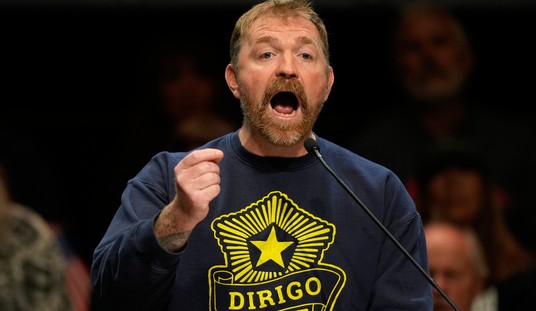
Change the soterlogical nature of salvation from infinite transcendence to this world, e.g. social justice, and one could will end up with someone from Black Liberation Theology becoming president of the USA. (For an excellent introduction into Black Liberation Theology look up Peter Berger in “The American Interest”, certainly a worthy rival of PJ Media for depth of analysis). Liberation theology (be it Black or Latin American) is one of victims and victimizers placed with in a marxistic interpretation. This means that the eschatogical goal remains in this world, i.e., the liberation of the victims from the victimizers — and you can guess that this means ending capitalism. Our president, expressing well the fruits of his days in a Black Liberation Church, speaks of salvation of the individual as only possible in the collective of a country. To the degree that such immanentizing soterology enters Christianity, Christianity will inevitably be juventilized (if not infantilized). What symbol is better for a happy world than an infant that is crying and then smiling. The photo above more correctly communicates an infantilization of Christianity than an juventilization. The words pinned on the infantile Christ would read better as: “My God, my God, why have you infantilized me?”
For Catholics such as Jeannette I suggest seeking out a translation (if there is one) of Martin Mosebach’s “Häreside der Formlosigkeit. Die römische Liturgie und ihr Feind” (Heresy of Formlessness. The Roman Liturgy and Its Enemy). Mosenbach well knows the current Pope and is a defender of the Latin Mass with its profundity through its “”form, rather than a guitar juvenil “formlessness” of screaching juveniles.
http://www.ignatiusinsight.com/features2008/vanhove_mosebach_may08.
A review by the highly-respected Fr. Brian Van Hove. Ooh, and it’s on Amazon. Thanks!
This is why so many theologically conservative Christians (esp. Independent Baptists) are unhappy about being lumped in with “Evangelicals”. Meanwhile, there is a line that can successfully be walked including the more contemporary Christ-centered music and non-self-centered worship.
[David W, As for denigrating the tenet of Eternal Security, there are many who believe deeply in such a principle, based on Scripture.]