
The Rosett Report

By Claudia Rosett

Bio

Get Updates From Claudia Rosett

‘The Tide of War’

January 25th, 2012 - 1:36 am

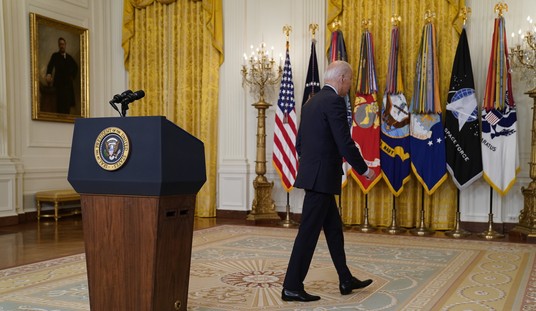
“The tide of war is receding,” or so President Obama keeps saying. He said it on June 22, 2011, talking about Afghanistan. He said it on Sept. 21, 2011, in his address to the annual opening of the UN General Assembly. He said it on Nov. 11, 2011, at Arlington Cemetery. He said it on Jan. 5, 2012, while announcing cuts in the U.S. military.

And on Tuesday night, in his State of the Union address, there it was again. Though this time Obama presented it less as an announcement than as the established context for his further remarks: “As the tide of war recedes… .”

If saying could make it so, this would all be a marvelous exercise. But there’s a dangerous muddle here, in which the gutting of U.S. defense and the withdrawal of U.S. troops from overseas theaters are confused with an end to war. If the metaphor here is to be one of ocean tides, then the extension of the metaphor is that we are being invited to spread out our well-padded entitlement programs and picnic on the beach — oblivious to the signs that the water is coming back. North Korea and Iran are still working on nuclear bombs and missiles. Iran, along with its ties to al Qaeda, continues to arm and support terrorist groups such as Hamas in Gaza and Hezbollah in Lebanon, which in turn have networks well beyond the Middle East, including in Latin America — where Iran’s President Mahmoud Ahmadinejad just completed yet another visit to his pals in Cuba, Nicaragua, Ecuador and Venezuela. China is busy with a massive military buildup. Russia is sending arms to Syria. And, with the U.S. nodding along, Egypt is on its way to Islamist rule. These are not developments that herald an imminent era of  peace. Neither is the plot alleged by Obama’s own Justice Department, in which Iran’s Quds Force planned to blow up the Saudi ambassador in a Washington restaurant, just last fall — sometime between Obama’s first two iterations about the receding tide of war, and the last three.

There’s something else that’s troubling about this “receding tide” formulation. Like that long and bending “arc of history” which Obama invoked while passively bearing “witness” in 2009 to the slaughter of Iranian protesters, this “tide” business implies that while the little folk might fret about the growing threats, the president walks hand in hand with some grand force of history which, catalyzed by his presence, will somehow sort it all out. It’s of a piece with Obama’s declaration when he became his party’s candidate in 2008 that “this was the moment when the rise of the oceans began to slow and our planet began to heal.” In that same speech, he went on to say, “this was the moment when we ended a war and secured our nation … .” Whatever the talk of arcs and tides, America has enemies focused on the here and now. Are we really more secure?

… Check out salaries at the United Nations. According to the U.S. envoy for UN Management and Reform, Joseph Torsella, UN salaries average out to $119,000 per year, and at UN headquarters in New York they are on average 30% higher than U.S. federal salaries in Washington.

The UN hasn’t figured much in the Republican debates, but surely those are numbers that would resonate with average American voters — who pay the biggest share of the bill for these average UN salaries.

“Groundhog day, over and over again,” is how Ambassador John Bolton has described U.S. efforts to talk with Iran, saying all such talks achieve is to buy time for Iran to work on its nuclear weapons program. That was in 2009, and right he was. There were talks with Iran before that — in 2009 Michael Ledeen linked to a list of  more than 28 high-level U.S.-Iran meetings held from 2001-2008, under the Bush administration.  President Obama arrived in office with an extended hand, offering “mutual respect,” and yet more talking — recall the December 2009 flop in Geneva.

Yet, with tensions high over tougher sanctions on Iran, and Iran’s threats to block the Strait of Hormuz, here come the calls for Groundhog day, again. From Trita Parsi, with his knack for channeling policies that benefit Iran, not the U.S., comes an op-ed in Friday’s Washington Post, “How Obama should talk to Iran.” Parsi’s prescription is that the U.S. administration drop sanctions and shower Iran with (more) offers of respect: “Talk to everyone — and talk a lot.” Implying that Iran’s power structure is similar to that of the U.S. (by way of quoting an unnamed “prominent journalist” close to the foreign minister of Turkey to that effect), Parsi urges a “process” that would have U.S. officials engaging — respectfully, of course — in “sustained” palaver with a panoply of Iranian “power centers,” including “the supreme leader’s office, the parliament,the president’s circle of advisers, the National Security Council and influential clergymen.” Parsi would have the U.S. jabber away for however long it might take to build a “strong rapport” with Iran, in expectation that eventually the happy day would arrive on which Iran’s regime would have talked with so many U.S. officials, for so long, that Tehran would no longer feel the need to pursue nuclear weapons. (Of course, by then Iran’s regime would almost certainly have nuclear weapons — but let’s not be dissuaded by such tedious practical considerations…).

Also writing in the Washington Post, on “Steps to Defuse a Crisis,” David Ignatius more modestly suggests that the U.S. and Iran need a back channel for direct communication. For this purpose, he would like to volunteer CIA director Gen. David Petraeus, and the head of Iran’s Quds Force, Gen. Qassem Suleimani. Ignatius notes that “Some would argue Suleimani is the heart of the problem” — what with some U.S. officials believing he was probably aware of the Quds assassination plot that the Justice Department alleges was meant to blow up the Saudi ambassador in Washington, D.C.  But Ignatius suggests that “precisely because Suleimani heads Iran’s most powerful intelligence network, messages through him would carry special weight.”

Pages: 1 2 | 37 Comments bullet bullet

How the UN Achieves Sustainable Peacekeeper Rape

January 11th, 2012 - 12:23 am

Year after year, since 2005, the United Nations has proclaimed its “zero-tolerance” policy for UN peacekeepers sexually exploiting or even raping the people they’re sent to protect. Year after year, the abuse continues. One of the more recent horrors took place last year in Haiti, when five UN peacekeepers allegedly pulled an 18-year-old Haitian into a UN base, pinned him down on a mattress, beat and raped him. Part of the scene, in which he screams for help while being assaulted, was caught on video.

Haiti’s president protested. The five peacekeepers, all from Uruguay, were sent home to face prosecution. Uruguay’s ambassador to the UN apologized. But now comes a report from ABC News — “Haiti Outrage: UN Soldiers from Sex Assault Video Freed.” ABC’s Brian Ross reports that the case has apparently stalled. It’s been put on “indefinite hold.” And a UN official has confirmed to ABC that the former peacekeepers have been turned loose. It seems the Uruguayan prosecution could not find the victim, though ABC’s Ross notes that his name and address are well known, “if there is any interest in finding him.”

It gets worse. ABC’s report includes an interview with a UN peacekeeping official, an American, Assistant Secretary-General Anthony Banbury. Asked if there’s any way to ensure that UN peacekeepers accused of sexual exploitation and assault will face justice, he simply admits, “Sometimes we can, sometimes we can’t.” In an earlier incident, when more than 100 Sri Lankan peacekeepers in Haiti were expelled for sexually exploiting underage girls, there was no sign they were ever prosecuted. That’s been largely the way of it, as cases of sexual abuse by UN peacekeepers have turned up again and again, in places such as the Congo, Bosnia, Cambodia, Liberia, the Ivory Coast, Burundi, Haiti, and South Sudan.

Pages: 1 2 | 58 Comments bullet bullet

Ahmadinejad — Not Nearly Isolated Enough

January 7th, 2012 - 12:08 am

Coming to a hemisphere near you — Iran’s Mahmoud Ahmadinejad is embarking on a visit to four countries in Latin America: Venezuela, Nicaragua, Cuba and Ecuador. Asked about this excursion at a Friday press briefing, State Department spokeswoman Victoria Nuland said that Ahmadinejad’s trip is a sign that Iran’s regime is “desperate for friends and flailing around in interesting places to find new friends.”

This inspired a rash of news stories playing up the desperation and isolation of Ahmadinejad & Co., and downplaying any real dangers Tehran’s Latin American hob-nobbing might pose to the U.S. The Associated Press reports, “Ahmadinejad Trip to Latin America a Sign of Desperation.” The New York Times, under a headline calling Ahmadinejad “Increasingly Isolated,” notes that on this trip Ahmadinejad is not visiting such hefty Latin American countries as Brazil, Argentina, Colombia or Mexico.

OK, thanks to a growing roster of sanctions pressed chiefly by the U.S. and EU, Ahmadinejad and his fellow thugs of the Iranian regime may be more isolated than they were a few years ago. But this trip hardly represents isolation and it certainly does not represent, as the State Department put it, “flailing around…to find new friends.” In Cuba, Nicaragua, Ecuador and Venezuela, Ahmadinejad is visiting old friends. As the New York Times notes, this is his sixth swing through Latin America. He has been making these visits about once a year since he became president of Iran in 2005. Add in the various visits that officials of his Latin hosts have made to Iran, and that’s a lot of hob-nobbing.

Lest anyone is tempted to dismiss Ahmadinejad’s  trip as chiefly an exercise in grandstanding and nose-thumbing — which is the tenor of much of the news coverage — let’s recall that almost two years ago, on the eve of retirement, former New York District Attorney Robert Morgenthau went out of his way (literally — he stepped off his Manhattan home turf to deliver his message in Washington) to warn that Iran’s growing ties with Venezuela had the makings of the next Cuban missile crisis : “The Iranian nuclear and long-range missile threats and creeping Iranian influence in the Western hemisphere cannot be overlooked,” said Morgenthau.

True, Venezuela’s despotic Hugo Chavez may be ill, and Iran is facing tougher sanctions than a few years ago. But Iran is also closer to producing nuclear weapons, has continued developing missiles to deliver them, and continues to pursue its collision course with the interests and security of the free world — threatening to close the Strait of Hormuz; arming and training terrorists in Gaza, Lebanon and beyond; meddling amid the turmoil in Egypt and Libya; supporting al-Qaeda; and caught last  fall allegedly plotting the terrorist act of bombing a Washington restaurant to assassinate the Saudi ambassador.

Whatever difficulties Ahmadinejad might be running into, his brazen trip to Latin America means he is not nearly isolated enough.

(Thumbnail on PJM homepage by Stocklight / Shutterstock.com.)

Axioms for 2012

December 31st, 2011 - 7:23 pm

So volatile are these times that friends keep adding caveats to the wishes for a Happy New Year. My variation on this has become, Happy New Year, whatever it may bring!

But amid the uncertainties, there are a few things of which we can be sure. Some are so obvious that only among experts and politicians do they really need spelling out. Nonetheless, given the abundance of experts and politicians currently jockeying for the cockpits of the planet, I offer below a small selection of axioms for 2012:

1) The government does not “create” jobs.

In matters of the economy, all the government really has the ability to do is force the transfer of assets — in too many cases eroding liberty, destroying real jobs and wasting resources. Any candidate, from any party, who tells you he or she has some great program for job creation is offering another big bamboozle (unless that jobs program boils down to simply getting the government’s all-too-visible hands out of the marketplace).

2) Diplomatic persuasion has its limits: Negotiations will not persuade Iran’s regime to scrap its nuclear weapons program.

3) Ditto the bit about diplomatic persuasion: No matter how many variations on 2-party, 3-party, 4,5,6 or umpteen-party talks might for the umpteenth time sound tempting, North Korea’s regime will not be negotiated out of its nuclear weapons program.

Pages: 1 2 | 35 Comments bullet bullet

UN Bows Again to Kim Jong Il

December 28th, 2011 - 10:34 am

The United Nations just can’t stop honoring North Korea’s dead mass-murdering tyrant, Kim Jong Il. Today, in tandem with North Korea’s funeral for Kim, UN offices around the world have lowered their flags to half mast — or so reports Xinhua, state news agency and self-described “important information organ” of the Kim regime’s best pal, the government of the People’s Republic of China. This UN flag-lowering for Kim follows last week’s moment of silence for Kim in the UN General Assembly.

It’s all a rich propaganda gift for the North Korean regime, now trotting out Kim’s son as the Great Successor and Supreme Commander, and tallying the condolences from places such as Equatorial Guinea and Sudan. Amid such company, it is quite a plum for the Pyongyang regime to see the U.S.-subsidized UN flags dipping worldwide in a show of respect for Kim.

Let us repeat — for the weeping, wailing people of North Korea, there is at least the excuse that unless they provide an impassioned public display of grief over the demise of the thug whose regime has sent hundreds of thousands to be starved, tortured, frozen, worked to death or executed outright in Kim’s prison camps, that same regime may inflict horrible punishment on them. But for the eminences and bureaucrats of the UN, there is no excuse. In dipping its flag to half mast, the UN is effectively delivering a message of encouragement to a North Korean regime which sustains itself by way of repression, murder and nuclear proliferation. This is not solely a symbolic case of UN protocol trumping human decency; this is an act cheap for the comfortable offices of the UN to engage in, but potentially so costly that at the far end of the message transmitted to Pyongyang, more people may die. A UN flag that is lowered to half mast for Kim Jong Il is a flag does not deserve to fly at all.

The Long Rough Awakening of Russia

December 24th, 2011 - 7:02 pm

Twenty years ago this Christmas day, Mikhail Gorbachev gave a speech announcing “I hereby discontinue my activities at the post of President of the Union of Soviet Socialist Republics.” And with that, the totalitarian and murderous construct of the USSR, already uncoupled earlier that month by Russian President Boris Yeltsin and the presidents of Ukraine and Belarus, was no more.

These were monumental events. Yet so tumultuous is the world right now that the 20th anniversary of the Soviet collapse is figuring as little more than a footnote in the news. In Russia itself, the events of the hour are the protests against the reign of Vladimir Putin, with tens of thousands of people bravely demonstrating in the freezing streets, alleging foul play in the recent parliamentary elections and, as the AFP reports, carrying banners with slogans such as “We woke up and this is only the beginning.”

If so, it has been a long beginning. Twenty years have passed since Russia officially embarked on its awakening. An entire new generation has come of age, and the years since Christmas of 1991 have been filled with trouble, disappointments, crude grabs for Russia’s colossal natural resources, the fading of freedoms once promised, and the rise of a new autocracy. There would be room for a more joyous celebration of the Soviet collapse, were there less call to deplore a great deal of what has followed.

But I would not give up on Russia, or at least on the Russians.

An anecdote: In 1993, I arrived in Russia to work as a foreign correspondent at the Wall Street Journal‘s Moscow bureau. It was a queasy time, fascinating but difficult. No one knew quite what the rules were anymore. Nothing worked the way one wanted it to. As one source explained it to me, no one even knew anymore whom to bribe.

There came a cold, gray miserable evening in the early autumn of 1993, during the standoff between Yeltsin and the Soviet-installed old parliament, when I was alone in the bureau — and the power went out. Yet another bout of news was breaking about the endless tussles in the Kremlin, and I had just a few hours to find out whatever I could, and file a story to the foreign desk in New York. The office was freezing, and without electricity the TASS machine had gone dead, the satellite phone was on the fritz, and the lights were out. I managed to place some phone calls, using the erratic Russian phone lines. Then, in my frustration, I made a call to the U.S., to seek some wisdom from an old family friend, economist Douglass North — who later that year received the Nobel Prize for his work on the interactions of economic and institutional change.

Pages: 1 2 | 43 Comments bullet bullet

A Monstrous Moment at the UN General Assembly

December 22nd, 2011 - 3:42 pm

This isn’t just a low moment. It is despicable. The United Nations General Assembly has just paid tribute to the late North Korean tyrant, Kim Jong Il, with delegates standing to observe a minute of silence in his memory.

The Associated Press reports that this kind of tribute is “customary for leaders who die in office” and that North Korea’s Mission to the UN requested this tribute to Kim. There were no speeches, and the chamber was half empty.

None of that excuses the depraved act of the UN honoring a man whose rule was responsible for abominations and atrocities inflicted by Kim Jong Il and his regime during Kim’s 17 years in power, or for that matter Kim’s long prior career under his father of engineering terrorist acts such as bombings and abductions abroad. For the UN to pay any tribute to Kim Jong Il is to insult the million or more Koreans who died of famine, the hundreds of thousands consigned to Kim’s prison camps, and the many millions more leading lives of grotesque fear and deprivation — all as the cost of Kim’s rule.

Nothing in the UN rulebook requires the General Assembly to pay tribute to its array of resident monsters. The Assembly could have replied to the North Korean mission that there will be no tribute to anyone, dead or living, who contributed to North Korea’s totalitarian horrors. But this same General Assembly that annually demands billions of dollars from U.S. tax payers — and gets them from our federal government — has just paid tribute to Kim Jong Il. What more do we need to know?

Memo to World Diplomats: Don’t Cry for Kim

December 19th, 2011 - 12:10 am

To release news of Kim Jong Il’s death, North Korea’s government stuck a woman newsreader in front of a TV camera, where she sobbed and wept her way through the announcement. In coming days we can expect to see a lot more North Korean wailing and weeping. For such lamentation over the death of a monster, North Koreans at least have the excuse that they have been bombarded all their lives with Kim’s propaganda, and if that didn’t do the job, they could be shipped off to the North Korean prison camps, with their families, to be starved and beaten into a more acceptable posture of deference. Whatever their private views, they have plenty of reasons to weep.

The rest of the world has no such excuse. Nonetheless, CNN’s all-night all-North Korea coverage has already been featuring a parade of commentators warning that we must be tactful with North Korean feelings at this “delicate” time. I fear that we are about to witness a diplomatic outpouring of condolences to North Korea on the death of Kim. Already, reports the AFP, the Japanese government has done exactly that — issuing a statement that “We express our condolences upon receiving the announcement of the sudden pasing of Kim Jong Il, the chairman of the National Defense Committee of North Korea.”

Please. There are moments when diplomatic lies have their uses. The death of Kim is not one of them. He was a mass-murdering tyrant, a cosmic cheat whose brand of power entailed abductions and terrorist killings, proliferating missiles and nuclear plans to other rogue powers, running narcotics and counterfeiting rackets out of his embassies, stunting his own country, maintaining Stalin-style prison camps and starving to death an estimated million or more of his own countrymen.

There are some nations whose governments may genuinely regret the death of Kim, for the reason that he was a handy business partner in their missile and nuclear proliferation ventures, or a convenient irritant and menace to the West. Iran and Syria will surely send flowers. China and Russia will likely make some ritual display of grief. And there are some that in their quest for solidarity, or perhaps for business, apparently have no shame. The same Korean Central News Agency web site now reporting Kim’s death still features such recent news items as the goodwill visit just made by Kim Yong Nam, president of the Presidium of the Supreme People’s Assembly of North Korea, to Tanzania — where he was reportedly received by the president.

But for any self-respecting free nation, or for that matter, any multilateral crew that pretends to defend human rights and dignity (the United Nations comes to mind) there can be no excuse to send condolences to North Korea on the death of Kim. Far from gaining the goodwill and cooperation of whomever, or whatever, now takes power in Pyongyang, any show of respect would only help to preserve Kim’s monstrous system. If condolences should be sent, they should be sent not to the government of North Korea, but to North Korea’s 23 million people — and they should be condolences not for the death of Kim Jong Il, but for his long and ruinous life.