
Critics called it “trickle-down economics.” George H. W. Bush famously called it “voodoo economics.”
But no matter what you call it, supply-side economics works. Ronald Reagan’s economic record speaks for itself: He inherited double-digit inflation and interest rates approaching 20%, and in record time, he created 20 million new jobs, slashed unemployment, and our Real Gross National Product grew by 26%.
As Reagan quipped, “I could tell our economic program was working when they [Democrats/media] stopped calling it Reaganomics.”
Yet many Democrats refused to give Reagan credit. They insisted his success was illusory — the byproduct of deficit spending, cooking the books, and the rich getting richer.
What we needed was an apolitical way to test the validity of supply-side economics. A nonpartisan testing ground that removed all doubt.
When the internet was invented, we got it.
In the early days of the World Wide Web, nobody knew how the heck to monetize it. (Indeed, plenty of investors went broke trying.) As late as 2008, South Park ran an episode mocking viral video creators who thought they deserved financial compensation.
But the supply of digital content — and thus, content creators — grew and grew. For supply-siders, cyberspace was manna from heaven: online regulation was minimal; emails, texts, and posts were free; taxes and overhead were virtually nonexistent. The public “freely traded” videos, links, and social media posts globally.
And before long, an abundance of supply led to an abundance of demand.
Google, Facebook, and the other tech giants didn’t get filthy rich by charging their audience right away. They waited until they were super-popular — with billions of eyeballs and steady traffic — before making bank on advertising revenue.
And then they were off to the races, becoming the biggest, most powerful companies on earth.
Because the supply triggered the demand.
This online ecosystem gave birth to a new profession: digital influencers. They’re the ones who create the content that keeps audiences endlessly doomscrolling.
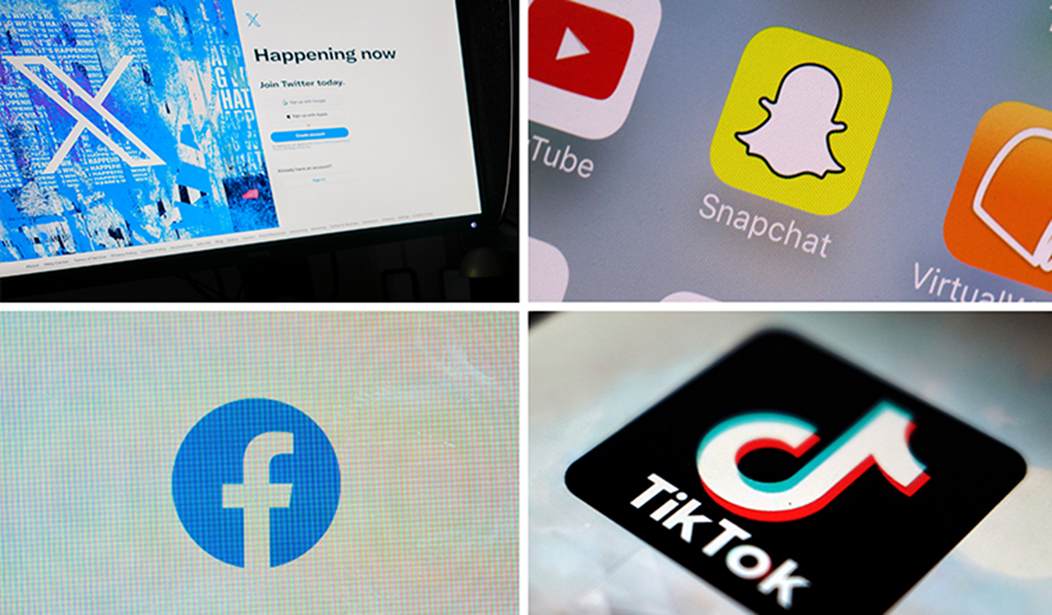
Digital influencers operate on preexisting platforms, namely X, TikTok, Facebook, YouTube, Twitch, and Instagram. Each company’s algorithm is different, but when audiences click, view, or interact with their content, influencers get paid.
And when millions of people interact with their content, their windfall is extraordinary. No wonder 57% of Gen Zers want to be professional influencers: It’s a cheat code to fame and fortune.
But that’s not the only way influencers get paid.
The New York Times ran an interesting article this week on the undisclosed payments to political influencers. A few conservative names were mentioned, but the overwhelming majority of bribe-taking influencers were on the left.
For the most part, their audience doesn’t have a clue:
As more people spend time scrolling on their phones, campaigns view these shows of support from influencers as a vital way to reach voters. They are also significantly less expensive than traditional advertising.
But unlike campaign mailers, billboards and television spots, these messages fall into a legal gray area.
There are no federal regulations requiring disclosure of payments for political support on social media, and only a few states have such rules. That allows influencers, in most instances, to endorse candidates for a fee without ever disclosing those payments in their posts. Creators say some campaigns have even asked them to actively conceal the fact that they’re being compensated, making it impossible to know what’s genuine support — and what is pay-for-play.
In most cases, the only way a viewer would know an influencer is being paid would be to search a candidate’s campaign finance reports, as The New York Times did to discover the payments. Even then, such compensation is regularly obscured by funneling the payments through middlemen.
Theoretically, there are numerous tools that could compel influencers to reveal their sources of funding. And if a source turns out to be a foreign government, the fallout could be considerable.
PRediction: Although the New York Times cited many more examples of left-wingers, it’s almost certainly just as big of a problem on the right.
(I’m guessing the abundance of left-wing examples was more likely due to the Times’ systemic bias, with its reporters caring about — and corresponding more frequently with — left-leaning influencers. Which says more about the mindset of the mainstream media than anything else.)
After all, the market conditions, political aspirations, and incentive structures on the right are identical to those on the left. So how could it not be a bipartisan problem?
Neither party has a monopoly on dirtbags and mercenaries.
But holy cow, the Dems are doing it with gusto:
During California’s hard-fought primary this spring, Mr. Steyer’s campaign paid 17 influencers at least $5,000 apiece, including one, Carlos Eduardo Espina, who has over 14 million followers on TikTok and received a total of $400,000, campaign finance filings show.
Former Representative Katie Porter, who also ran unsuccessfully for California governor, paid 12 influencers a total of $139,500. One of them, a lifestyle creator named Avery Cyrus with 9.5 million followers on TikTok, received $25,000 for what appeared to be a single post claiming “Katie Porter’s thing works.”
If Avery Cyrus has nothing to hide, she sure isn’t acting like it:
Ms. Cyrus’s post was deleted after The Times inquired about it. She did not respond to a request for comment made through the social media agency that represents her, UnderCurrent Media, but the firm’s chief executive, Eric Bogard, said in an email that it “was not asked to oversee disclosure compliance, nor were we provided instructions concerning any required disclosures.”
Under California law, paid political posts on social media must be disclosed. A Times review found three posts supporting Ms. Porter on TikTok from influencers who were paid by her campaign that did not include any disclosures. In seven other instances, the disclosures could be found only after clicking through to a hidden section of TikTok for comments flagged “as potentially offensive or disturbing.”
One way or another, it’s all gonna come to light, either through leaked/hacked financials, congressional hearings, lawsuits, new laws, and/or more.
The same incentive structures that led influencer bribery to thrive exist on the opposite end of the tracks, and for every candidate/influencer who benefits from this bribery, at least one other candidate — plus multiple other influencers — is hurt by it.
The motivation to expose it is gonna be greater than the motivation to keep it in the shadows.
Plenty of politicians will be embarrassed. And that’s not all.
PRojection: It’ll deeply damage the careers of many of today’s top political influencers.
How many will be damaged? Hard to tell.
But some of the Times’ anecdotes were eyebrow-raising:
This spring, a woman posted dozens of videos promoting Mr. Steyer in the California primary. Weeks later, she appeared in videos from a different account complaining about the cost of living “here in Michigan” and encouraging people to vote for Representative Haley Stevens, Dr. El-Sayed’s primary opponent in the Senate race. Then she pivoted to a third account talking about affordability in Wisconsin.
Corporate records show that the woman, Paige Dunmeyer, actually lives in Kansas City, Mo., and is registered to work with a U.G.C. company called SideShift. It’s not clear how much she was paid for her Michigan and Wisconsin videos, but she has earned more than $30,000 on SideShift for a variety of political and commercial campaigns, according to company records reviewed by The Times.
Promoting a no-name account from a (pseudo-) anonymous citizen is one thing. Those accounts come and go all the time.
I’m more intrigued by the established names:
Josh Greene is a rising left-wing social media star with his own podcast, nearly 800,000 followers and access to politicians like Senator Bernie Sanders of Vermont and Mayor Zohran Mamdani of New York.
He has used that platform to support dozens of progressive candidates in the midterm elections, ranging from low-profile, down-ballot contests to some of the nation’s marquee Democratic primaries. In camera-facing videos, Mr. Greene informs his followers of his preferences, calling some candidates “the most viable” and, in other cases, declaring that “this is the candidate for you.”
He does not always tell his viewers that he is being compensated for his support.
But records show that Mr. Greene, 26, has received money from at least seven politicians, or outside groups supporting them, in the current campaign cycle…
According to Gemini, there are 75 to 150 conservative influencer accounts on X alone with over 800,000 followers. If you add up followers from across all platforms, the number skyrockets.
If it’s that lucrative for Greene, it’s almost certainly just as lucrative for those on the right.
PRaise: To those in Congress, including Rep. Anna Paulina Luna (R-Fla.), who are at least trying to crack down on foreign governments influencing U.S. public opinion by secretly bribing influencers.
The good thing is that this raises awareness. And sunlight is the best disinfectant.
But the bad news is that there are always a zillion different ways to work around it.
Take me, for example: I’ve never worked for a foreign government. Never taken a dime of foreign money. My political opinions are 100% my own. When you read my columns, you’re ALWAYS getting what I truly believe.
(Honestly? I’m not important enough for anyone to bribe, which kinda-sorta hurts my feelings.)
But if a foreign government — or more likely, a diplomat or well-funded businessman from that country — hired me for “marketing services” at a privately held company of his, and whammo, now I’m echoing all his country’s positions on social media, would I have to disclose anything?
Where do my First Amendment free-speech rights end and disclosure laws begin? Would everyone employed by a foreign company be subject to such laws?
If so, that’s a lot of people: T-Mobile, Accenture, 7-Eleven, PwC, Ernst & Young, Anheuser-Busch, Chrysler, Dodge, Jeep, and Ram are all foreign-owned brands or companies. A little more than 8.5 million Americans work for foreigners.
Plus, Qatar and Saudi Arabia can afford lawyers, too. (Really good ones.) If it’s legally possible to circumvent these restrictions, they’ll figure out a way.
Sadly, with dishonest people, there are no easy answers.
That doesn’t mean we shouldn’t try. We should.
But we need to know going in that the deck is stacked against us, and it’ll certainly take more than just a new law. We’ll also need public pressure, public scrutiny, and a well-oiled shame campaign.
And plenty of sunlight.
PRedators: All the influencers on the left AND the right who’ve traded their credibility for money. We don’t know who all of ‘em are right now… but one day, we will.
People talk. Info gets leaked. Nothing stays secret forever.
And those of you who sold out your principles for foreign dollars?
You deserve to be shunned.