
I don't think that "futurists" are good for much of anything save a few laughs. They were wrong about flying cars, personal spaceships, and vacations on the Moon — all by the year 2000 — which were made when I was a kid.
Too bad. I could have used a flying car.
I make one exception to my belief that futurists are bunco artists: Ray Kurzweil. A computer scientist and futurist, Kurzweil is an entertaining gadfly. He claims an 86% "accuracy rate" for his predictions. Less excitable observers say it's much lower. However, independent reviewers acknowledge that his overall track record for anticipating overarching technological trends is remarkably strong.
He predicted in the late 1980s that a worldwide network of computers would emerge to connect humanity and dominate daily life by the late 1990s. He also foresaw high-speed wireless internet access and handheld mobile devices serving as primary interfaces for reading, information retrieval, and media consumption.
Kurzweil was wrong about self-driving cars (by 2009) and voice recognition replacing typing for most text creation also by 2009. While his broad directional calls almost always come to pass, his specific target dates are occasionally ahead of regulatory, economic, or physical reality.
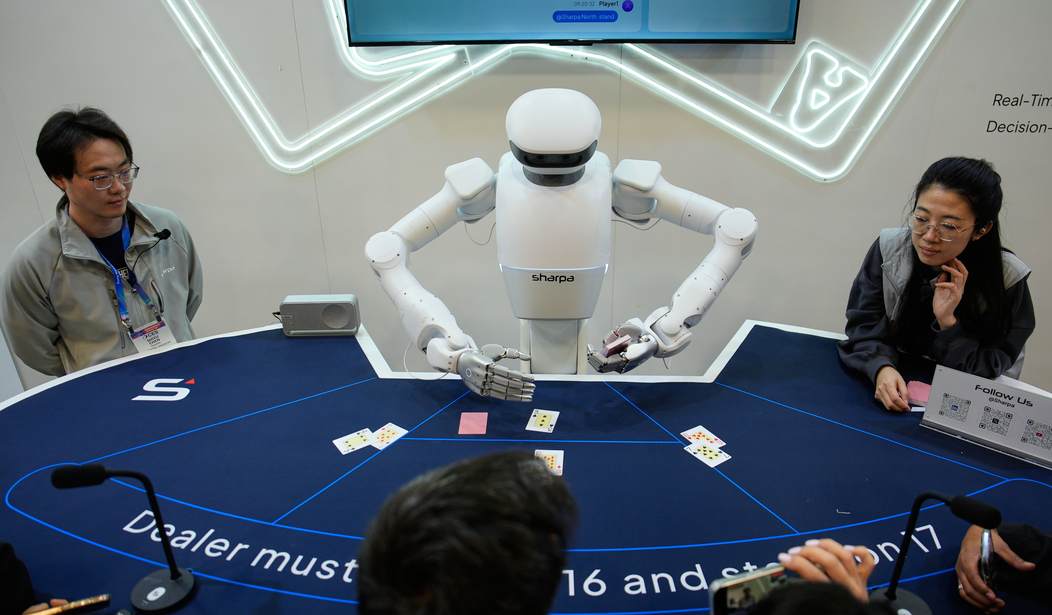
Today, Kurzweil is looking at the man/machine hybrid and when the "Singularity" might come to pass. He "has long believed that humanity is headed toward what’s known as “the singularity,” when man and machine merge, writes Darren Orf in Popular Mechanics. "In 1999, Kurzweil theorized that artificial general intelligence would be achieved once humanity could achieve a technology capable of a trillion calculations per second, which he pegged to occur in 2029."
“We’re going to be a combination of our natural intelligence and our cybernetic intelligence,” Kurzweil said in an interview with The Guardian, “and it’s all going to be rolled into one. We are going to expand intelligence a millionfold by 2045, and it is going to deepen our awareness and consciousness.”
While this idea subscribes to a merger more akin to physical intervention to bridge the gap between man and machine, other philosophers and AI experts agree that some form of merger is likely inevitable, and in some ways, is already beginning. In July 2024, Oxford’s Marcus du Sautoy and Nick Bostrom both expounded on the hopeful and harrowing possibilities of our AI future, and for both of them, a kind of synthesis appeared inevitable.
“I think that we are headed toward a hybrid future,” Sautoy told Popular Mechanics. “We still believe that we are the only beings with a high level of consciousness. This is part of the whole Copernican journey that we are not unique. We’re not at the center.”
Of course, this “Brave New World” of a hybrid AI-human existence brings with it a plethora of issues both political and personal. What will humans do for jobs? Could we possibly live forever? Would that change the very idea of what it means to be human?
Kurzweil’s predictive framework relies heavily on the Law of Accelerating Returns — the idea that technological progress grows exponentially rather than linearly. While his broadly and vaguely directional calls almost always come to pass, his specific target dates are occasionally ahead of regulatory, economic, or physical reality.
“In the early 2030s we can expect to reach longevity escape velocity where every year of life we lose through aging we get back from scientific progress,” Kurzweil told The Guardian. “And as we move past that, we’ll actually get back more years. It isn’t a solid guarantee of living forever—there are still accidents—but your probability of dying won’t increase year to year.”
I'm not convinced. Kurzweil was unaware that a level of hysteria would be generated against artificial intelligence and the data centers that power it. He also could not have foreseen the speed with which these AI models are adapting.
I'm not sure what that does to his timeline, but I think it will probably delay the general adoption of AI, and if the Democrats take control in the midterms, the restrictions on AI will be so severe that it could be made useless.