





There was no such thing as a "quiet summer day" where I grew up in suburban Chicago. Many of the boys on my block played baseball (no girls allowed), as well as epic games of "pirate" and "capture the fort." The girls played outside as well, jumping rope, playing hopscotch, and other girly-type games. The cacophony of uninhibited, unplanned play rang out across the quiet streets and nearby parks, where we had no problem walking or riding our bikes.
Sixty-five years ago, when I was seven years old, I was playing catcher in a pick-up baseball game with some friends in the vacant lot behind my house. In those days, we could easily fill out the roster for two full teams because there were so many kids on our block: 10 in our house, 11 in the family next door, with several other families featuring four to seven kids.
The batter, my friend Jimmy Edder, swung his bat and caught me full on the mouth, knocking out three of my front teeth and scaring me half to death with all the blood. My mom rushed me to the dentist, the bleeding stopped, and I eventually received three false teeth to replace the ones I lost.
No big deal in those days. I can imagine the outcry today. My mom might have been arrested. The dentist would have had to report this instance of "neglect" to the authorities, and social services would have paid a visit, forcing my parents into a humiliating promise to watch me more closely.
There's a fierce debate raging in academia, at school board meetings, and other places where anxious parents gather about the mental health crisis among young people, the reasons for it, and possible solutions. Social psychologist Jonathan Haidt published The Coddling of the American Mind in 2018, offering one possible explanation: the decline of unstructured play. Taking away a child's freedom to explore, make mistakes, and make decisions hinders his social development.
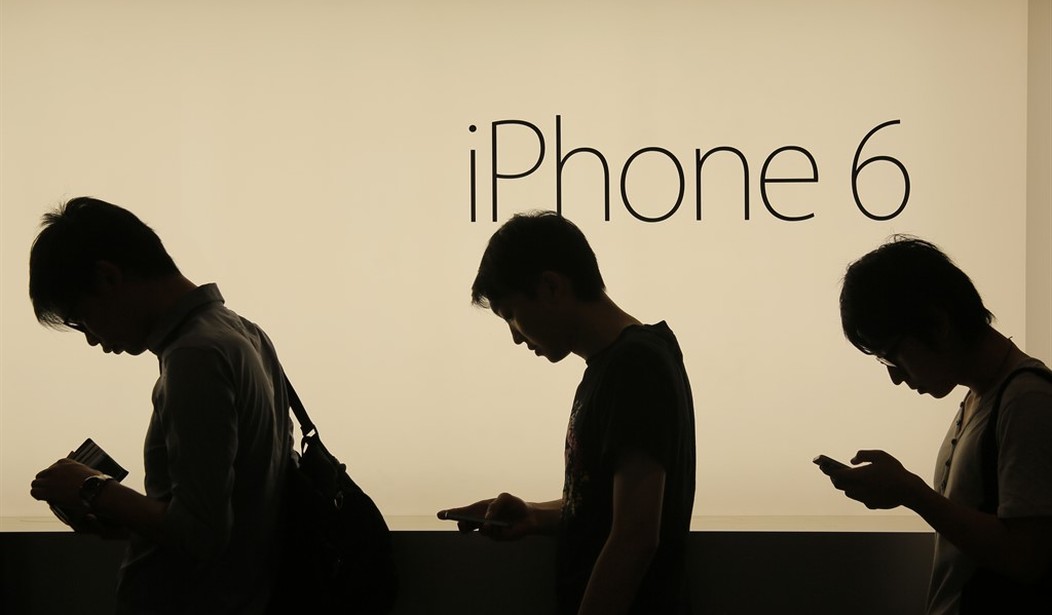
Haidt went on to postulate in 2024's The Anxious Generation that the advent of smartphones in 2009 has contributed to a serious mental health crisis among the West's youth. "Members of Generation Z (born in and after 1996) are suffering from anxiety, depression, self-harm, and related disorders at levels higher than any other generation for which we have data," writes Haidt. The cause, Haidt says, is kids' use of social media.
"Children learn through play to connect, synchronize, and take turns," the book says. "They enjoy attunement and need enormous quantities of it."
Social media, by contrast, "is mostly asynchronous and performative," Haidt writes. "It inhibits attunement and leaves heavy users starving for social connection."
Haidt suggested four possible remedies:
- No smartphones for kids before high school — give them only flip phones in middle school.
- No social media before age 16.
- Make schools phone-free by putting devices in phone lockers or Yondr pouches.
- Give kids far more free play and independence, including more and better recess.
The response has been incredible. As of mid-2026, 43 out of 50 states (plus Washington, D.C.) have enacted statewide phone-free school requirements through legislation, executive orders, or state board policies.
The rush to ban phones and even make it illegal for kids to use social media in Australia, Indonesia, and Malaysia has been one of the most remarkable responses to a crisis in history.
Recommended: Of Rumor Panics and Apocalypse Fever
But what if Haidt is wrong?
One prominent social psychologist, Peter Gray, vehemently disagrees with Haidt's "immoral" solution to the children's mental health crisis that both men agree is hitting young people. Gray, once a colleague and collaborator with Haidt, has written his own book, Restoring Childhood: How to Set Kids Free in the Age of Anxiety, out in September, that attributes the crisis to the 2010 implementation of the Common Core academic standards.
The new book will argue that the mental-health crisis affecting children is real, but has nothing whatsoever to do with what Gray describes as the “moral panic” over smartphones and social media. The real problem, he says, has to do with schools—and in particular with the 2010 rollout of the Common Core standards, which narrowed teachers’ options for creative curricula and increased the amount of time that the average American student spent taking tests.
To make that case, Gray points to the American Psychological Association’s annual Stress in America study, which surveyed kids in 2009, just before Common Core was introduced, and in 2013, just after. In 2009, 43 percent of U.S. teenagers said that performing well in school was a source of stress in their lives. In 2013, this number jumped to 83 percent. Gray found analogous survey data from before and after similar educational reforms in Sweden and England were put in place.
Both men agree that kids' playtime is too structured and children need more freedom. But Gray has a hard time justifying Haidt's belief in that concept with what he sees as one more restriction on kids. Taking away their smartphones and keeping them off social media is exactly the wrong answer.
"Haidt’s book implies that kids cannot be trusted to delve into the online world on their own, or even taught to do it safely," writes The Atlantic's Kaitlyn Tiffany. "The internet is too dangerous for children—too full of scary strangers and powerful temptations—much in the same way that parents and pundits had decried the perils of the physical world generations before."
Restoring Childhood goes on to make another, even more surprising argument: It says that computers and video games have actually been responsible for improving children’s mental health. Teen suicides rose in every decade from the 1950s through the 1980s, Gray writes, as restrictions were increased on children’s freedoms. Anxiety and depression seem to have been rising too. But that trend was temporarily reversed by the arrival of the digital world. Suddenly, kids had a new place where they could connect with one another, make their own rules, and solve their own problems. They were among the early adopters of the new technologies, and so became authorities in their households, giving them a chance to feel competent and helpful. Teen-suicide rates never went back down to the levels of the 1950s, but they did decline by about 40 percent from 1990 to 2010. “Everybody was ignoring that,” Gray said. “Nobody was writing about that.”
A lot of political capital has been spent on banning phones from schools. But Gray's solution—dump Common Core—wouldn't be cheap. Common Core standards have meant new textbooks, retraining teachers, and creating new ways to report data. What would replace it?
Haidt's solution is cheaper and easier to implement. The social media bans are much more problematic, if not entirely unenforceable. And there may be other, unexplored factors that have helped create the mental health crisis among children.
Gray's work on freeing children from playtime constraints is admirable. I'm not sure about his critique of Haidt and the banning of smartphones. Parents have always worried about the impact of new technology on their kids. We couldn't watch more than two hours of TV on school nights, even during the summer. My mom talked about some radio shows that her parents wouldn't let her listen to.
Even with unstructured play, there need to be some limits on children to help them grow into healthy, reasonably happy adults.
Editor's Note: The Democrat Party has never been less popular as voters reject its globalist agenda.
Help us continue exposing Democrats' plans to lead America down a dangerous path. Join PJ Media VIP and use promo code FIGHT to receive 60% off your membership.



Join the Conversation
VIP members get the ability to comment on articles.