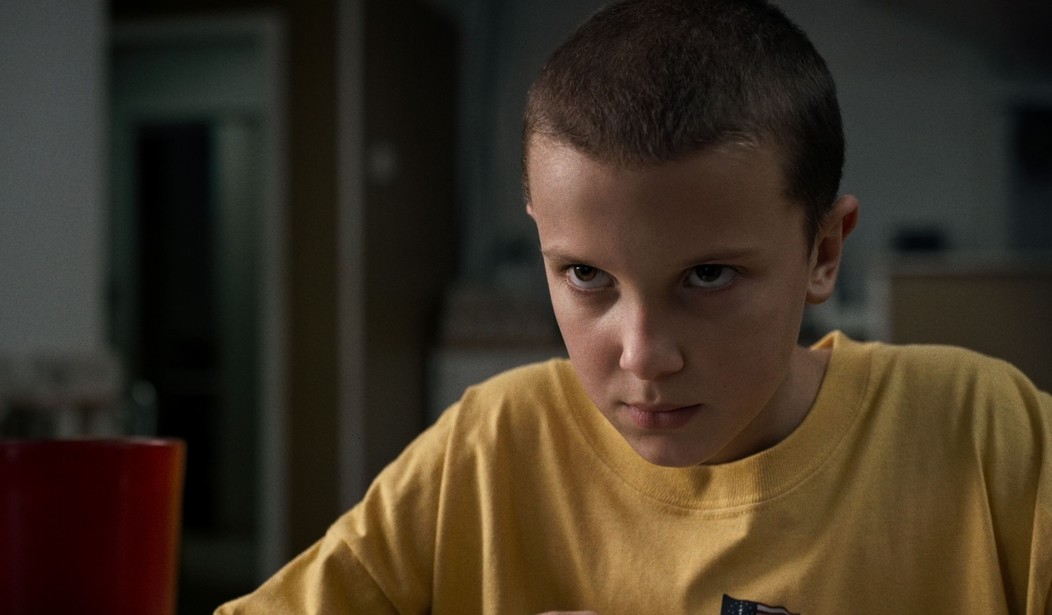

The series finale of the pop culture phenomenon Stranger Things dropped on New Year’s Eve, and as someone who has been a superfan of the show since it debuted in 2016, I have mixed—but still very strong—feelings about how the story wrapped up. That feeling intensifies when it comes to the show’s main character, Eleven, and the ending the Duffer brothers—the show’s creators and head writers—chose for her.
There are massive, I mean MASSIVE, spoilers ahead for the finale, so if you haven’t watched it yet, you should probably stop reading and go do that before continuing. You have officially been warned.
I’m not going to discuss anything from the finale aside from how the story wraps up Eleven’s arc and why it left me with a level of dissatisfaction that nearly forced me to double up on my blood pressure medication. I’ll summarize as best I can while leaving out as many details as possible so you can suffer through the agony of watching the ending just like I did. I know, I know. How evil of me. Too bad. Suffering is more fun when you have company.
In the finale, the show gives every major character a somewhat happy ending—except for El, the poor, abused, neglected child who emerged as the product of a morally evil experiment conducted by secret government agencies to create an army of psychic super-soldiers to stick it to the commies in Russia. Throughout the series, El receives tiny glimpses of what life with a loving family and friends could look like, only to have those moments ripped away from her to save the world from inter-dimensional monsters and a government that refuses to let her experience peace until it can turn her into a weapon and use her to create more soldiers for its twisted agenda.
And the Duffer brothers ultimately gave us more of the same when they brought Eleven’s story to a close. This time, however, they left the ending open with two distinct possible outcomes that viewers can choose to believe about her fate. Yes, they went full Sopranos on this one. And you never go full Sopranos. Not if you want to give fans a satisfying conclusion to a well-told story.
My one hope for the series finale was that the writers would avoid the laziest trope in all of fiction: the ambiguous ending. Instead, the creative forces behind this otherwise incredible series completely let me down. An ambiguous, open-ended conclusion to a main character’s arc screams from the mountaintops that the writers didn’t know how to give her a proper ending. Rather than wrestle with that challenge, they passed their job as storytellers onto us—the audience—to finish the work for them. That’s not clever. It’s lazy storytelling.
Fans have invested ten years in Stranger Things. The show shaped pop culture in massive ways and created a fan community that spans generations. You can’t quantify the emotional attachment viewers have formed with these characters over a decade. With that level of loyalty, the powers that be absolutely owe the audience a solid conclusion. They should answer questions. They should deliver definitive endings.
When an audience stays faithful to a series from beginning to end, creators receive a rare privilege that most showrunners never get. Viewers fell in love with the world-building and character development and stuck around through every high and low. They immersed themselves in it. Fairness demands that the ending reward viewers as much as the journey did.
Ambiguous endings like the one crafted for Eleven do the opposite. They leave the audience disappointed, as if all the time they invested meant nothing. This doesn’t require a corny “happily ever after.” It simply requires a sense of completion. Forcing viewers to invent their own ending—one that carries no official weight—amounts to a cruel cop-out.
The ambiguity used in the Stranger Things finale signals that the creators built a deep, fascinating world full of mystery and mythology but ultimately couldn’t figure out how to bring it full circle. I don’t know if that’s true of the Duffers specifically, but when filmmakers or novelists rely on ambiguity, it often feels like they ran out of steam and had no idea how to satisfy the human craving for closure. Instead of committing to an ending—even a tragic one—they chose the easy way out to avoid angering different factions of the fandom.
That approach avoids risk, and risk-taking forms the backbone of great storytelling. A firm ending might upset some viewers, but at least it shows the courage to tell a complete story with something meaningful to say. Refusing to commit suggests the creators never truly knew what the story meant in the first place. It feels improvised, directionless, and unfinished. When they couldn’t figure out how to close the thematic exploration because they never started with a clear plan, they chose to end it by not ending it at all.
Unfortunately, that’s exactly what happened with Stranger Things. Eleven became the heart of the story, and by leaving her fate up to audience interpretation, the Duffers ended the series without truly ending it. The result leaves a hollow, unsatisfied feeling because fans receive no definitive answers about the fate of a beloved character.
Longtime fans deserved better.